

Resurrecting a Legend: The Zeiss Ikon Contaflex IV — Part II
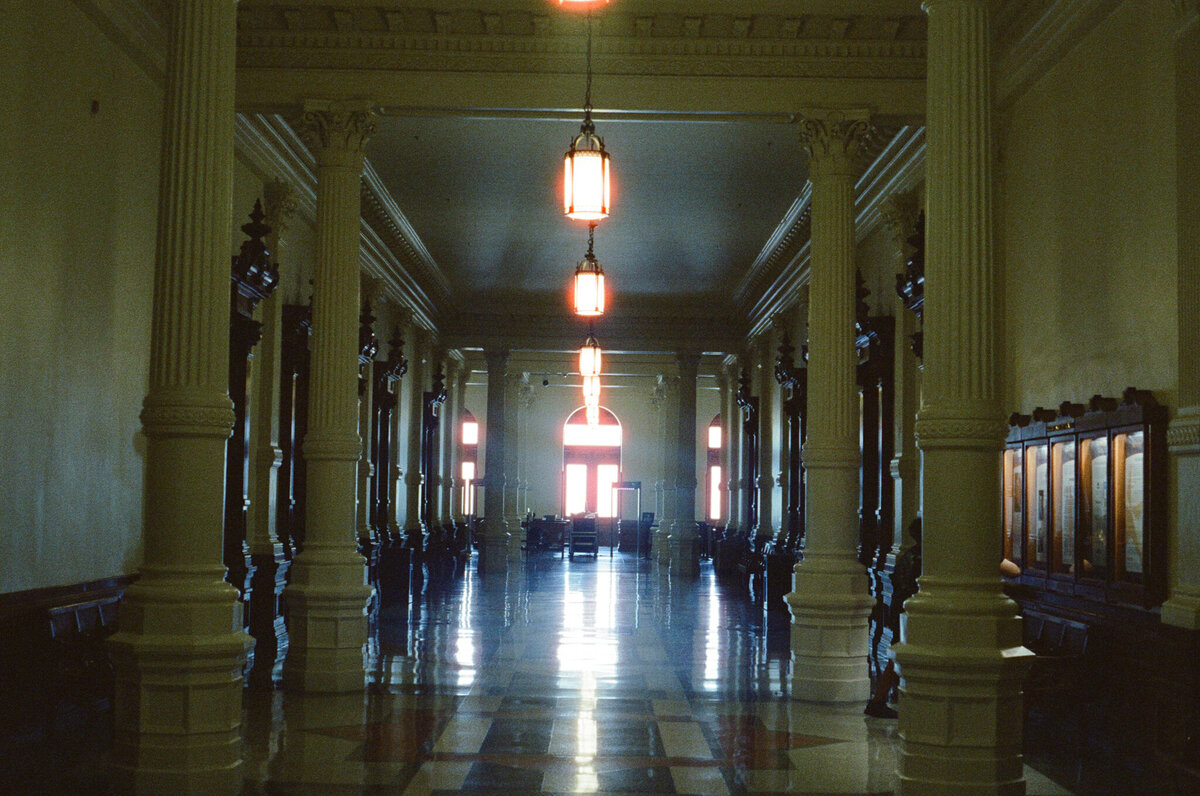
Unedited 35 mm film scans – captured on CineStill 400D and FPP Mummy ISO 400.

8. From Color to Contrast: The Second Roll
If the first roll of CineStill 400D was about rediscovering life and sunlight through a mid-century lens,
this second roll — FPP Mummy ISO 400 — was about tension, tone, and truth.
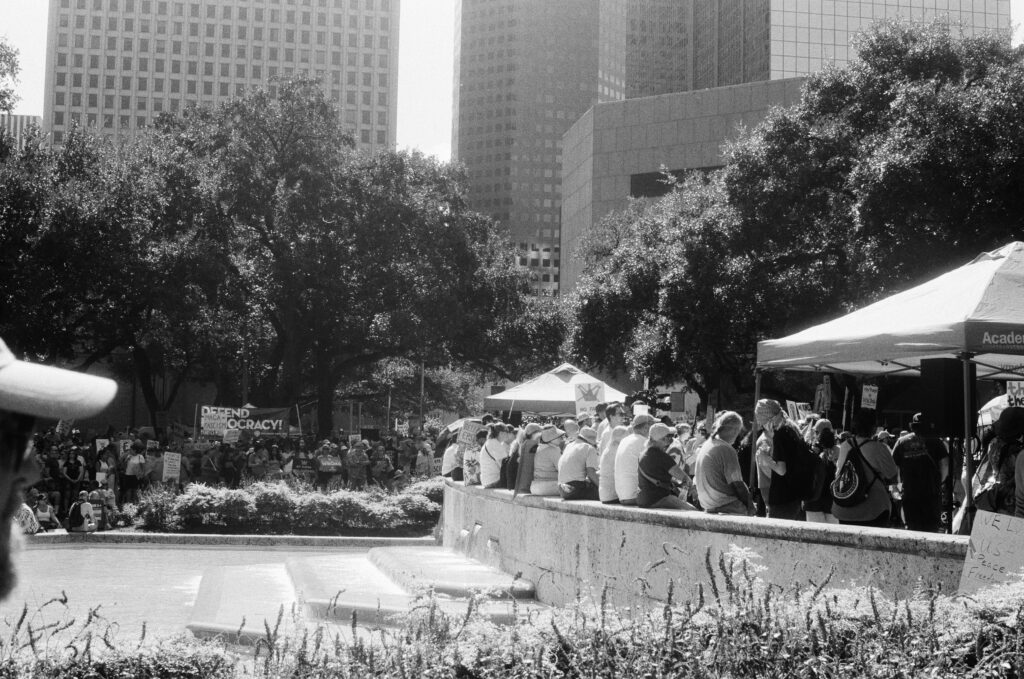
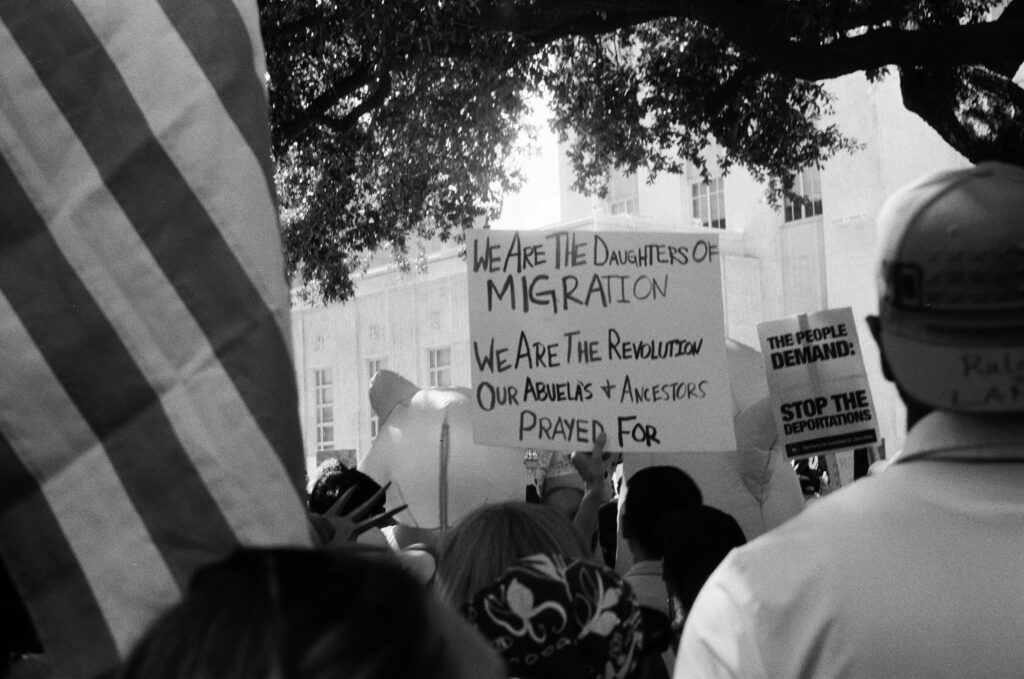
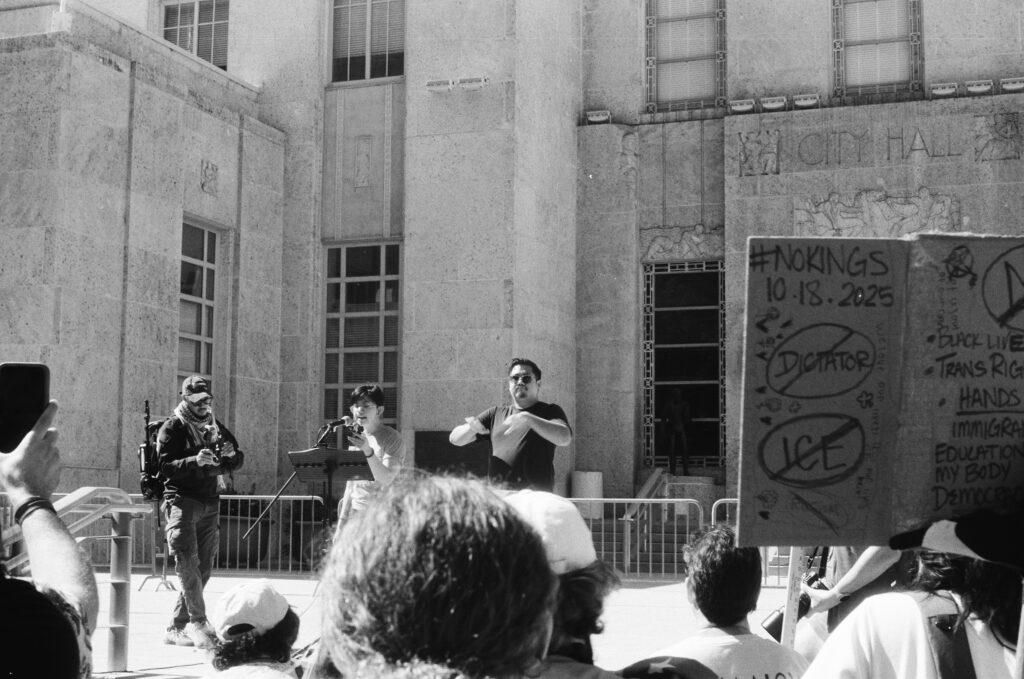
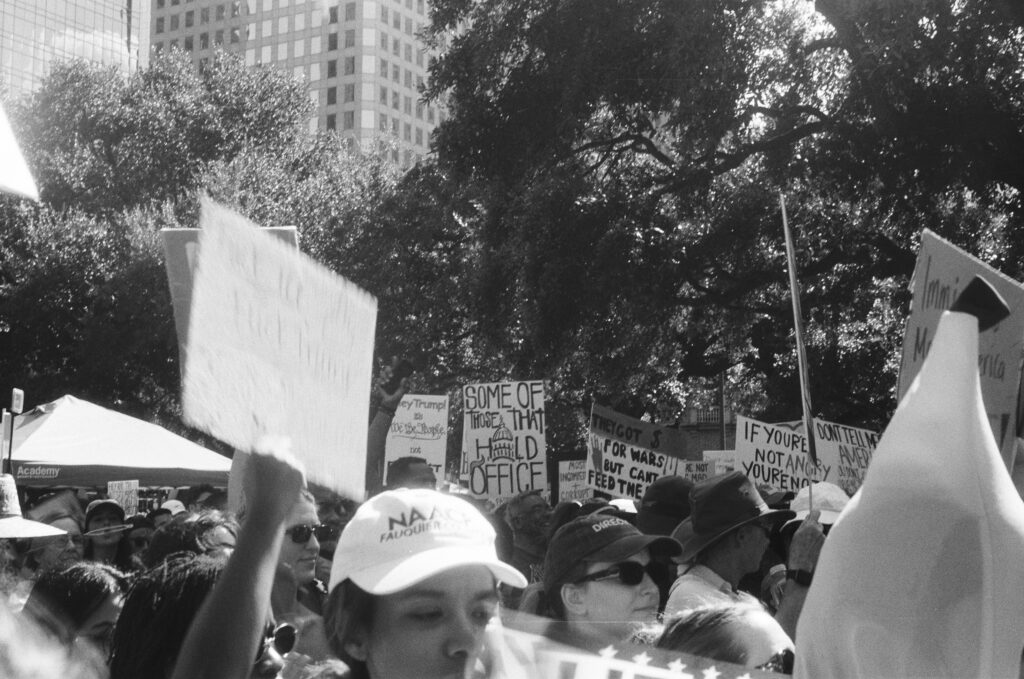
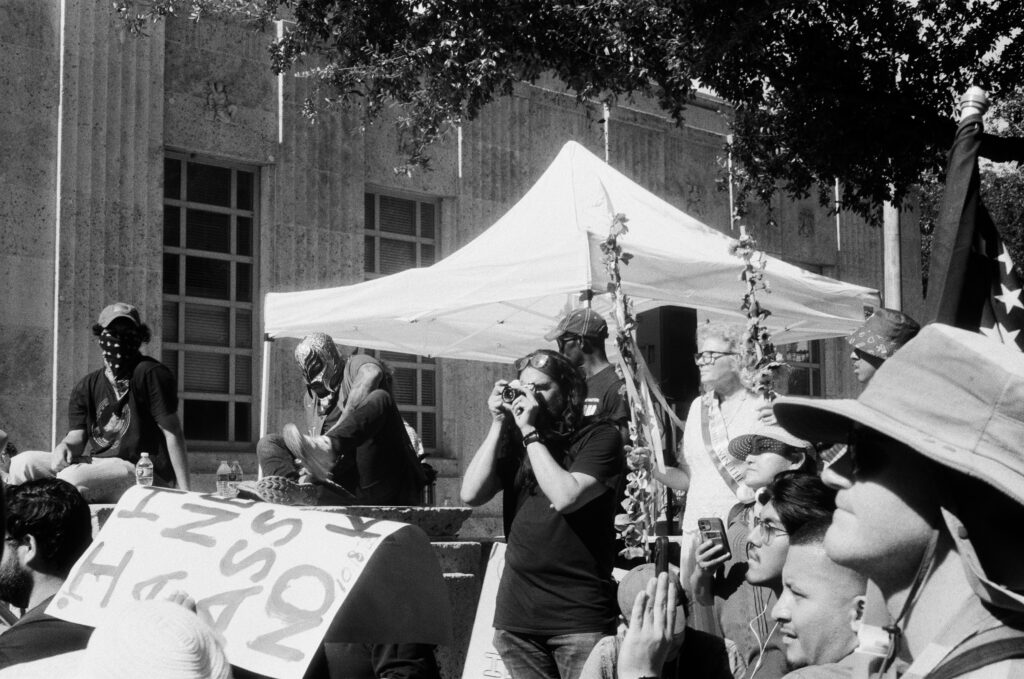
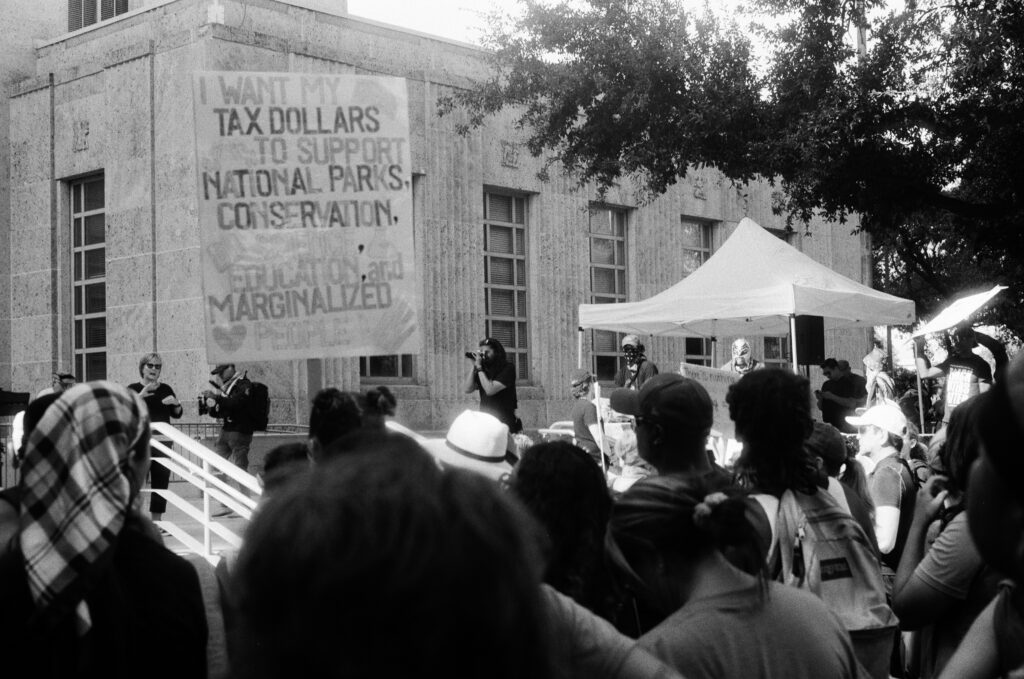
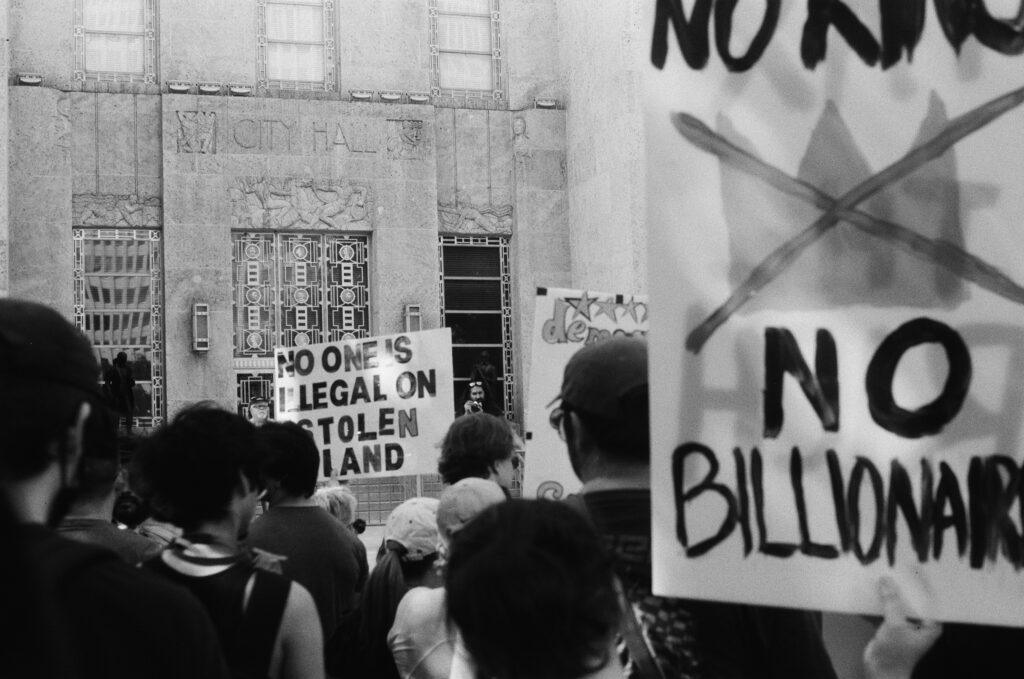
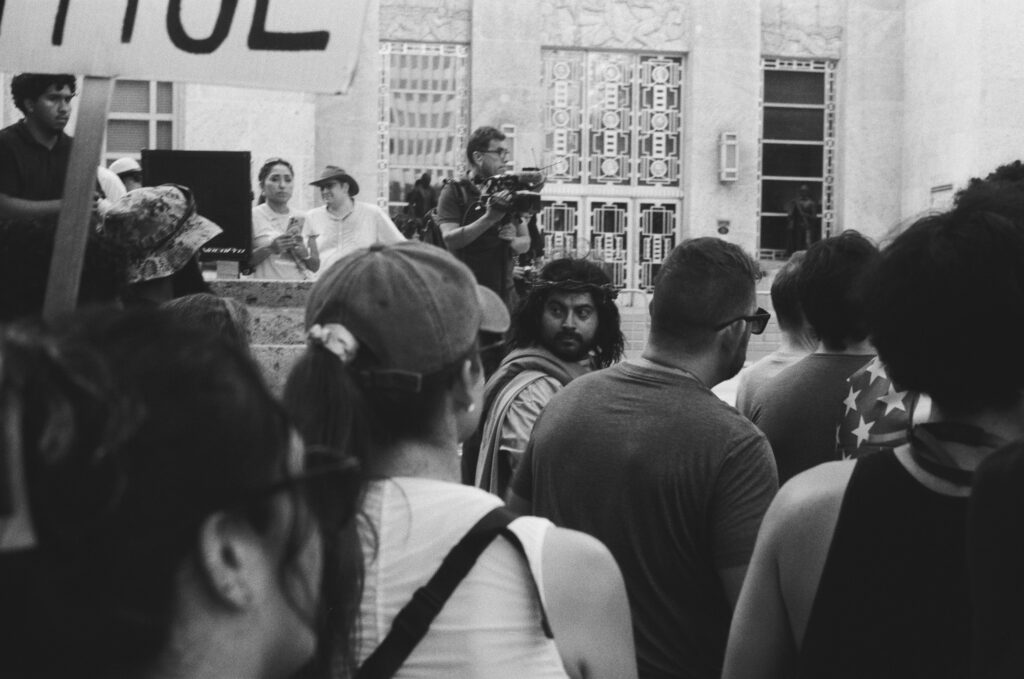
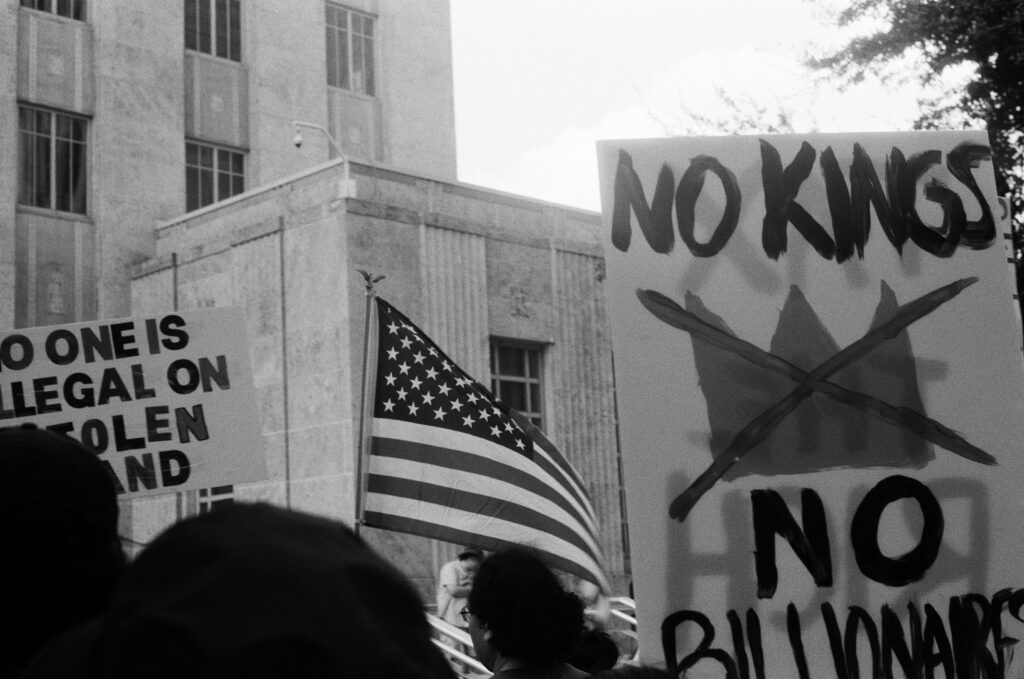
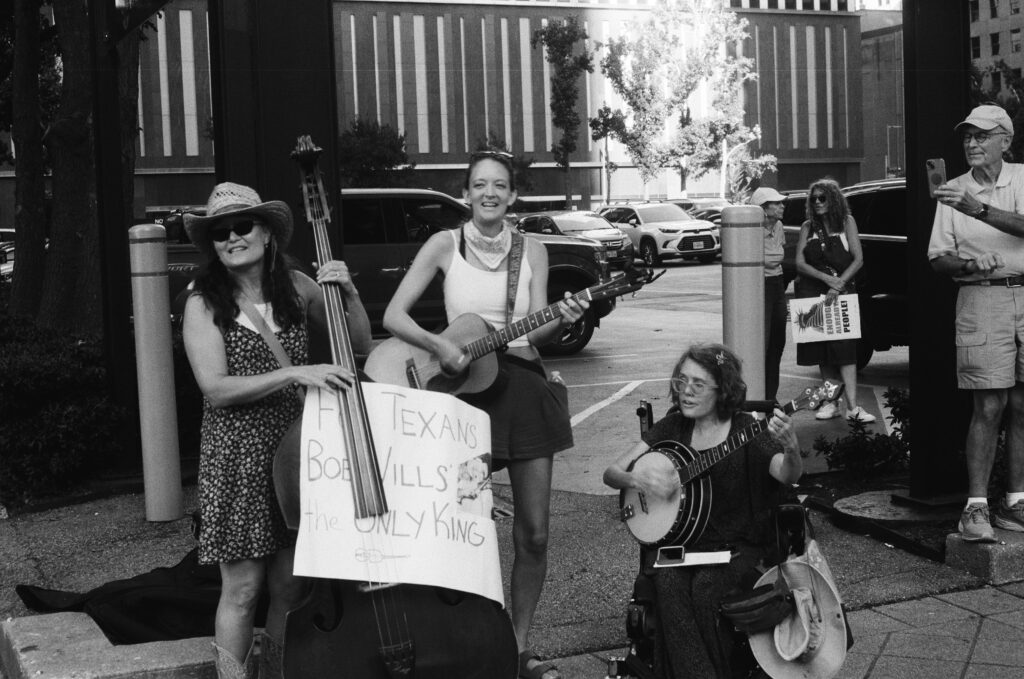
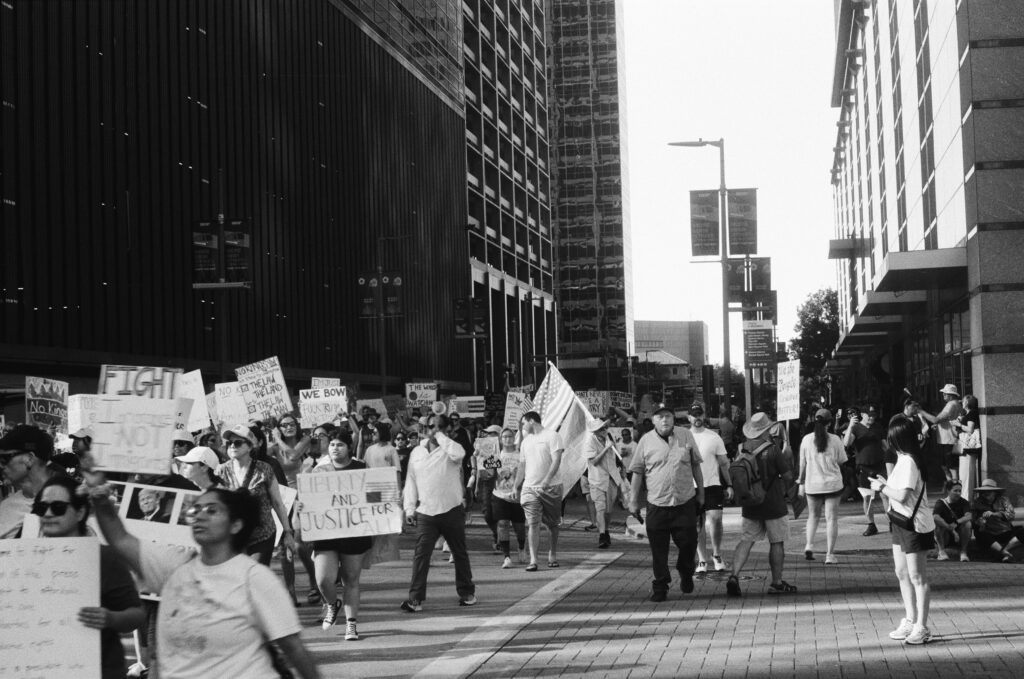
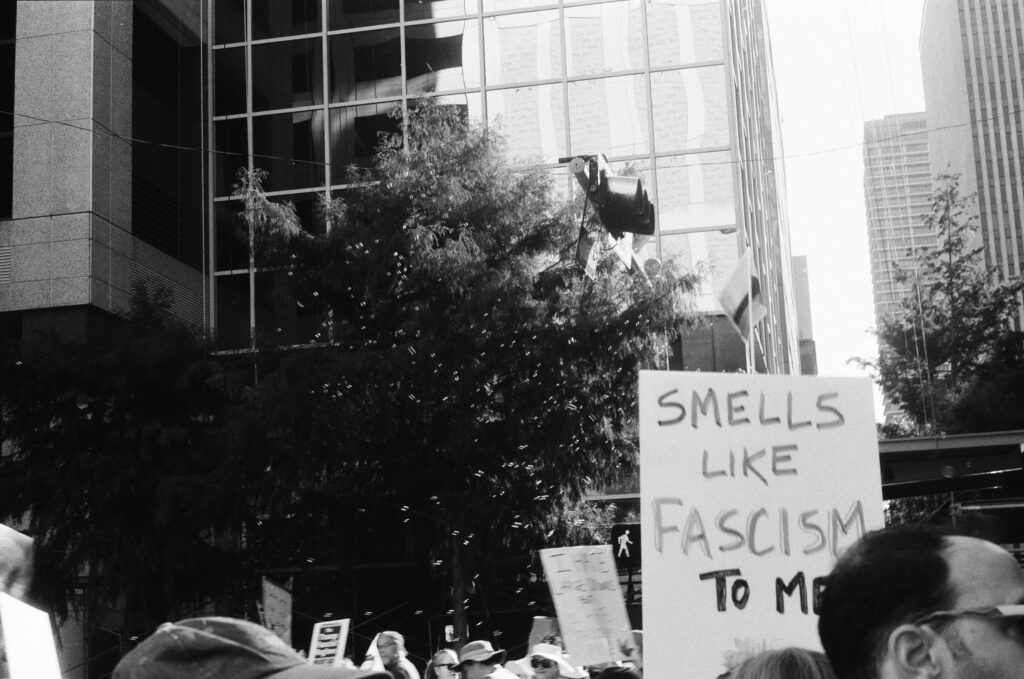
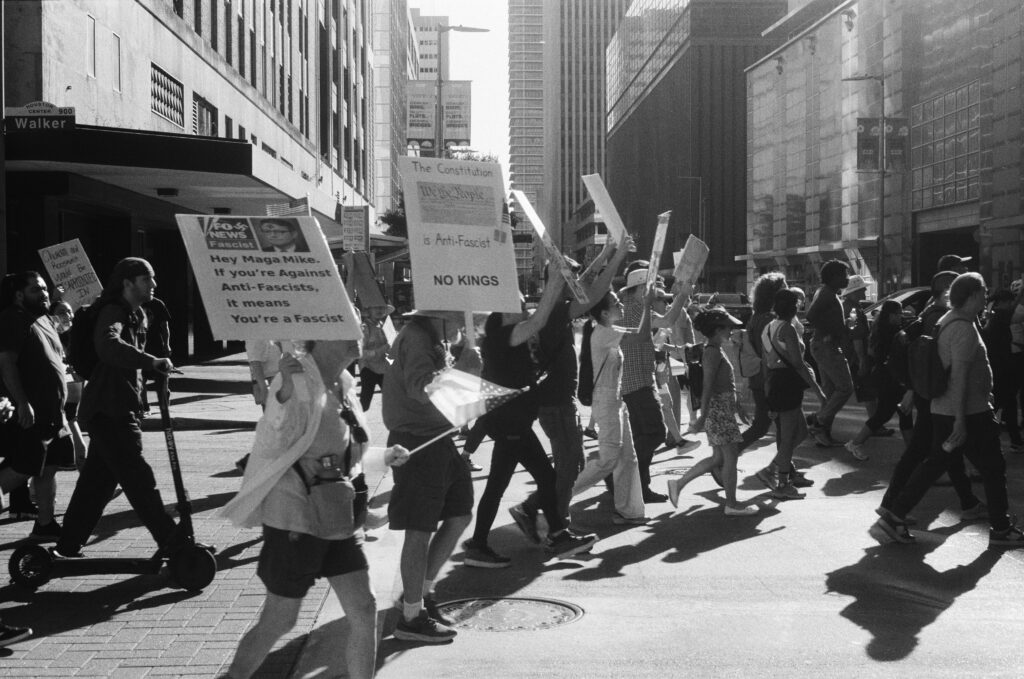
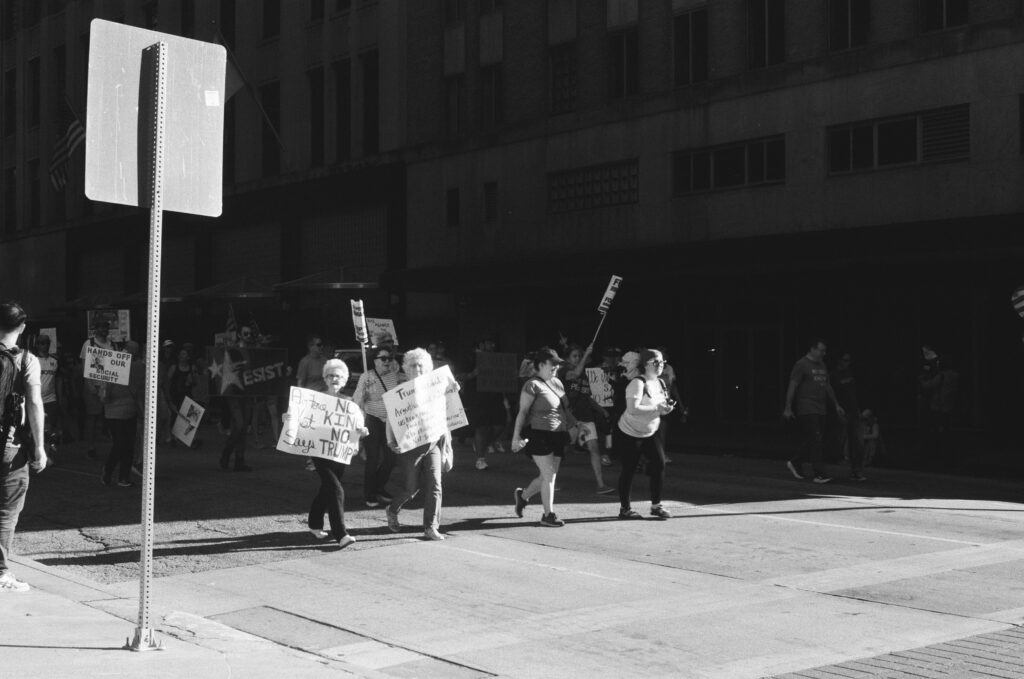
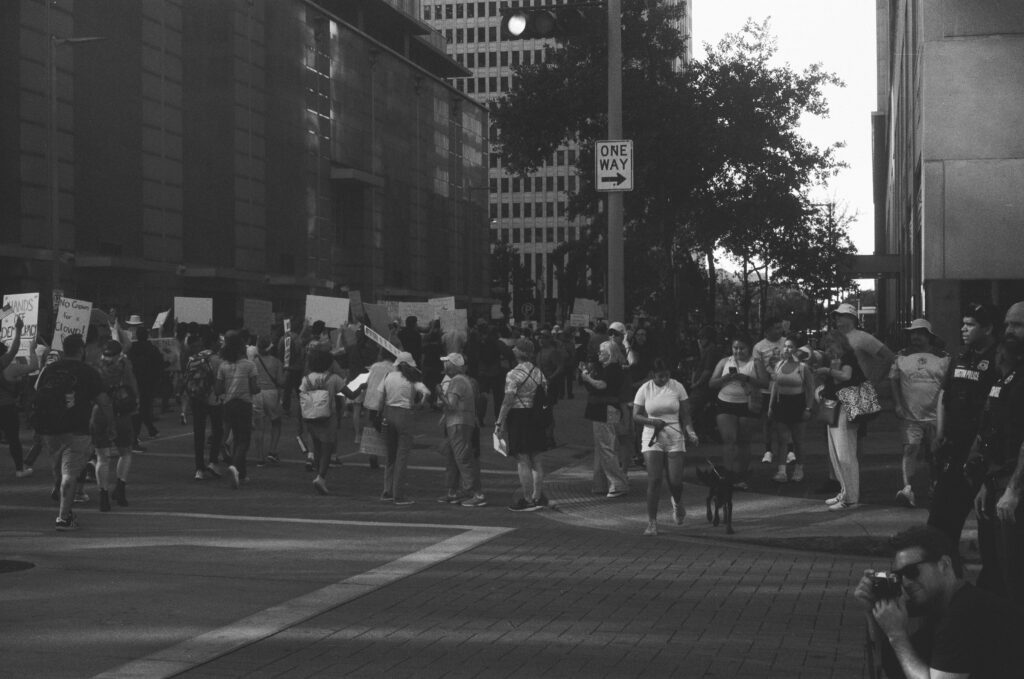
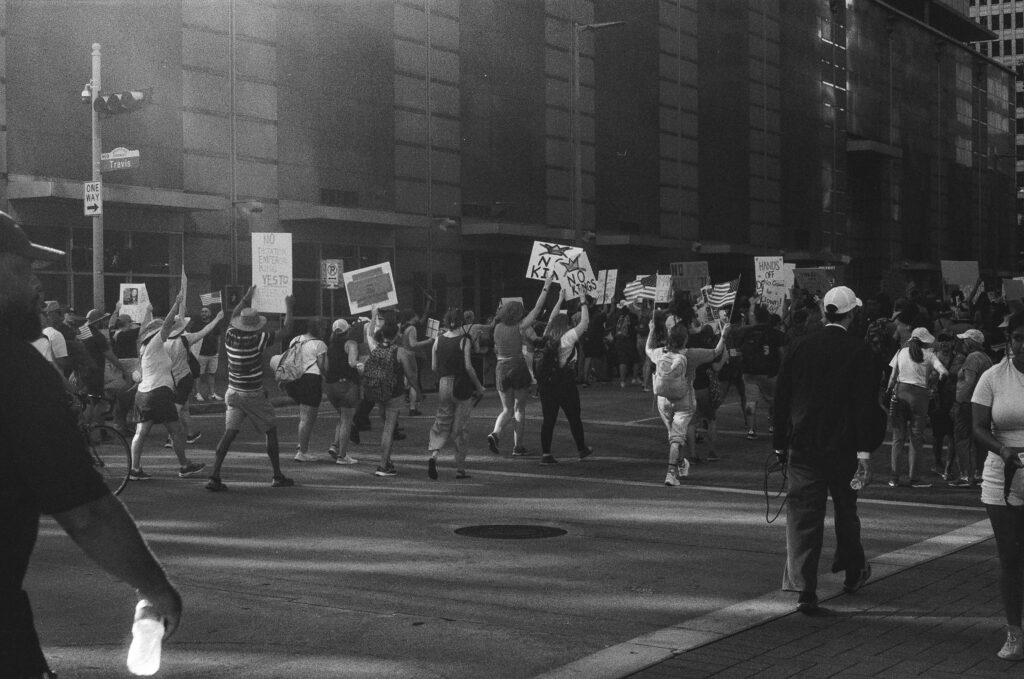
Loaded once again into the Zeiss Ikon Contaflex IV, the camera that refuses to die, I walked into downtown Houston as voices gathered in front of City Hall. The protest signs shouted, “NO KINGS,” “DEFEND DEMOCRACY,” “NO ONE IS ILLEGAL ON STOLEN LAND.”
The crowd was charged, peaceful, yet urgent — the kind of energy that black and white film captures better than color ever could.
9. The Film: FPP Mummy 400
FPP’s Mummy is a modern black-and-white negative film with a cinematic heart — punchy contrast, fine grain, and an ability to dig into shadows without losing texture.
It doesn’t romanticize the scene; it tells the truth with empathy.
Shot through the Tessar 50 mm f/2.8, the Contaflex handled the roll like it was built for this exact moment — because in a way, it was.
In the 1950s, when this camera was born, black-and-white film was not an artistic choice; it was the norm.
Manufacturers calibrated every mechanical curve, every optical coating, and every shutter blade to translate light into grayscale perfection.
When used today, it feels like returning the camera to its native language.
10. Through the Viewfinder at City Hall
Each frame came out deliberate and human — no machine learning, no burst mode, no pixel peeping. Just patience and timing.
- The crowd gathering under high noon, the glass towers of downtown reflecting light like stage lamps.
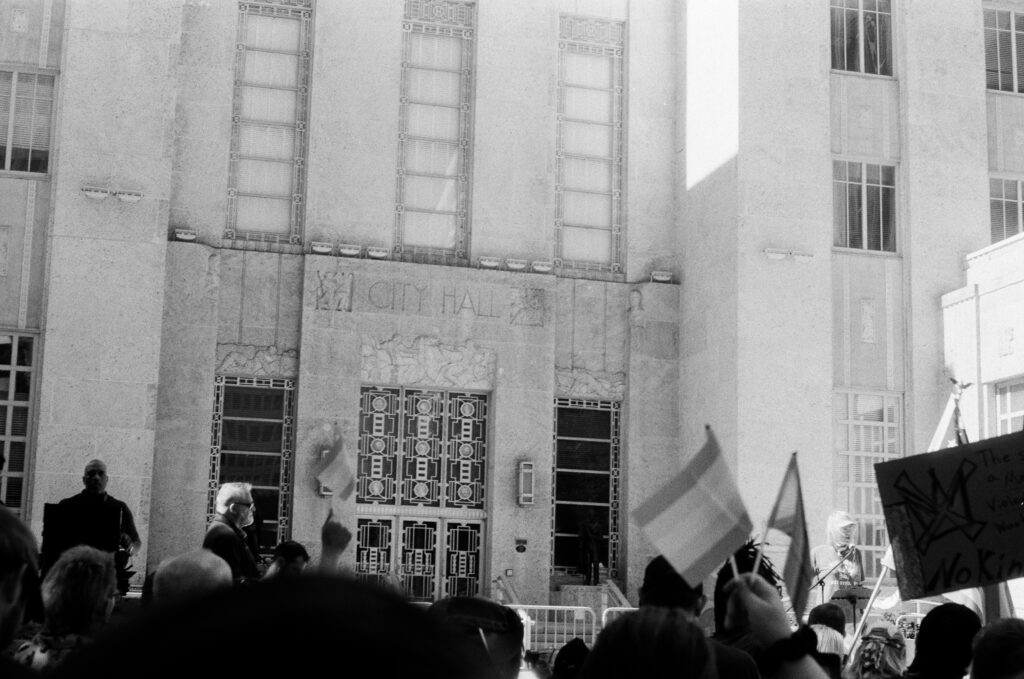
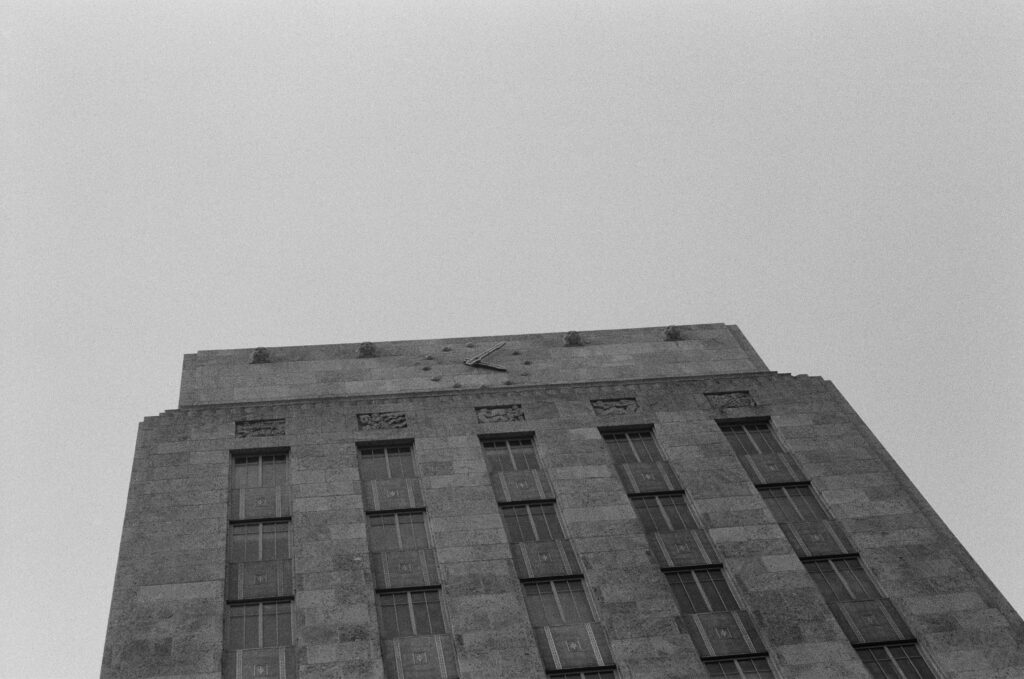
- City Hall’s limestone façade, weathered yet stoic, engraved with “CITY HALL” above the steps where generations have stood before.
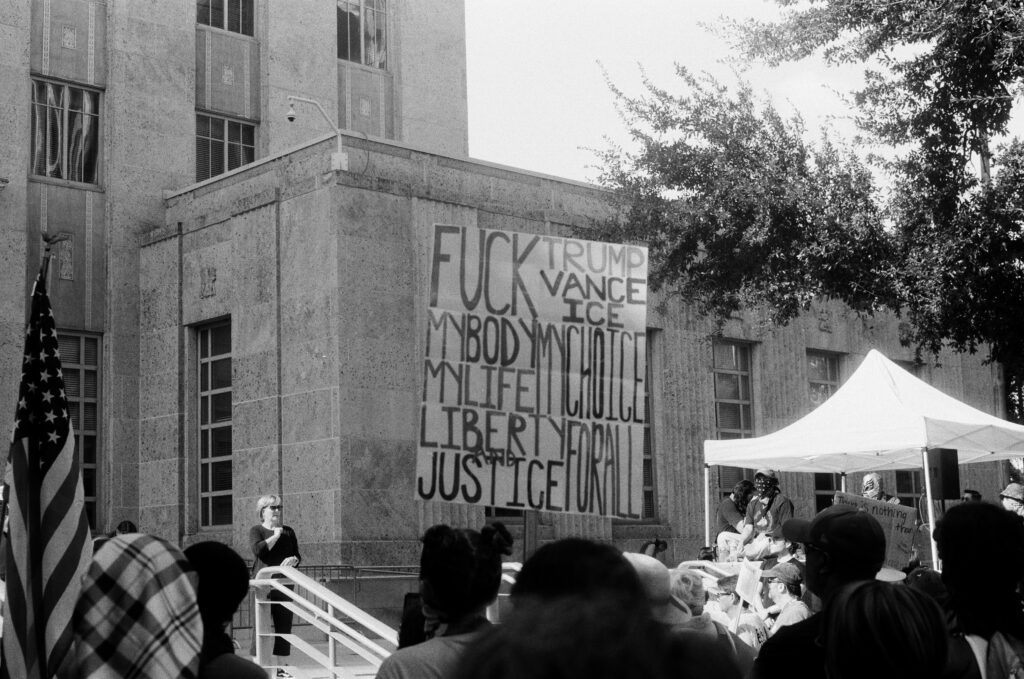
- A protester’s hand-lettered sign, bold words cutting through light haze: My Body, My Choice, My Life, Liberty and Justice for All.
- The last frame, a minimalist shot of the City Hall clock — hands frozen at 3:47 — a silent reminder that history is always ticking, whether or not we listen.
The tonal range of Mummy 400 through the Tessar lens gives something timeless — bright whites that don’t clip, blacks that anchor the emotion, and that soft mid-gray haze unique to mid-century optics.
There’s no perfection in these images. Just humanity rendered in silver halide.
11. Why the Contaflex Still Matters
Shooting protests on a 1957 Contaflex IV might seem like nostalgia, but it’s not.
It’s about grounding the moment — slowing it down enough to see it.
In an age where every phone records, posts, and scrolls, the Contaflex demands that you commit.
Each frame has a cost. Each shot has consequence.
That weight changes how you move, how you look, how you remember.
It’s remarkable that a camera engineered for mid-century Europe still documents twenty-first century America — not as a relic, but as a participant.
12. A Legacy in Light
Zeiss Ikon may no longer exist as it once did, but its fingerprints remain on every lens that values clarity over gimmick.
The Tessar formula — simple yet perfect — still shapes modern optics.
You can feel it in these frames: the edges of sun flare, the separation between marble and shadow, the honesty of human expression in natural light.
This isn’t just about keeping old cameras alive.
It’s about letting them show us that truth, composition, and patience never expired.
13. Closing Reflections
Part One was daylight color — an ode to nostalgia and sunlight.
Part Two is monochrome — a study of emotion, conflict, and collective memory.
Both rolls — CineStill 400D and FPP Mummy 400 — remind me that analog photography isn’t an escape from reality; it’s a confrontation with it.
You can’t overshoot, can’t delete, can’t auto-enhance. You live with your choices, grain and all.
From color to contrast, car shows to civic movements, the Contaflex IV still speaks fluently — one frame at a time.

Be the first to comment