

Notes From the Street: Venezuela, Protest Theater, and the Limits of Ideological Vision
I usually try to stay neutral.
Not because neutrality is fashionable, but because it’s necessary if you’re going to document public events honestly. When I show up to protests with a camera, my job isn’t to cheer, condemn, or validate anyone’s worldview. It’s to observe what actually happens, listen to what people say, and compare that to what’s verifiably true.
The protest I attended this week over Venezuela made that discipline harder to maintain—not because people were passionate, but because facts themselves were treated as hostile.
What I Walked Into
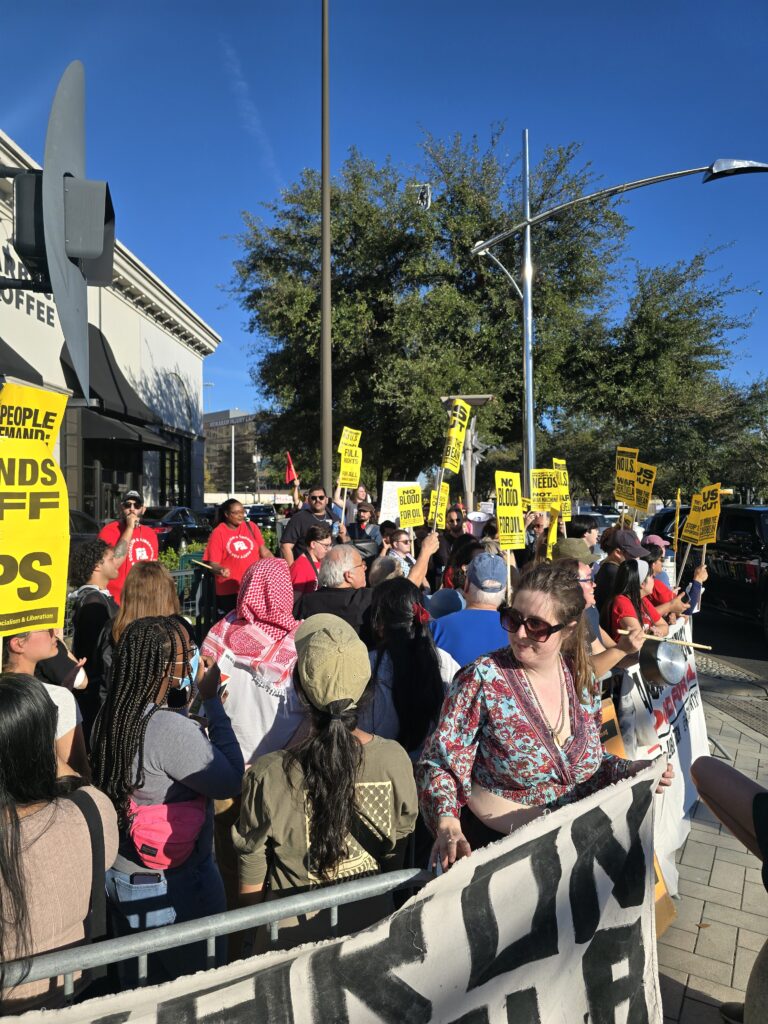
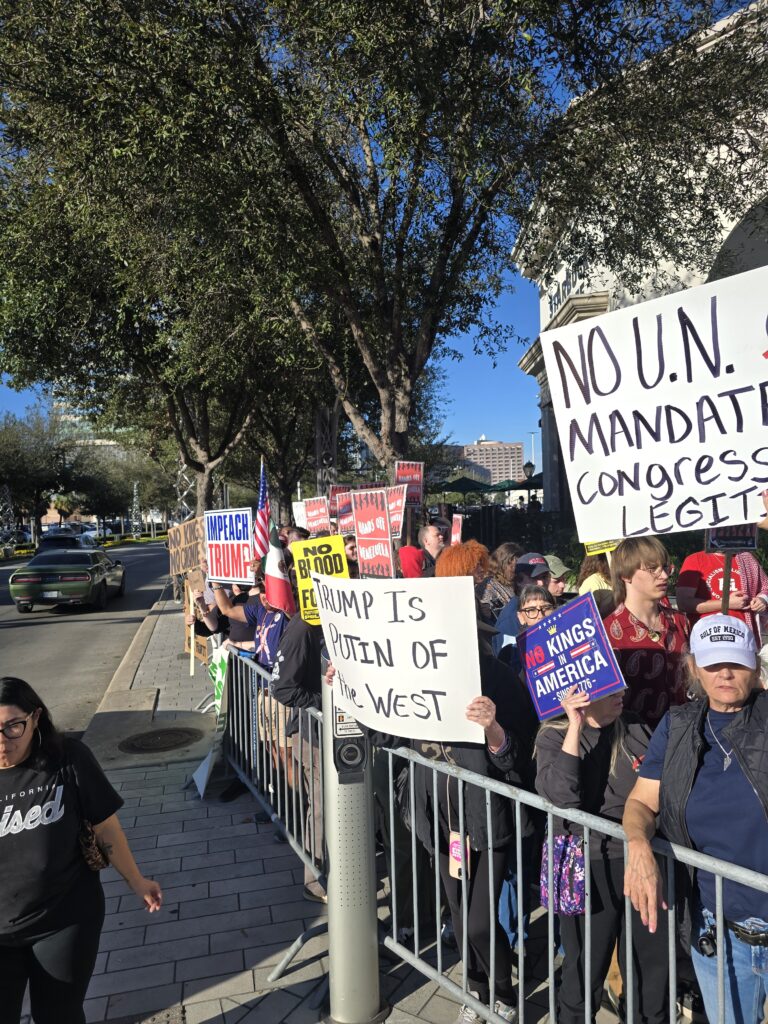
I pulled up to a protest organized by the Houston DSA—roughly 500 people deep. Loud. Organized. Confident. The rally centered on opposition to the Trump administration’s extradition of Nicolás Maduro to the United States.
As an independent journalist, I don’t live inside one media ecosystem. I read left, right, sideways, foreign press, court filings, and the boring documents nobody screenshots. That’s usually where things start to feel… weird.
Maduro isn’t some misunderstood figure. There’s documented election rigging, press suppression, narco-trafficking allegations, and a long list of countries that don’t recognize his legitimacy. Calling him anything but authoritarian is generous at best.
So watching a movement that proudly brands itself as anti-fascist show sympathy toward a strongman raised questions.
Not accusations. Questions.
When Facts Trigger the Shutdown Response
Here’s where the pattern became impossible to ignore.
Every time someone brought up factual context—court filings, video footage, Venezuelan voices, or even basic questions—the response was almost always the same:
“Ohhh, so you’re bringing smooth-brain right-wing propaganda now?”
Since when did facts become propaganda?
Since when did watching raw video—unedited clips of Venezuelans speaking for themselves, people cheering in the streets, showing daily life continuing uninterrupted—become some kind of ideological betrayal?
There are now hundreds of videos circulating of Venezuelans confronting protesters directly. Not pundits. Not politicians. Actual citizens explaining what they’re seeing and experiencing. And yet, those voices are dismissed outright—not because they’re wrong, but because they don’t fit the approved narrative.
That’s not skepticism. That’s ideological gatekeeping.
Rhetoric vs Reality
Nearly every credible report I’ve read describes the Venezuela operation as brief and targeted. Not a prolonged bombing campaign. Not the start of a new war. Not an occupation.
No U.S. troops are patrolling the streets of Venezuela. No checkpoints. No sustained military presence. They were in and out.
And yet, standing in the crowd, you’d think a full-scale invasion was underway.
That gap—between rhetoric and reality—kept pulling my attention back. It wasn’t subtle. It was structural.
Protest as Performance
Protests thrive on symbolism. That’s expected. What stood out here was how little curiosity there was for anything outside the script.
When challenged politely, many protesters didn’t respond with counter-arguments—they responded with moral slogans. “No war.” “U.S. empire.” “Hands off Venezuela.” These phrases weren’t used as starting points for discussion, but as shields against it.
Nobody wants to be wrong. That’s human nature.
But at some point, refusing to listen stops being ignorance and starts becoming ego preservation.
If your identity is built around always opposing one man—Donald Trump—then no evidence will ever be sufficient to disrupt that position. Everything he does must be evil by definition, even if opposing it requires abandoning logic, context, or common sense.
That’s not analysis. That’s programming.
Perception Replacing Observation
At one point during the protest, someone near me claimed police were there “to suppress the crowd.”
What I actually saw were officers stopping traffic so nobody got clipped by a car.
No batons.
No kettling.
No escalation.
Somewhere between perception and reality, the story changed. And that moment perfectly encapsulated the entire event.
This is why I shoot protests. Not to pick sides—but to capture that gap.
About the Images
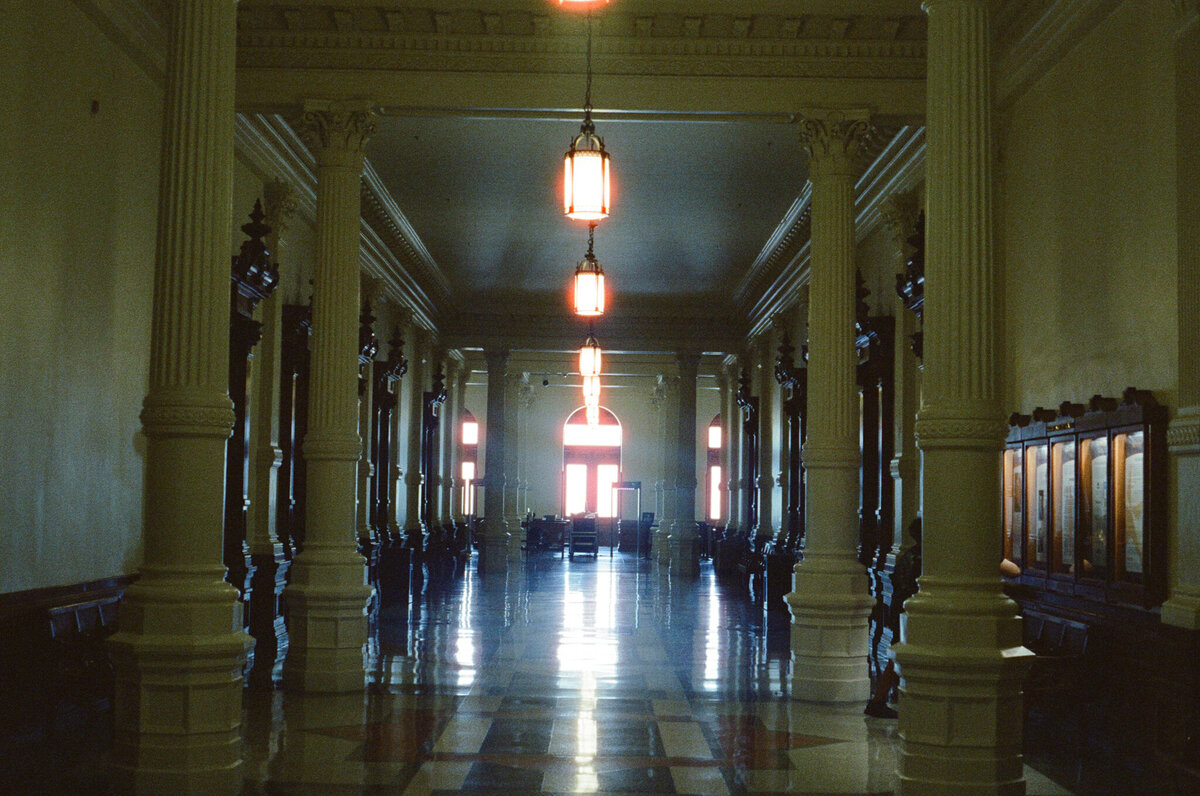
The video you saw was shot on my cellphone—a quick preview while the film gets developed. Digital has its uses, primarily when documenting real-time events.
The stills were captured the slow way:
MC Manual ISO 100 color, Wolfman 100, and Flic Film Pan 100, all through the Canon T90 with the 50mm and 28mm.
No edits.
No agenda.
Just film, light, and the moment.
The rest is for the public to decide.
Final Thought
I try to stay hypervigilant—absorbing information from every direction. From that vantage point, this doesn’t feel like the beginning of something historic. It feels like a spike in reaction.
Will this blow over in a week?
Will the 24/7 news cycle pivot to something else by Monday?
Probably.
What concerns me more is how quickly large segments of the political left now treat facts as threats. When evidence is dismissed as “propaganda,” when video is ignored because it contradicts belief, and when being wrong is treated as a moral failure rather than part of learning, something breaks.
If people would just stop, breathe, and loosen their grip on the idea that they can never be wrong, they might come to the same conclusion many others already have: that this situation is far more limited, complex, and grounded in reality than the slogans suggest.
As an independent journalist, my job isn’t to protect anyone’s ideology. It’s to document what’s in front of me.
This time, what I saw was certainty without curiosity—and that should concern all of us, no matter where we fall politically.

Be the first to comment