


Silver vs Silicon: Why Film Feels More Real Than Digital
Both film and digital cameras capture light that has traveled across unimaginable distances. But only one lets that light permanently rearrange matter.
Introduction: Light From the Universe, Caught Two Ways
Every photograph—film or digital—begins the same way.
A photon leaves the sun. Or a streetlamp. Or a star that exploded before humans ever existed. That photon travels across space, survives atmospheric distortion, bounces off a face, a building, a protest sign, a car hood, and finally enters a camera.
From there, the paths diverge.
One path turns light into numbers.
The other lets light scar matter.
This post is unapologetically biased toward film—not out of nostalgia, but because when you strip photography down to physics, chemistry, and elemental reality, silver still wins.
What 35mm Film Is Actually Made Of
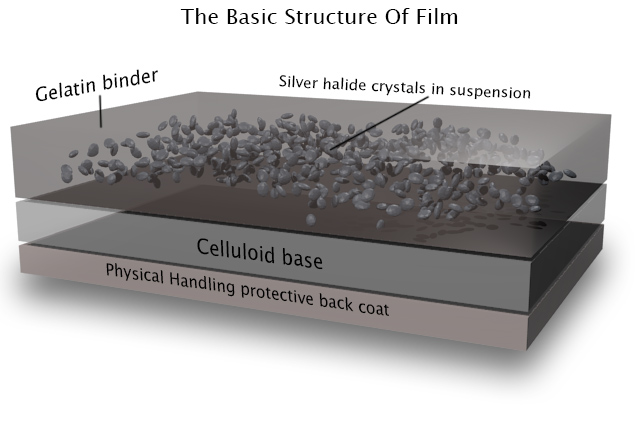
Before aesthetics, before grain, before “the look,” film is a physical object built from the Earth.
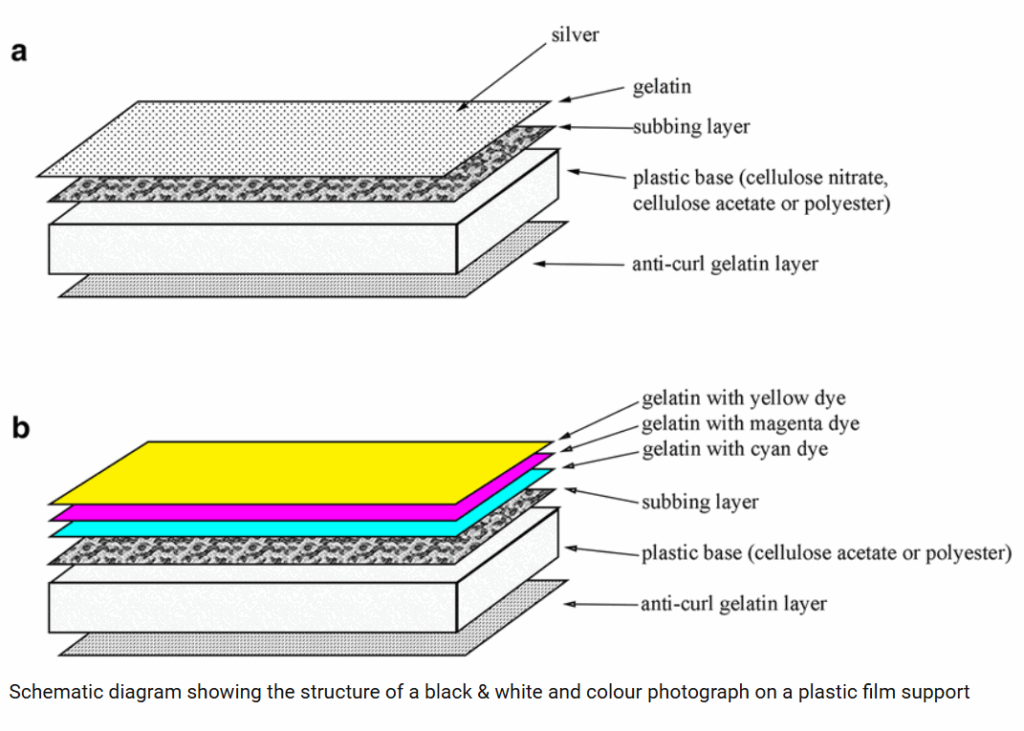
The Film Base
Most modern 35mm film uses:
- Cellulose triacetate or polyester
- Derived from wood pulp or cotton
- Flexible, organic-origin materials
This is not a circuit board. It is closer to paper than plastic.
The Emulsion: Where the Image Lives
The heart of film is the emulsion—a suspension of:
- Silver halide crystals
- Silver bromide (AgBr)
- Silver chloride (AgCl)
- Silver iodide (AgI)
- Suspended in gelatin
- Gelatin is rendered animal collagen
- Literally biological material
If you’re reading this and thinking:
“Wait… AgBr… that sounds familiar.”
Hey 👋
You’re not wrong.
This—silver bromide (AgBr)—is literally where Project AgBr Media gets its name.
Not a metaphor.
Not branding fluff.
Actual chemistry.
Ag = Silver
Br = Bromine
Together, they form one of the primary light-sensitive compounds in photographic film. When photons hit AgBr crystals, they don’t just bounce off—they do something. They rearrange atoms. They leave evidence.
That idea stuck with me.
I wanted the name to point back to the material truth of photography—the part that exists before presets, before pixels, before uploads. The part where light physically alters matter and says: this happened.
So every time you see AgBr in this post, that’s not just a chemical formula—it’s the foundation of how I think about images, memory, and why film still matters.
Alright. Back to the regularly scheduled film bias.
Let that sink in:
Bones, chemistry, and mined silver are holding your image.
How Film Records Light (Not Data)
When light hits film:
- Photons strike silver halide crystals
- The crystal lattice is physically altered
- A latent image forms—real, invisible, already there
- Development converts altered crystals into metallic silver
After development:
- Dark areas are literally silver metal
- Highlights are areas where silver was removed
- The image is matter rearranged by light
This is not metaphor.
It is chemistry.
The photograph exists even if no one scans it.
What Digital Sensors Are Made Of
Digital cameras are marvels of engineering—but they belong to a different world.
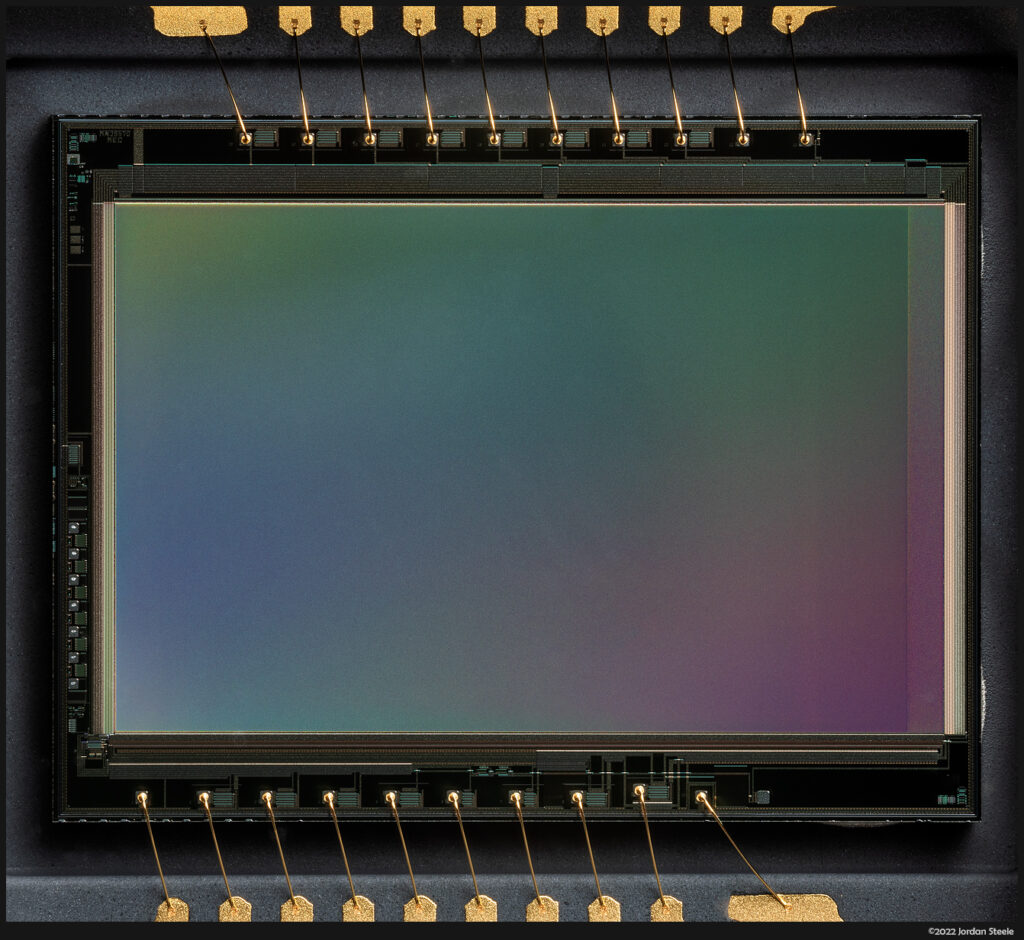
The Core: Silicon
Digital sensors are built on:
- Silicon wafers
- Silicon comes from quartz (sand)
- Refined in extreme industrial processes
- Purity levels far beyond anything found in nature
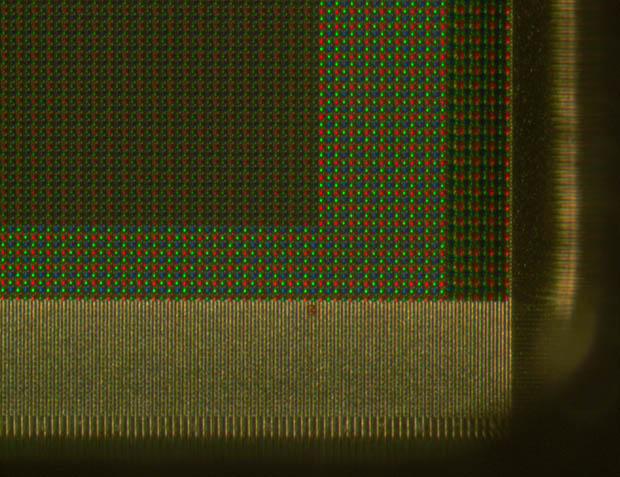
Supporting Layers
- Photodiodes doped with boron and phosphorus
- Color filter arrays (usually Bayer patterns)
- Microlenses made from polymers or plastics
- Metal wiring thinner than bacteria

How Digital Records Light (Measurement, Not Memory)
When light hits a digital sensor:
- Photons release electrons
- Electrons generate voltage
- Voltage is sampled
- Samples become numbers
- Numbers become a file
No physical image exists.
Only instructions.
Delete the file, and the photograph is gone forever.
The sensor itself remembers nothing.
Elemental Reality: Silver vs Silicon
Let’s be blunt.
| Film | Digital |
|---|---|
| Mined silver | Refined silicon |
| Animal gelatin | Industrial polymers |
| Light rearranges matter | Light triggers electronics |
| Image exists physically | Image exists as data |
| Latent image before viewing | Nothing until processed |
| Degrades naturally | Fails digitally |
Film is alchemical.
Digital is computational.
Cosmic Light, Two Philosophies
Yes—both film and digital capture cosmic light.
But the relationship to that light is different.
Film’s Relationship to the Universe
- Light collides with matter
- Matter is permanently changed
- The photograph becomes a fossil of an event
Film absorbs history.
Digital’s Relationship to the Universe
- Light is sampled
- Converted into signals
- Stored temporarily
Digital measures history.
Why Film Feels More Real (Because It Is)
Film isn’t perfect—and that’s the point.
Silver halide crystals are:
- Random
- Uneven
- Non-repeatable
- Subject to entropy
Every frame is unique at the atomic level.
Two exposures can never be identical, even under identical conditions.
Digital strives for precision.
Film accepts uncertainty.
Reality is uncertain.
Permanence, Mortality, and Memory
A strip of film can be:
- Held
- Lost
- Found decades later
- Rediscovered without software
- Read with light alone
A RAW file:
- Requires electricity
- Requires compatible hardware
- Requires software
- Requires future support
Film dies slowly, like paper or bone.
Digital dies suddenly.
Film as Physical Witness
This is why film matters—especially for documentary work.
Film doesn’t just represent a moment.
It contains it.
That protest.
That street corner.
That car passing under sodium vapor light.
That face, that night, that fraction of a second—
They physically altered silver pulled from the Earth.
No update can overwrite that.
Closing: Choose Your Medium, Know Your Truth
Digital photography is powerful.
It is fast.
It is precise.
It is indispensable.
But film is something else entirely.
Film is:
- Earth
- Chemistry
- Time
- Light made solid
Film doesn’t record light.
It absorbs it, rearranges itself, and remembers.
Take the flak.
Silver can handle it.

Be the first to comment