

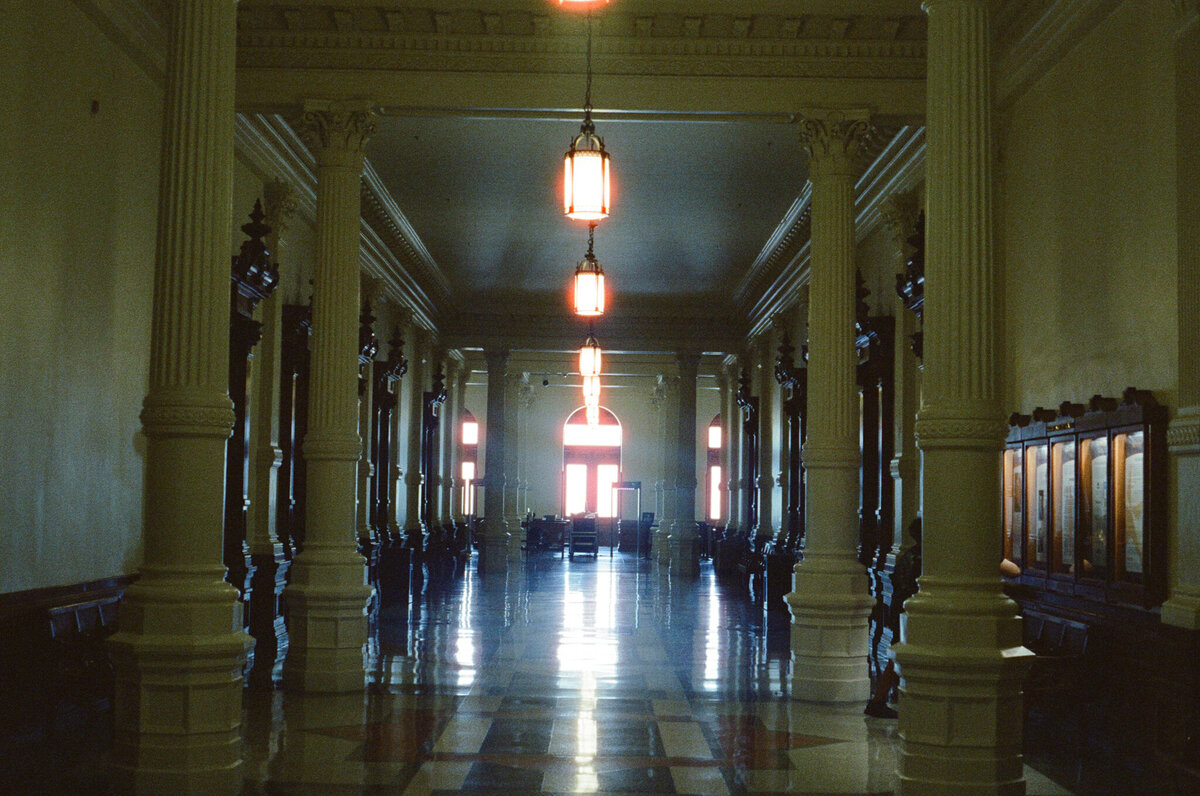
Venezuela Protest, Part II — After the Chants Fade
(Independent field notes, photography, and context from Houston)
What Changed After the Cameras Went Quiet
Twenty-four hours later, the story had already moved on.
That isn’t an opinion; it’s an observation. The news cycle pivoted, the slogans stopped trending, and a different headline replaced Venezuela almost overnight. The speed of that shift matters because it exposes something structural about how modern protest narratives are built and discarded.
In the moment, the rhetoric was absolute: no war, hands off, this changes everything. Within a day, it was background noise.
This follow-up isn’t about relitigating slogans. It’s about documenting what happens after certainty burns off—and what remains when you compare claims, outcomes, and evidence.
Scripted Reactions vs. Measurable Reality
Standing in the crowd, it is evident that many participants had already arrived and were already fluent in the talking points. That isn’t unusual—movements depend on repetition. What stood out was how quickly dissenting facts triggered a shutdown rather than a discussion.
Bring up court filings? Dismissed as propaganda.
Reference video from Venezuelan civilians? Written off as staged.
Ask whether the operation matched the language being used to describe it. Accused of bad faith.
That reflex matters more than any individual argument. When a movement treats curiosity itself as betrayal, it stops being analytical and starts being performative.
Performance travels well online. Reality doesn’t always.
A Narrow Operation Framed as an Existential Crisis
What the evidence actually showed was limited and targeted. No prolonged occupation. No sustained military presence. No escalation beyond the specific objective being discussed at the protest.
Yet the language on the street implied something much larger.
This gap—between rhetoric and scope—is where documentation becomes essential. Not to persuade, but to preserve proportion. When everything is framed as catastrophic, nothing is.
Protest as Identity Maintenance
For some attendees, opposition wasn’t situational—it was foundational. If your political identity is anchored to opposing a single figure or administration, then every action taken by that administration must be interpreted as illegitimate by default.
That mindset doesn’t require evidence; it requires consistency.
Once that consistency becomes more important than accuracy, facts stop functioning as inputs and become threats.
Where the Photos Fit In
This is where photography matters.
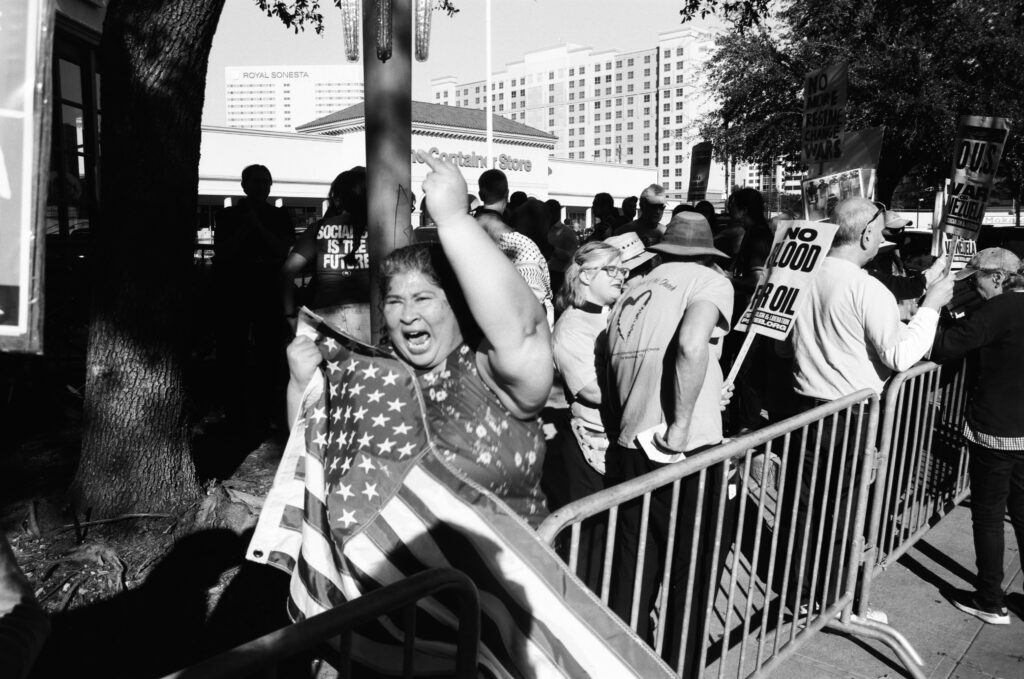
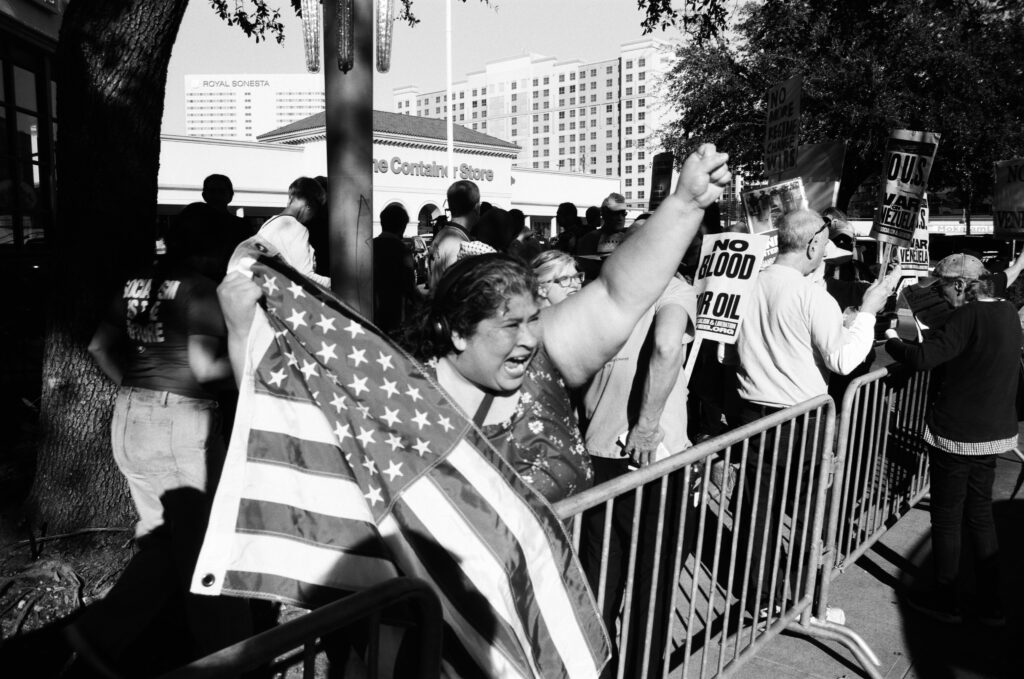
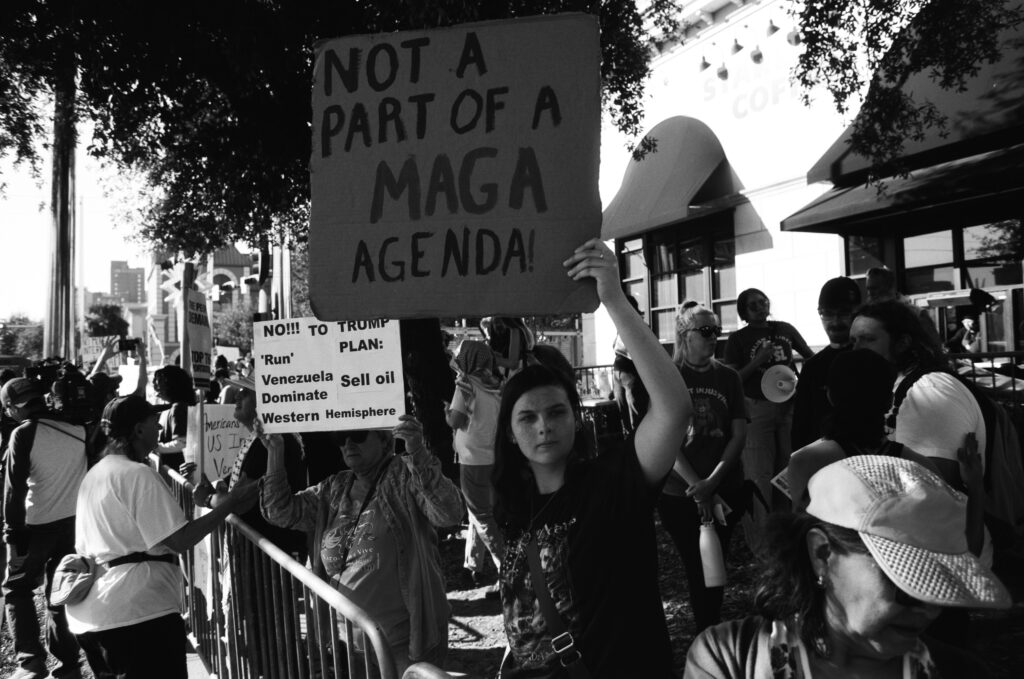
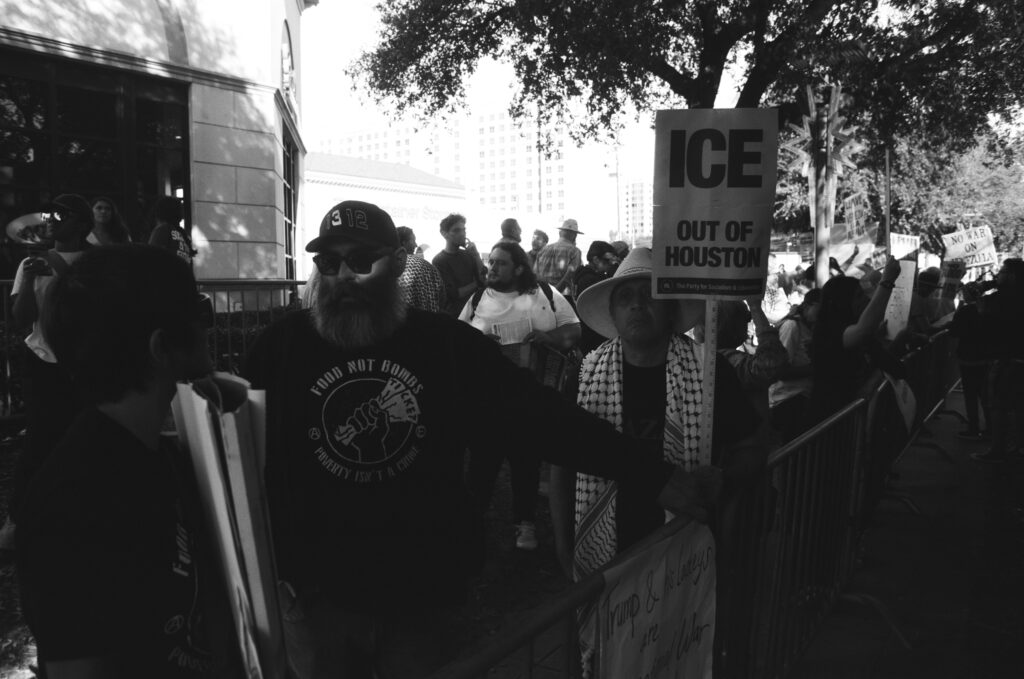
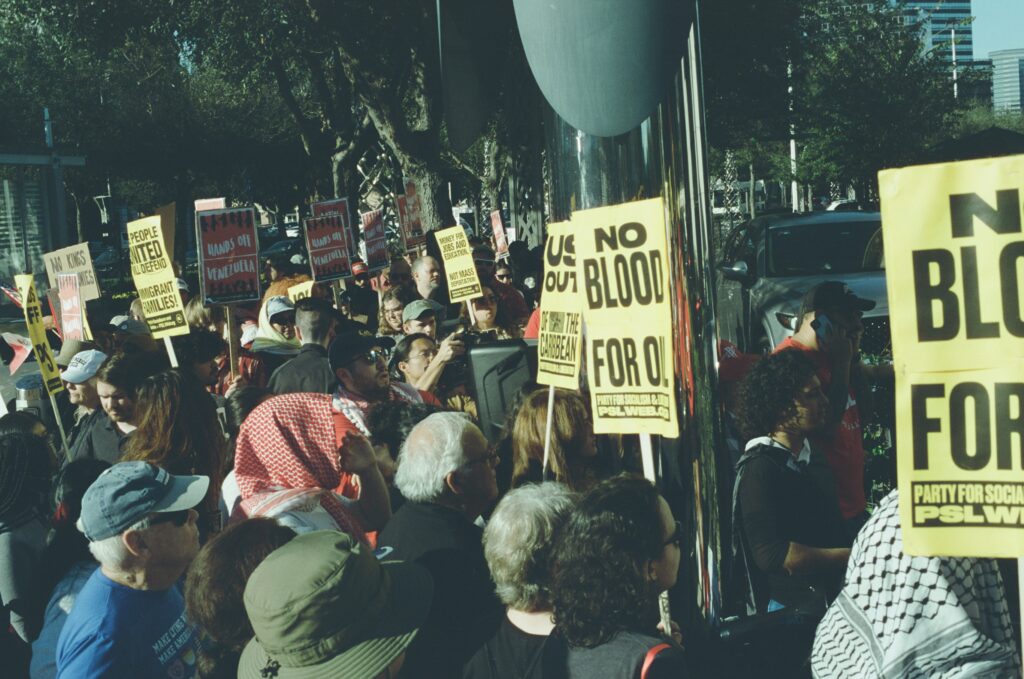
Still images don’t argue. They don’t chant. They don’t compress context into slogans. They simply show who was there, what was said, and how people interacted with the space around them.
The frames below aren’t curated to flatter or indict. They’re ordered to reflect the flow of the event as it unfolded.
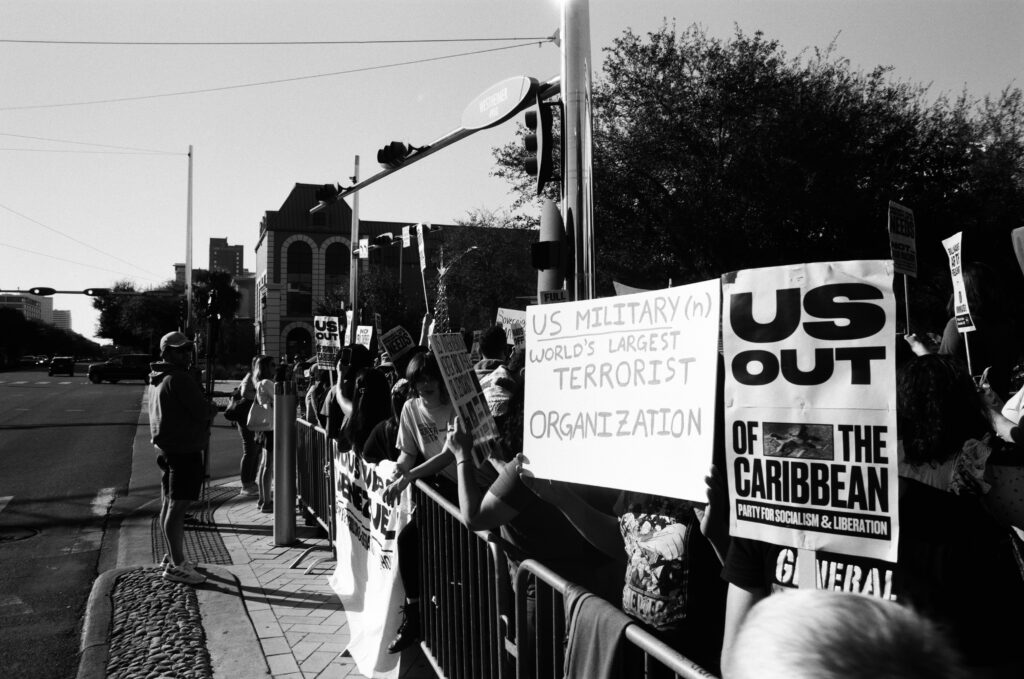
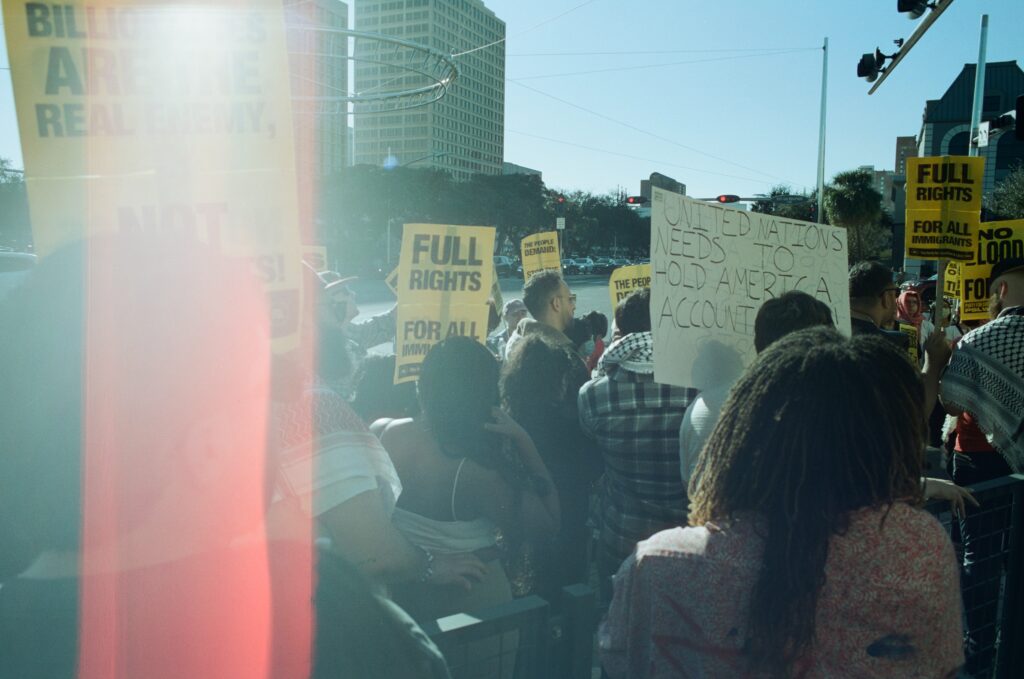
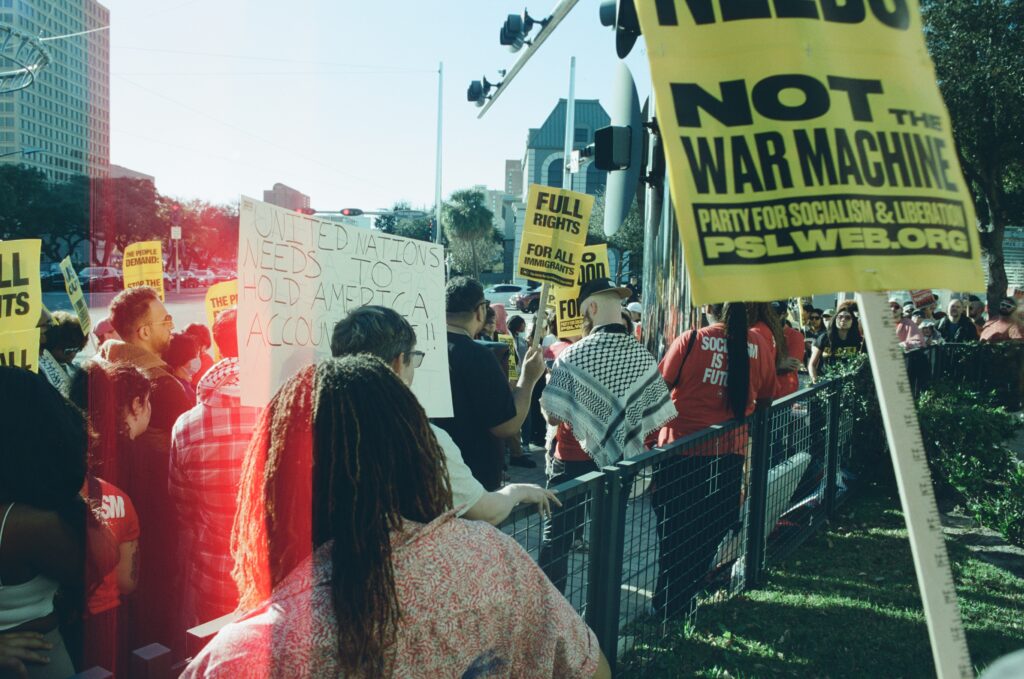
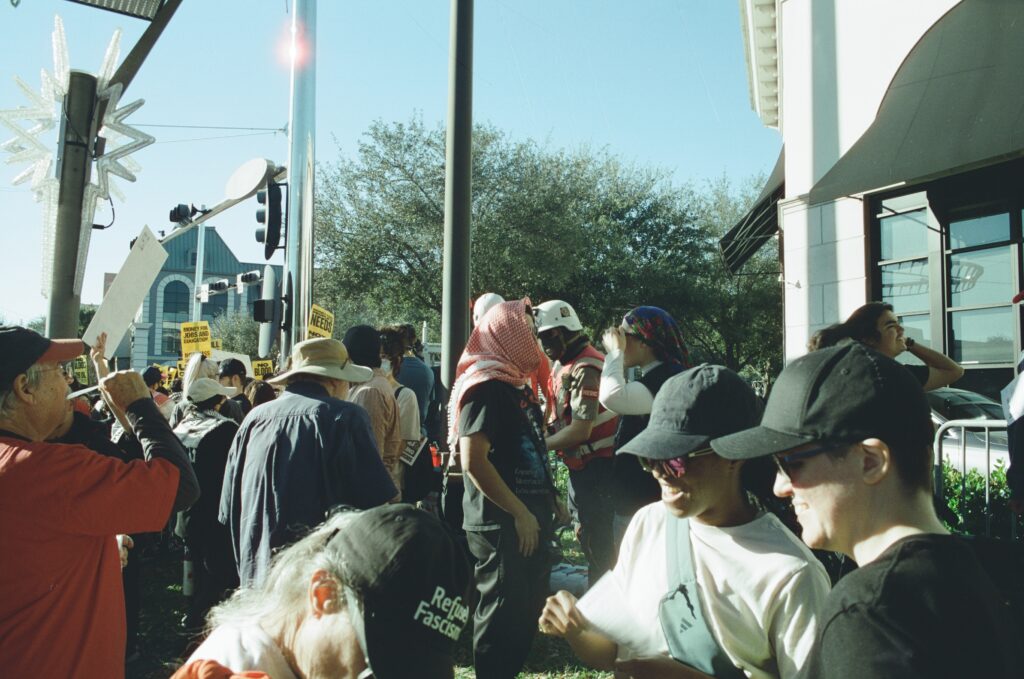
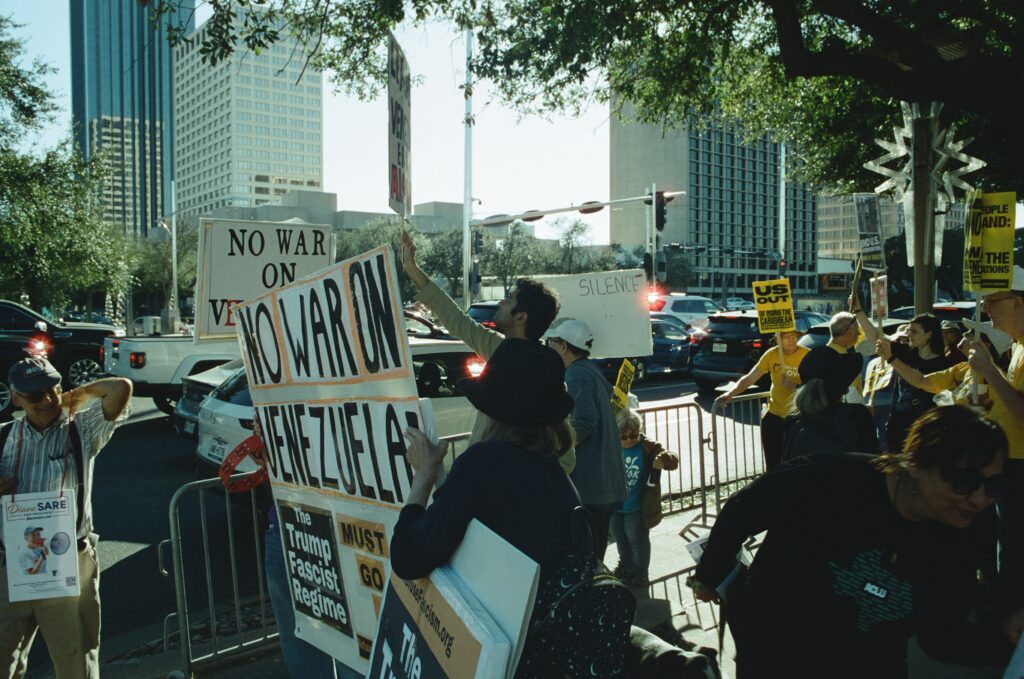
PHOTO SET — STREET & CROWD CONTEXT
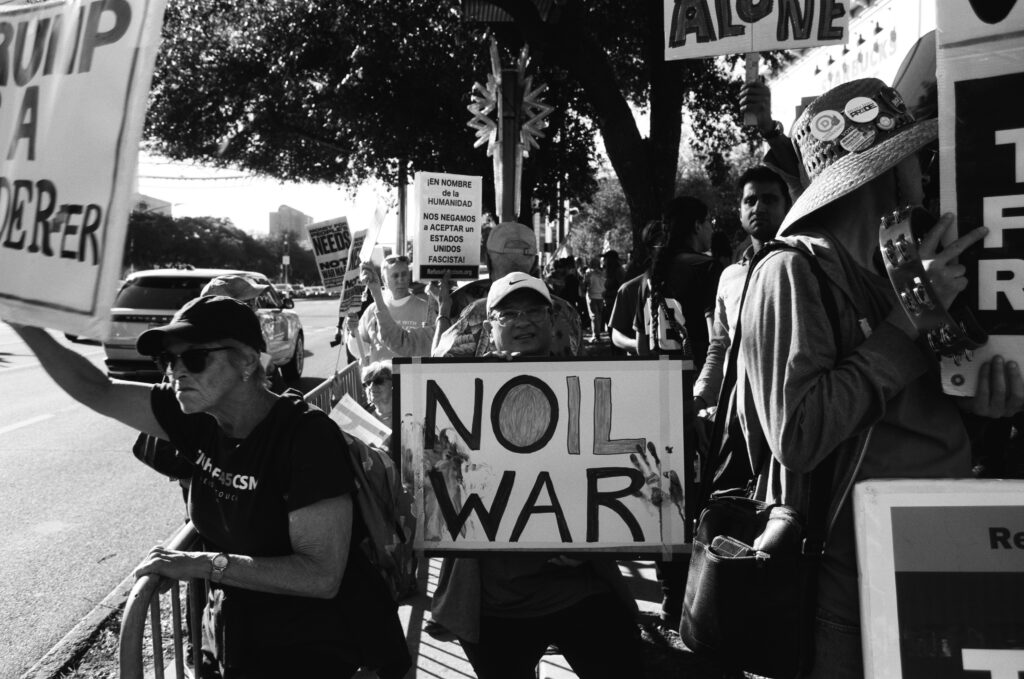
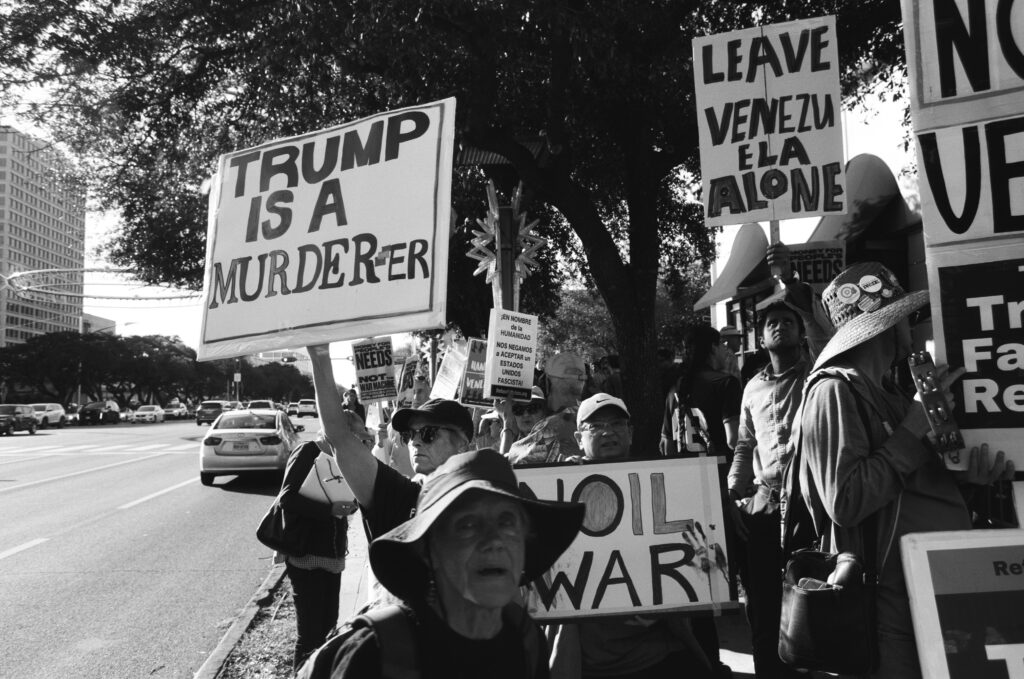
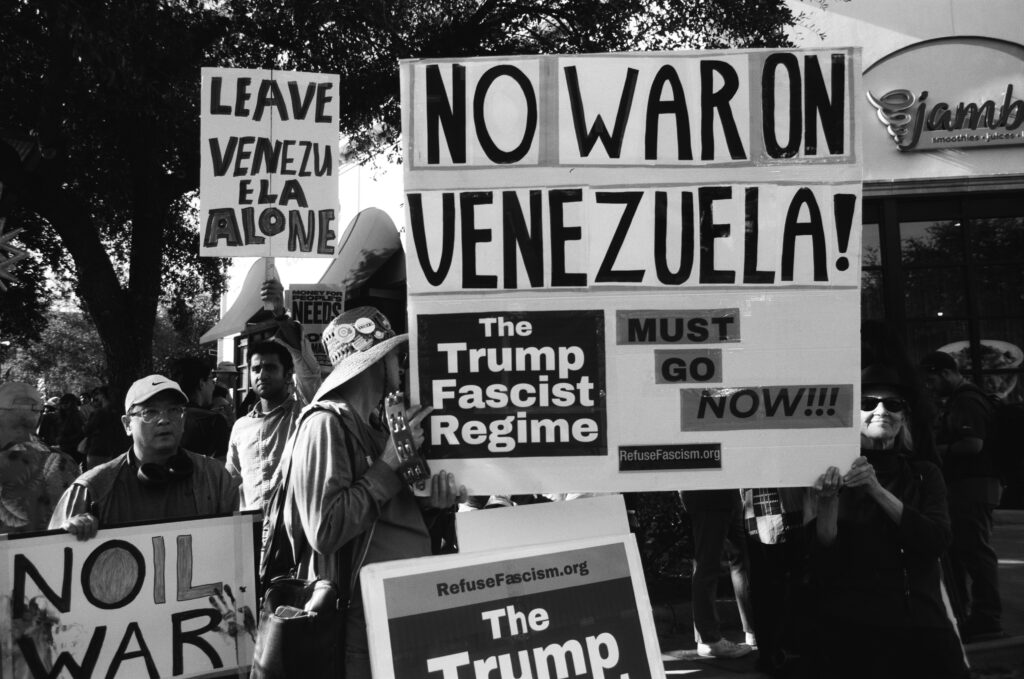
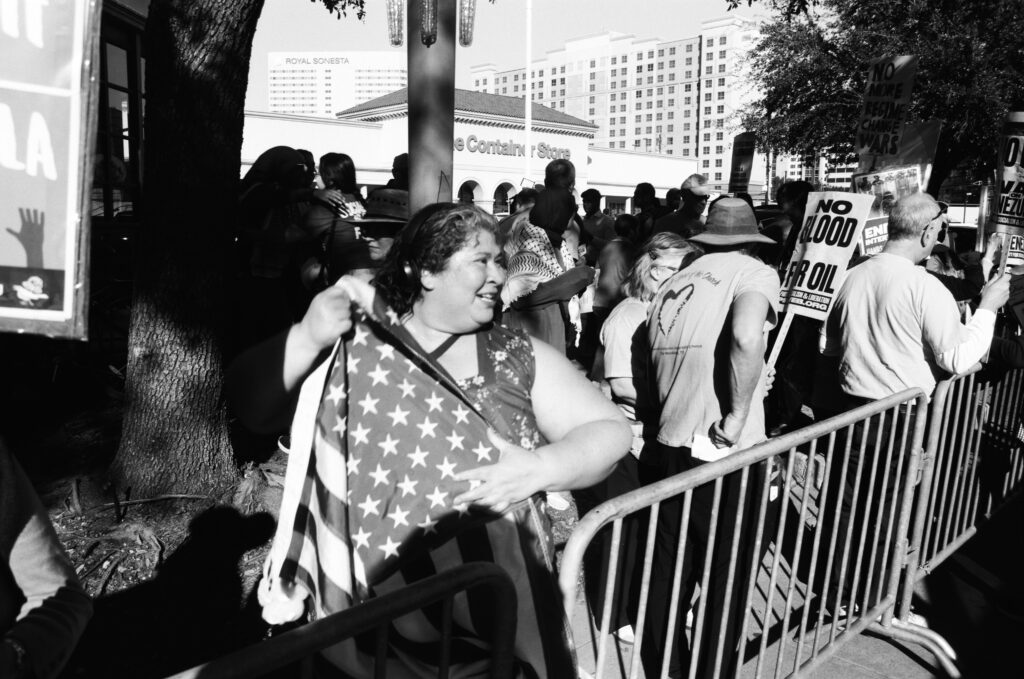
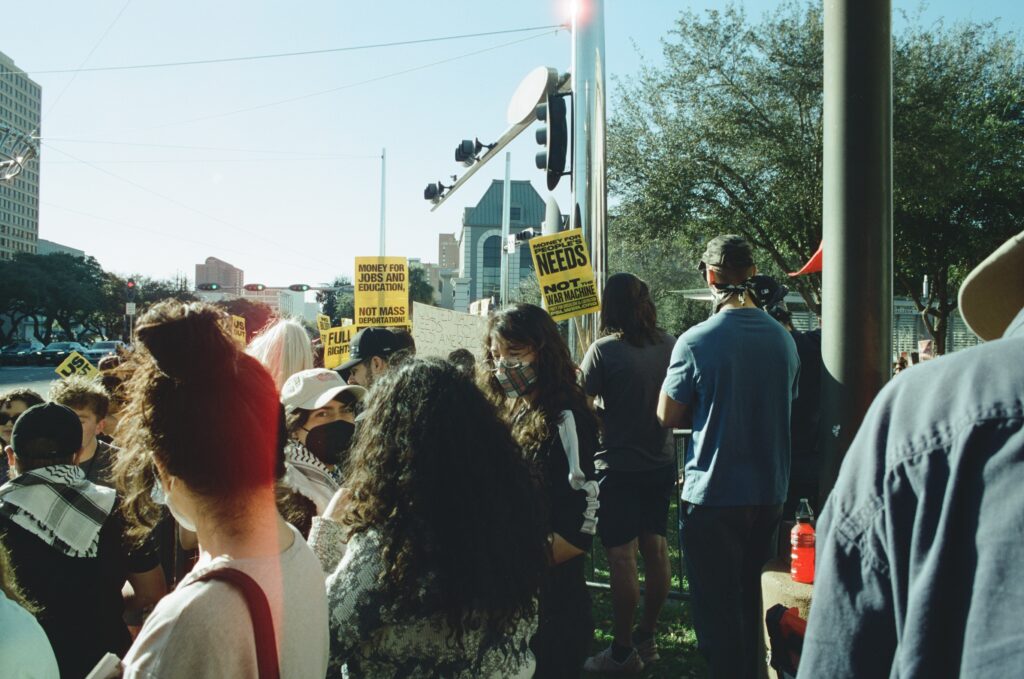
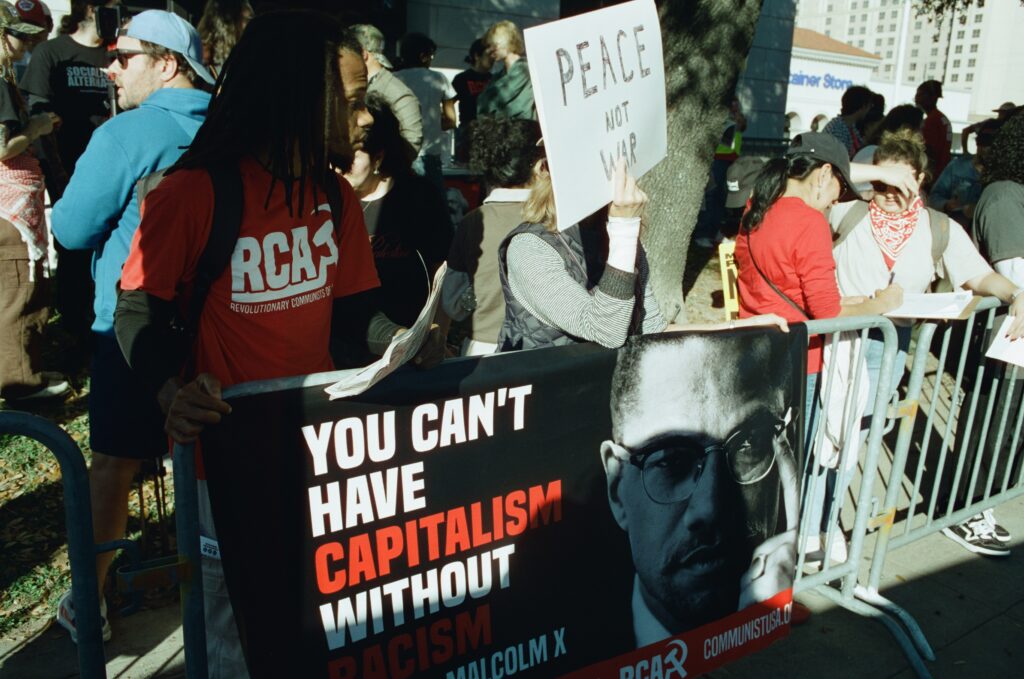
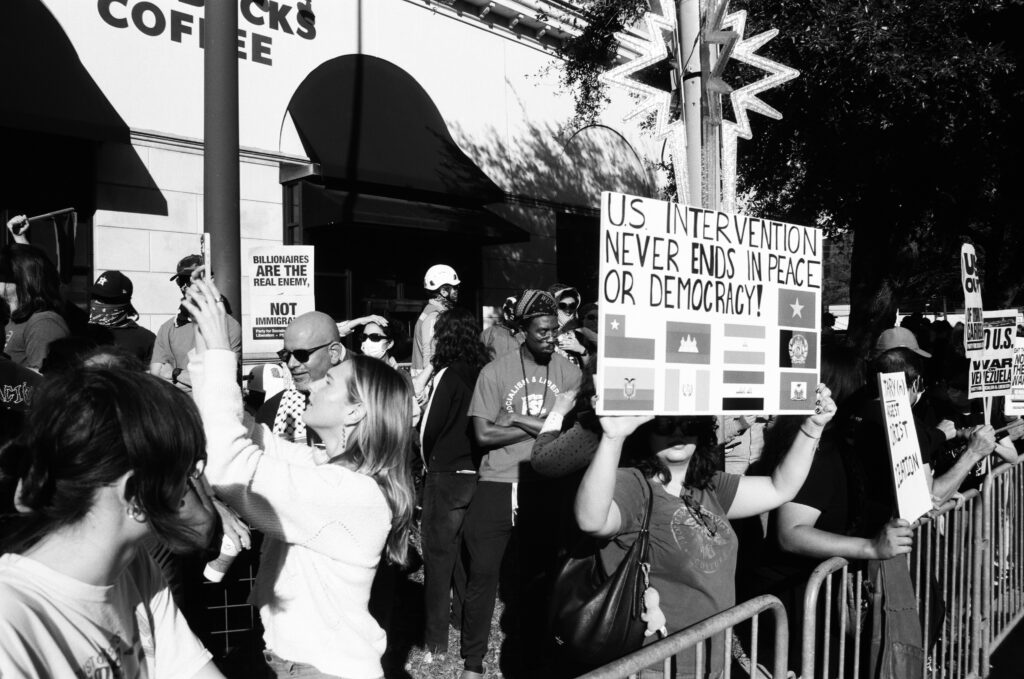
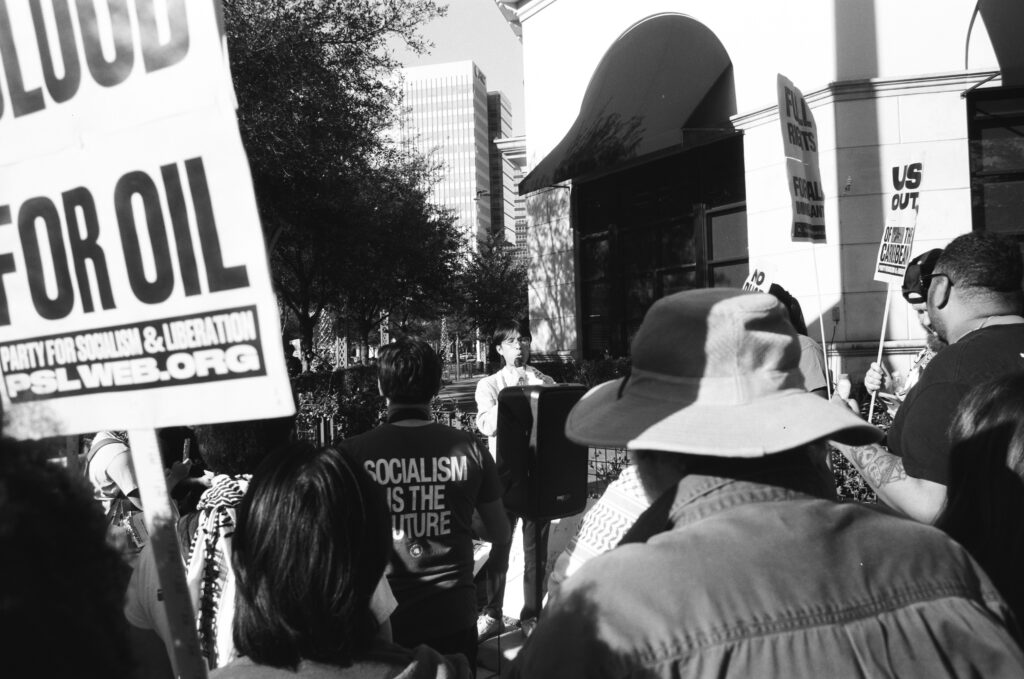
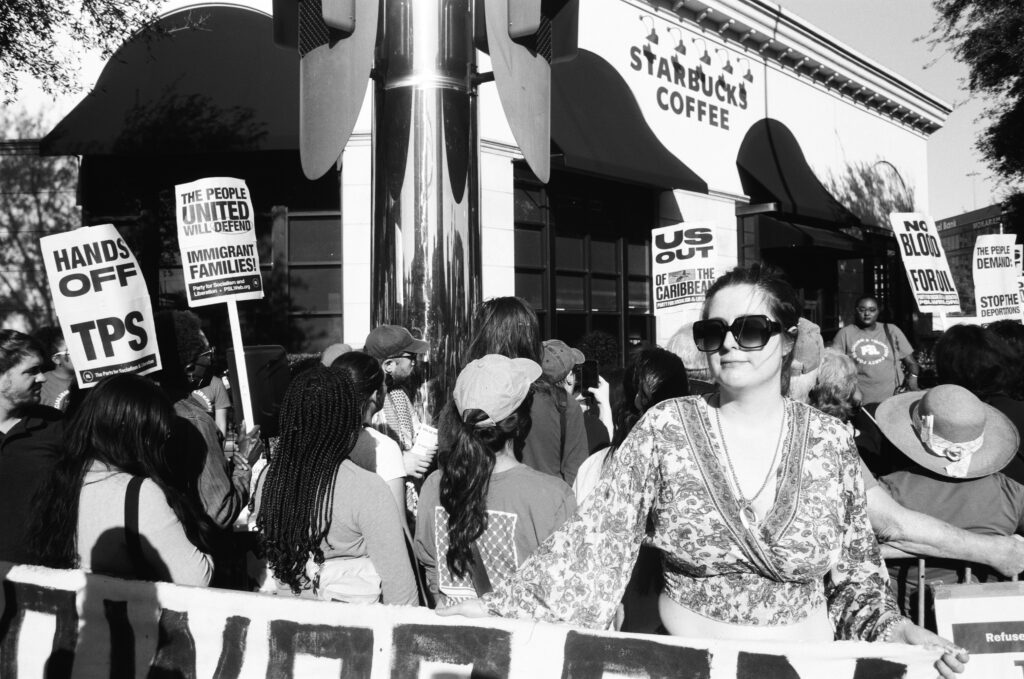
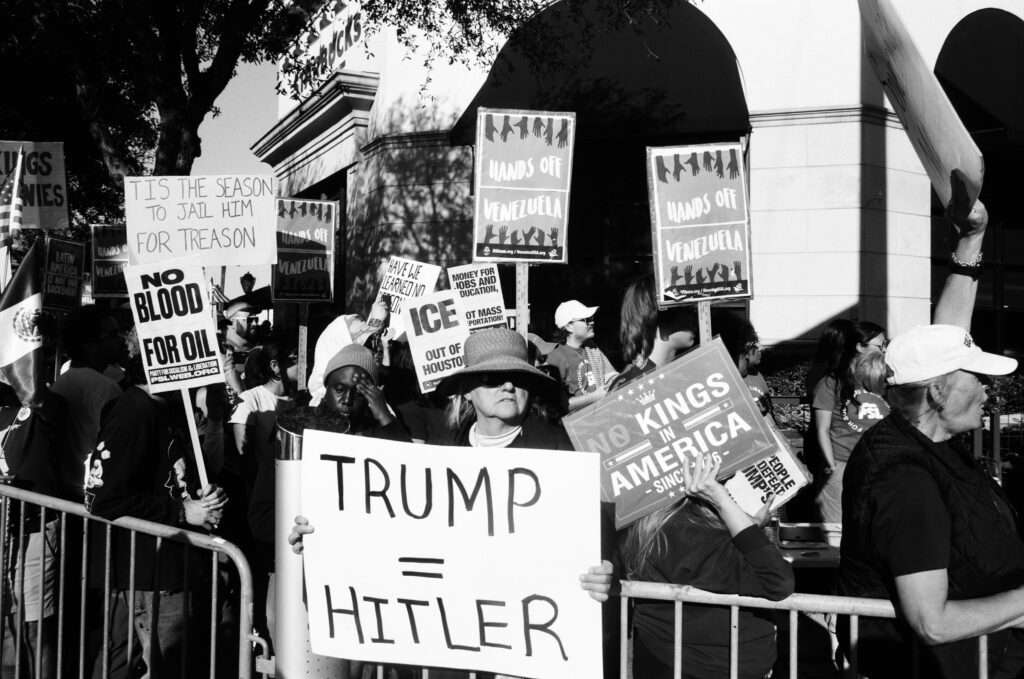
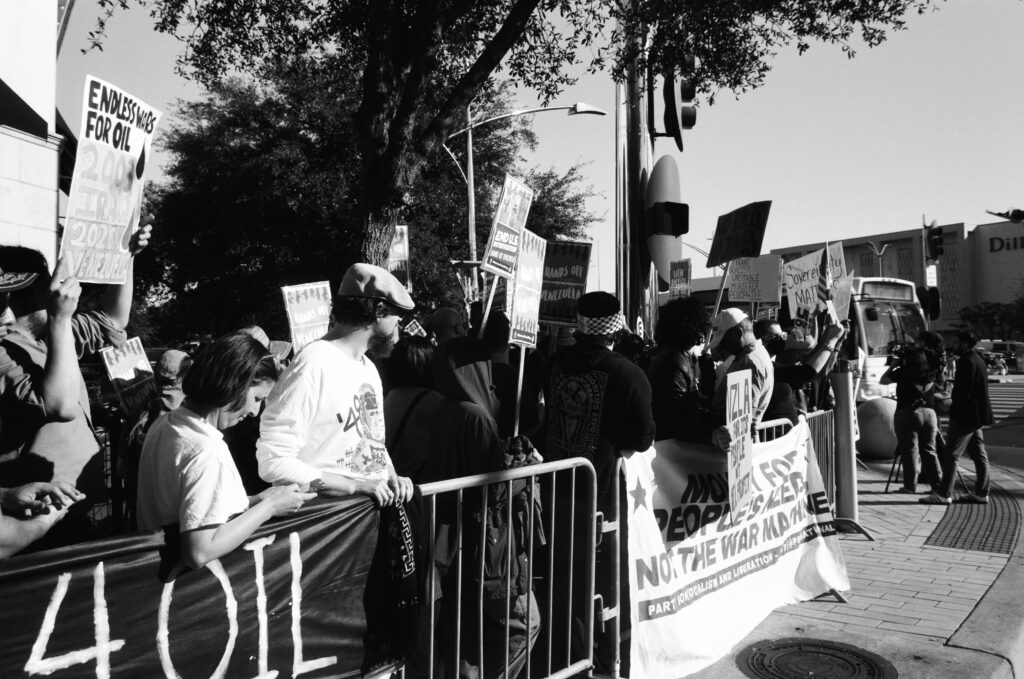
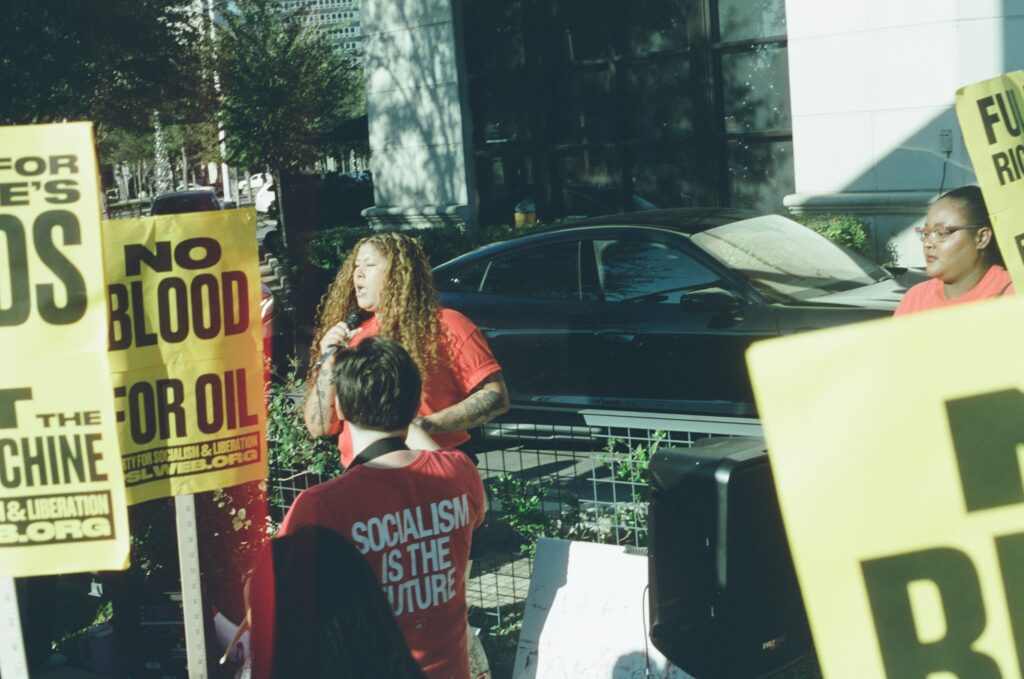
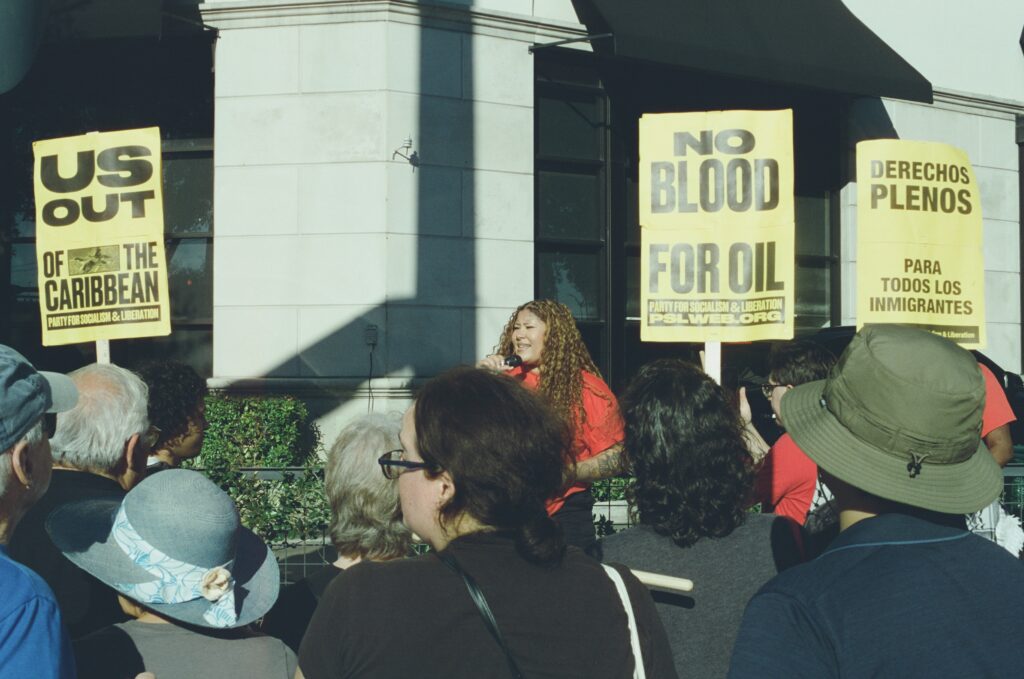
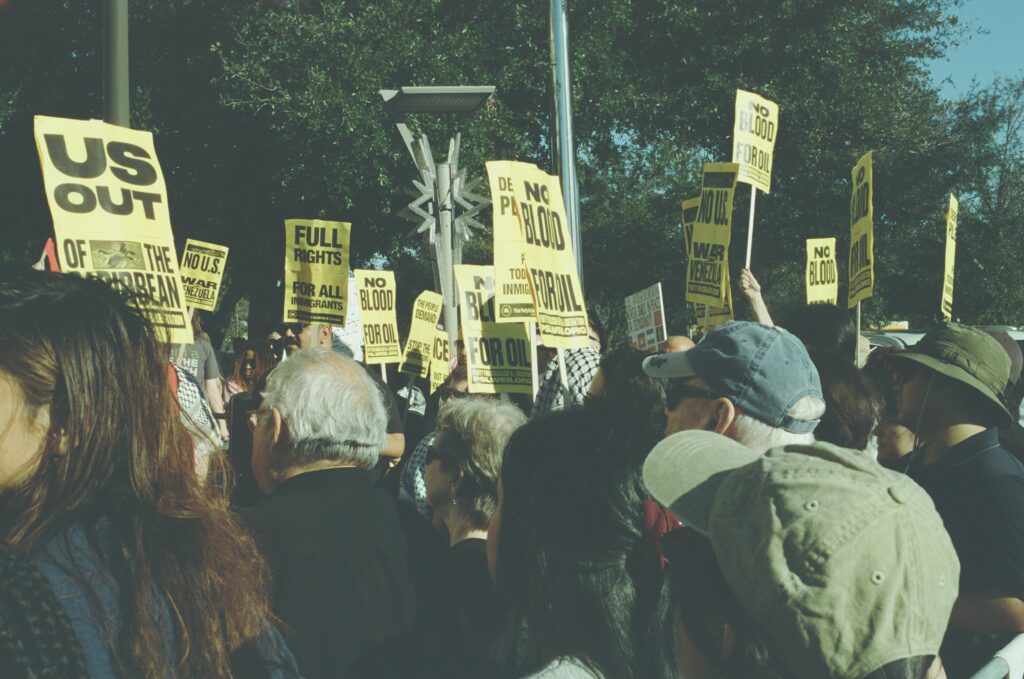
These establish scale, composition, and tone: how many people were present, how tightly packed they were, and how messaging repeated across signs.
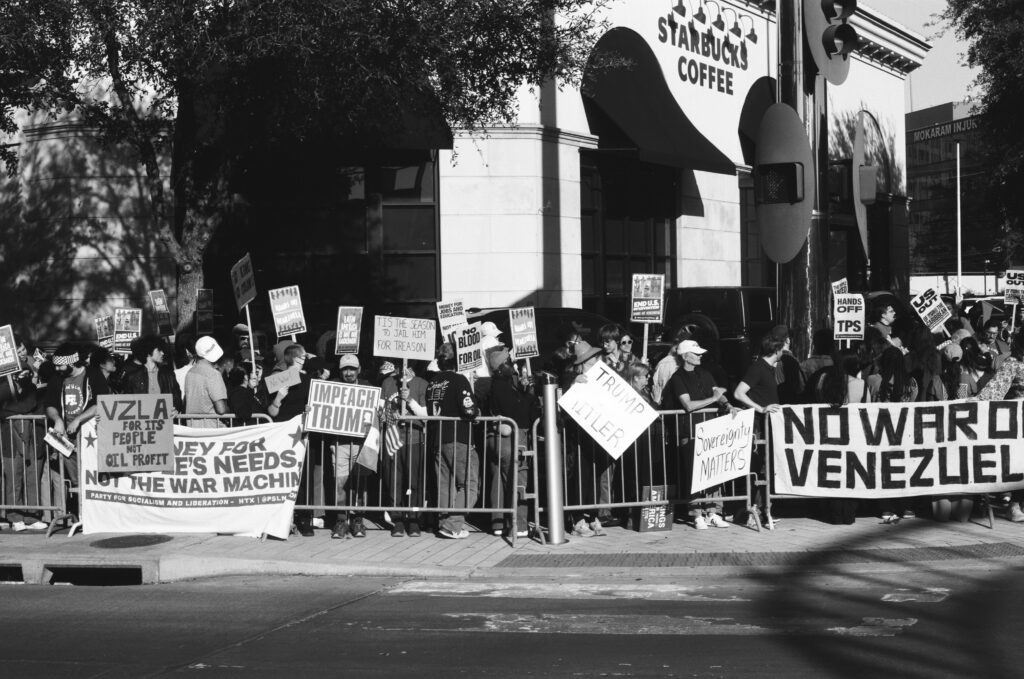
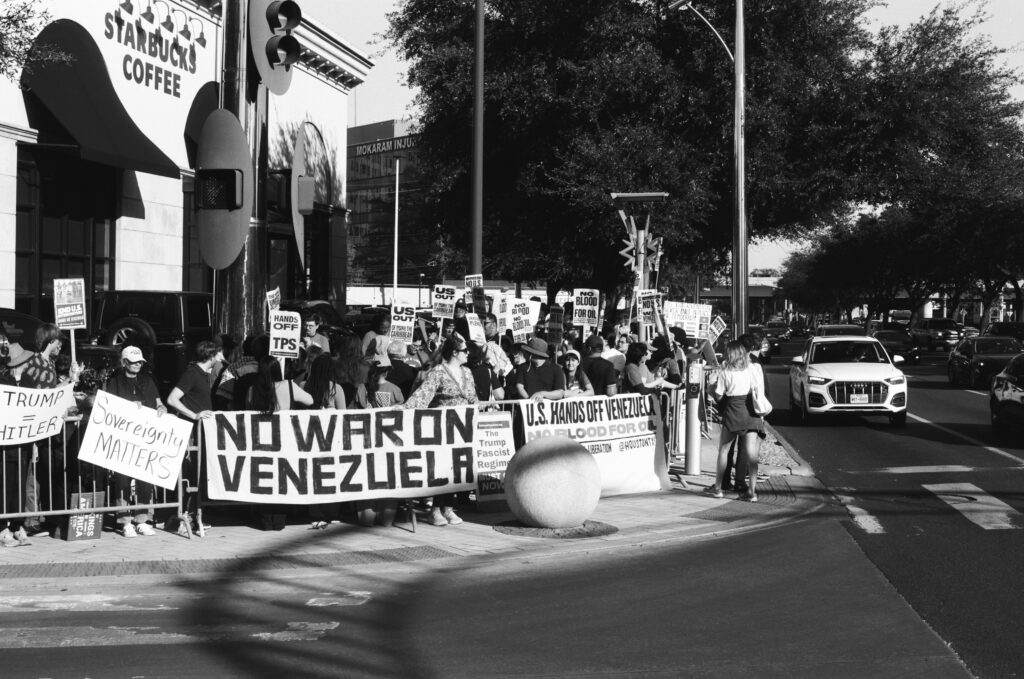
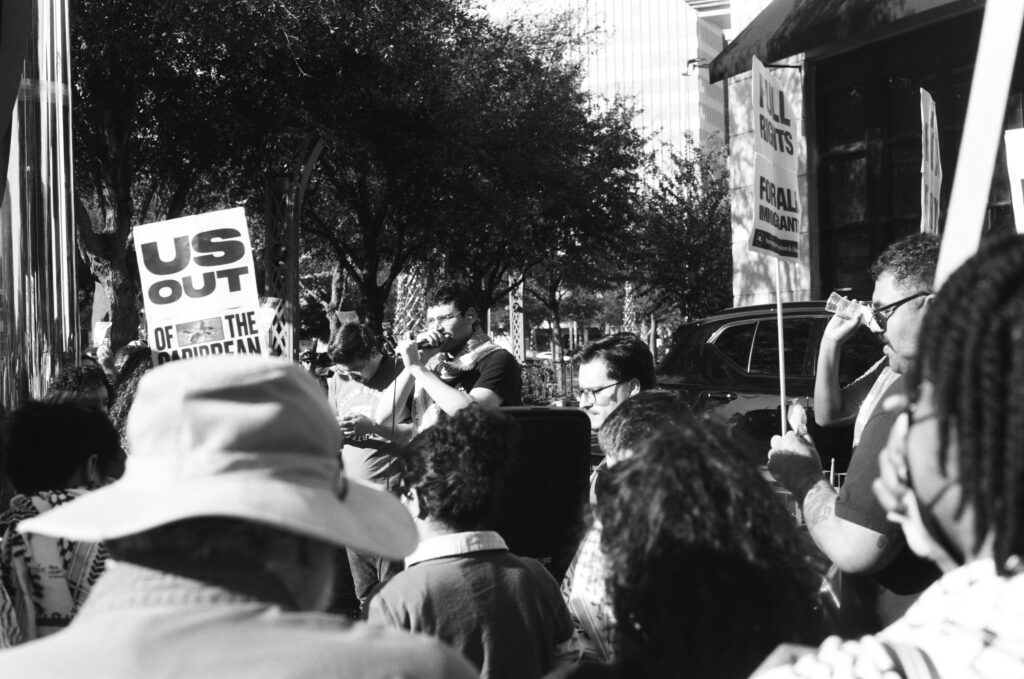
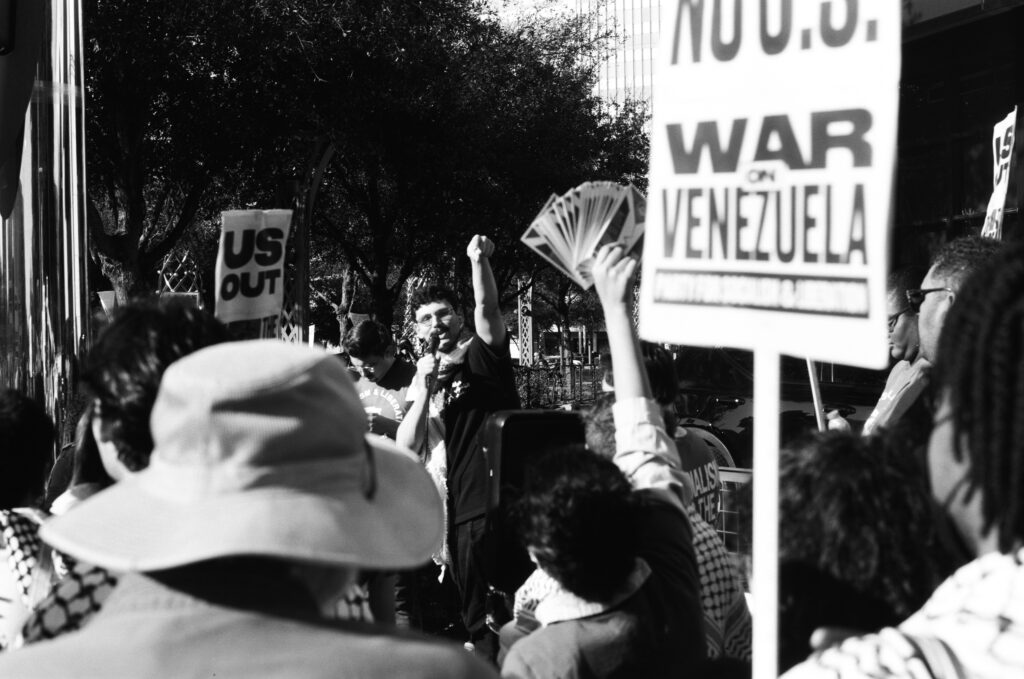
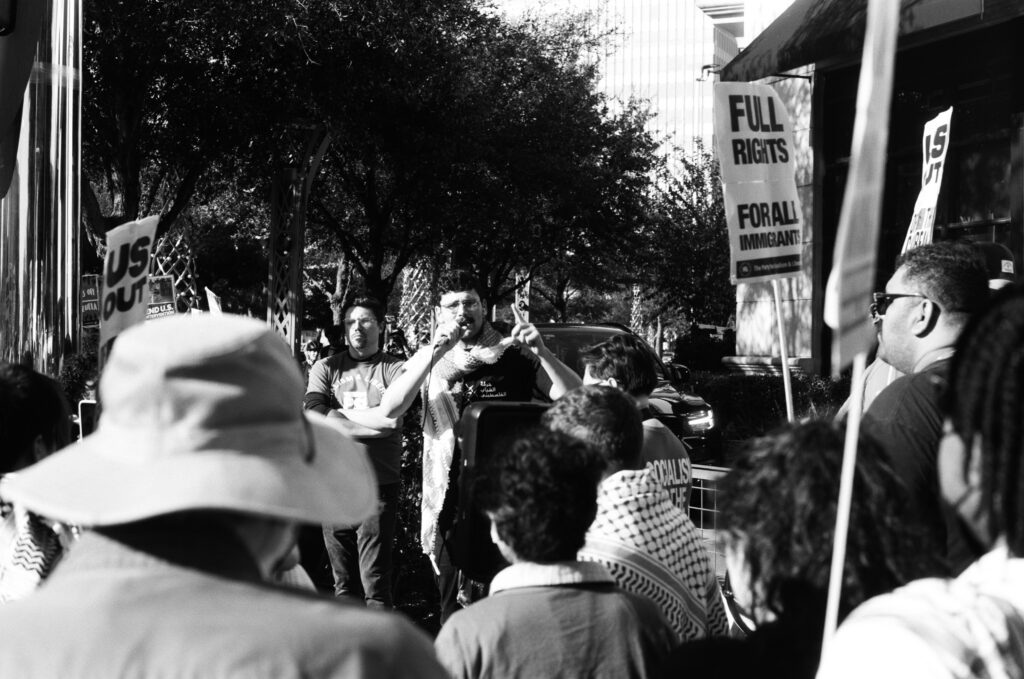
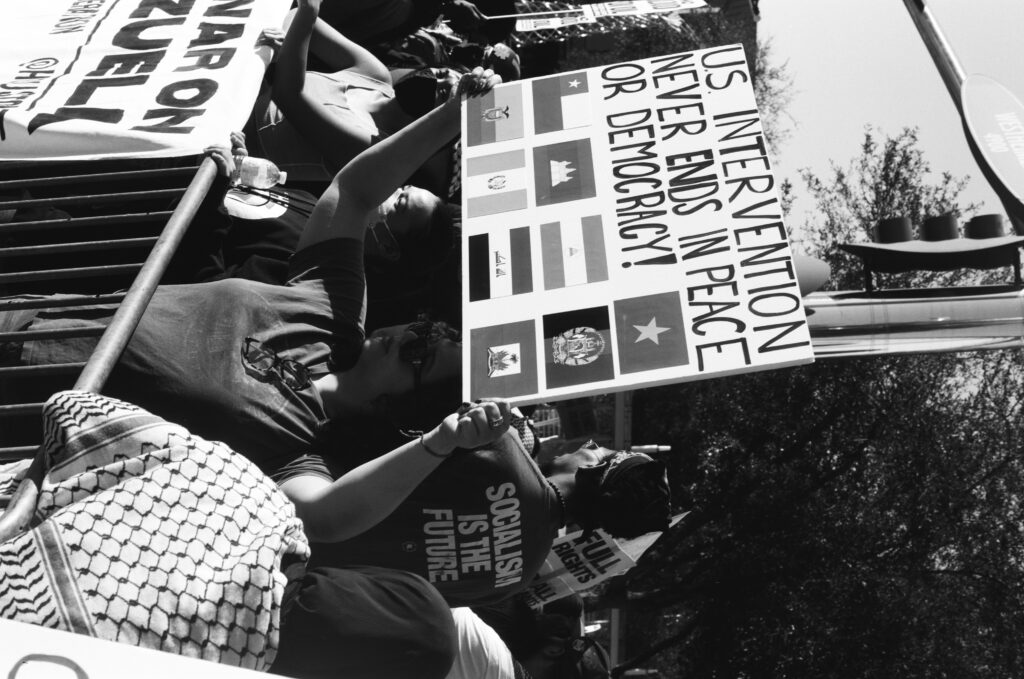
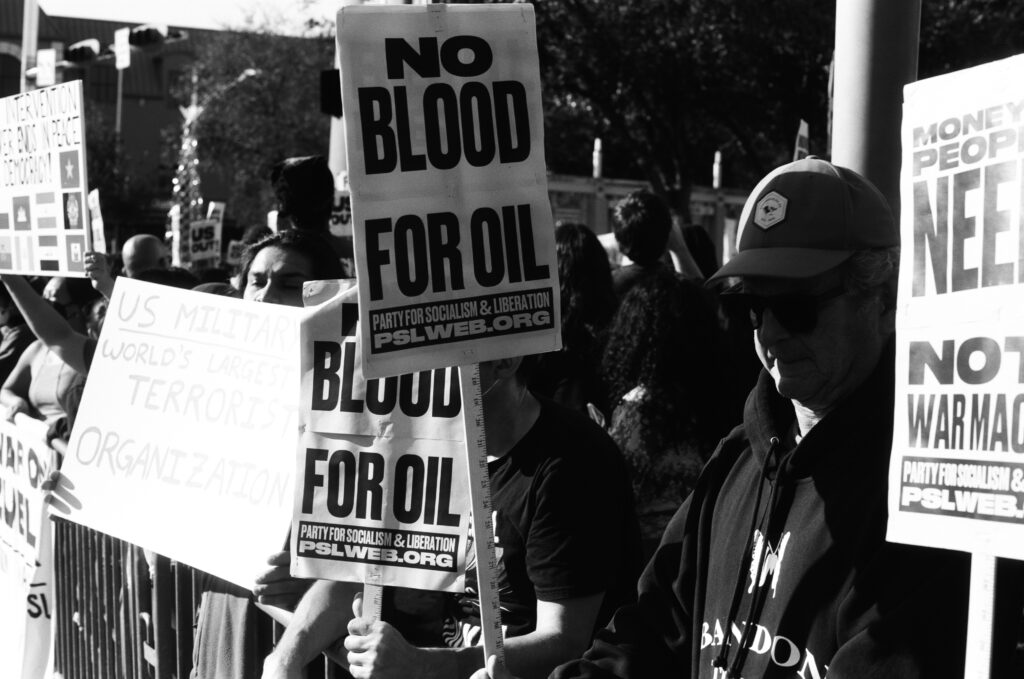
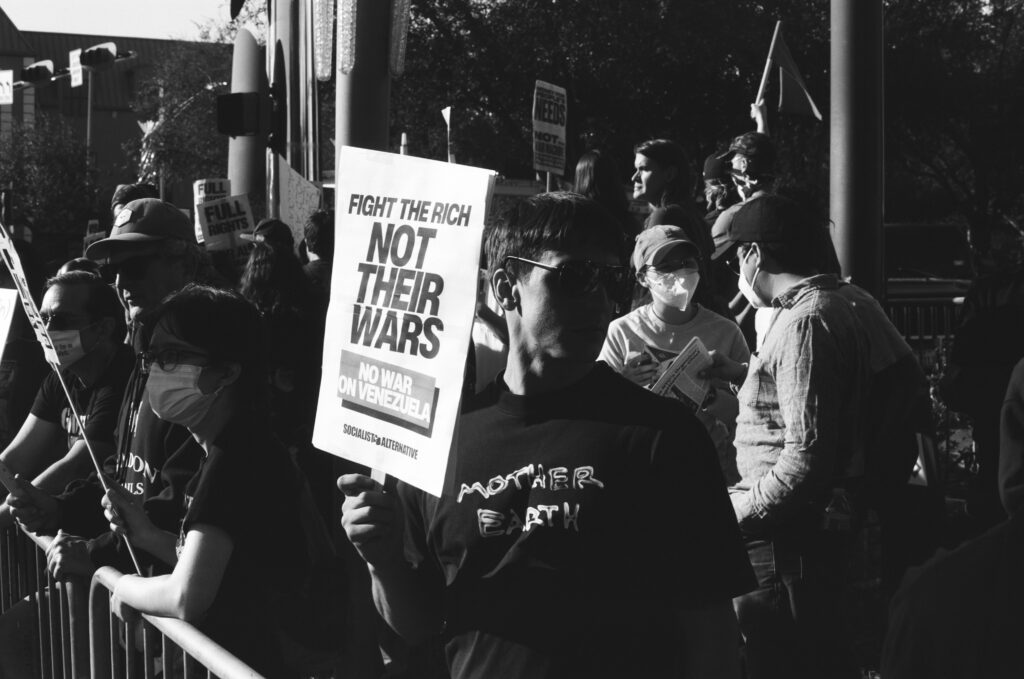
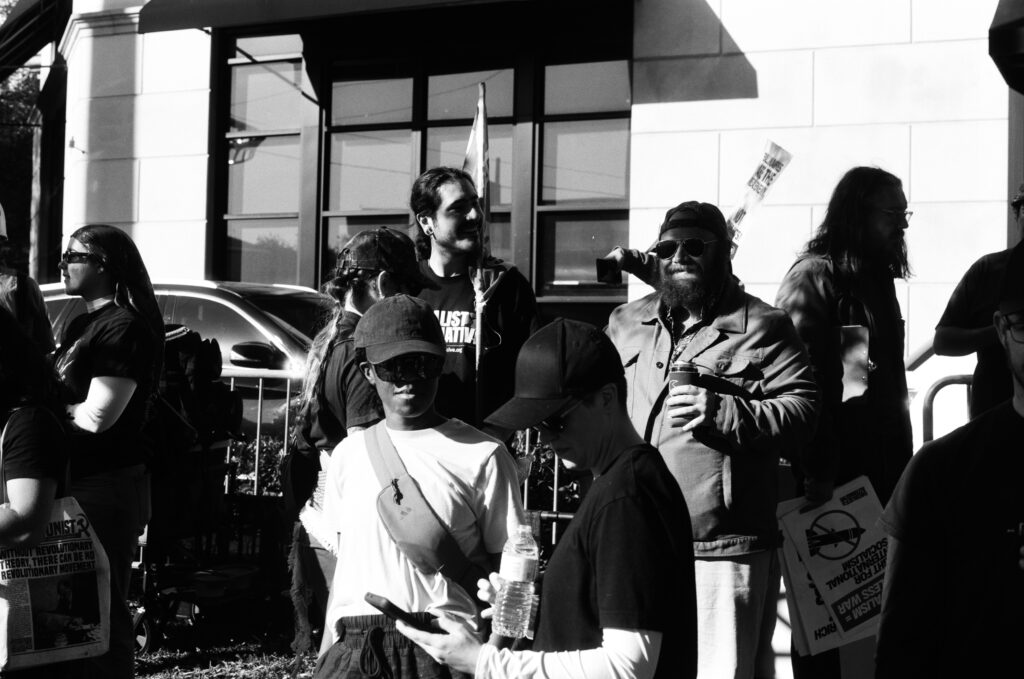
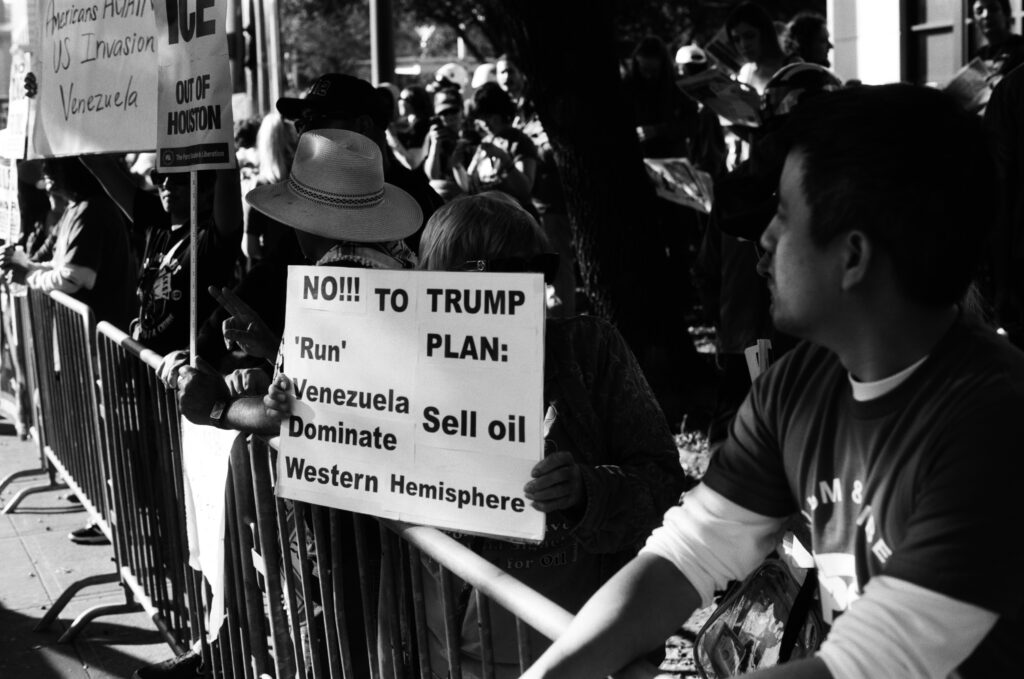
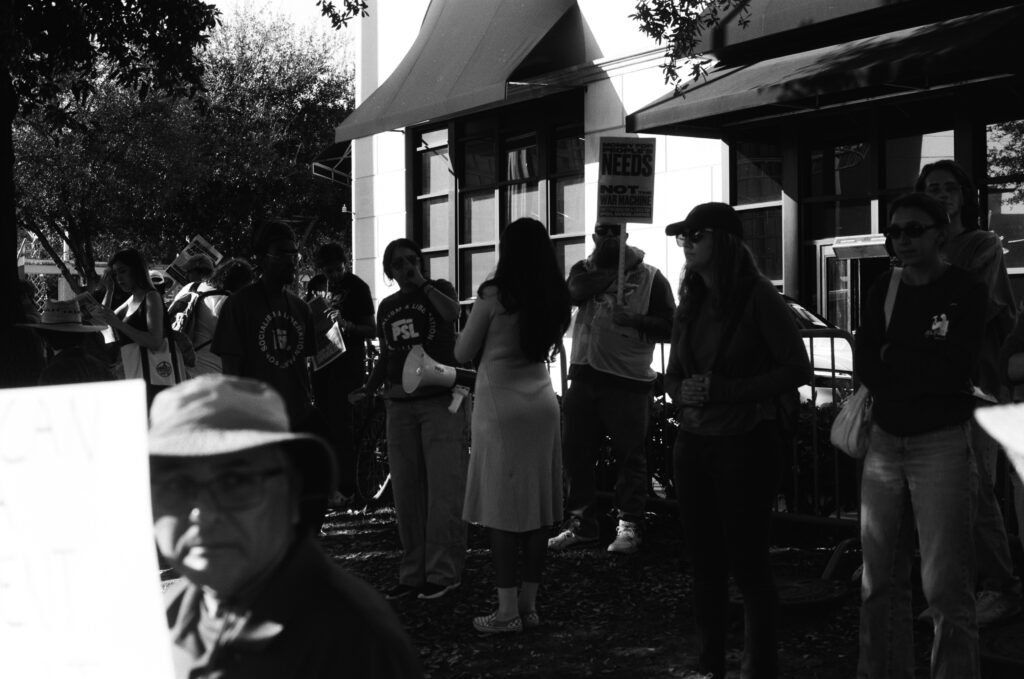
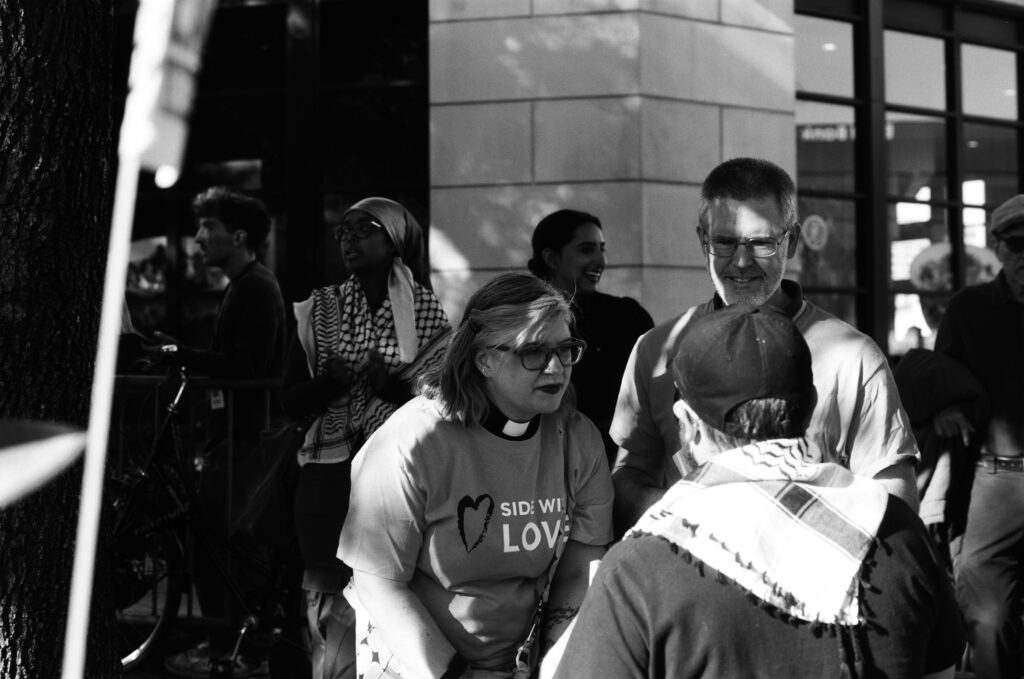
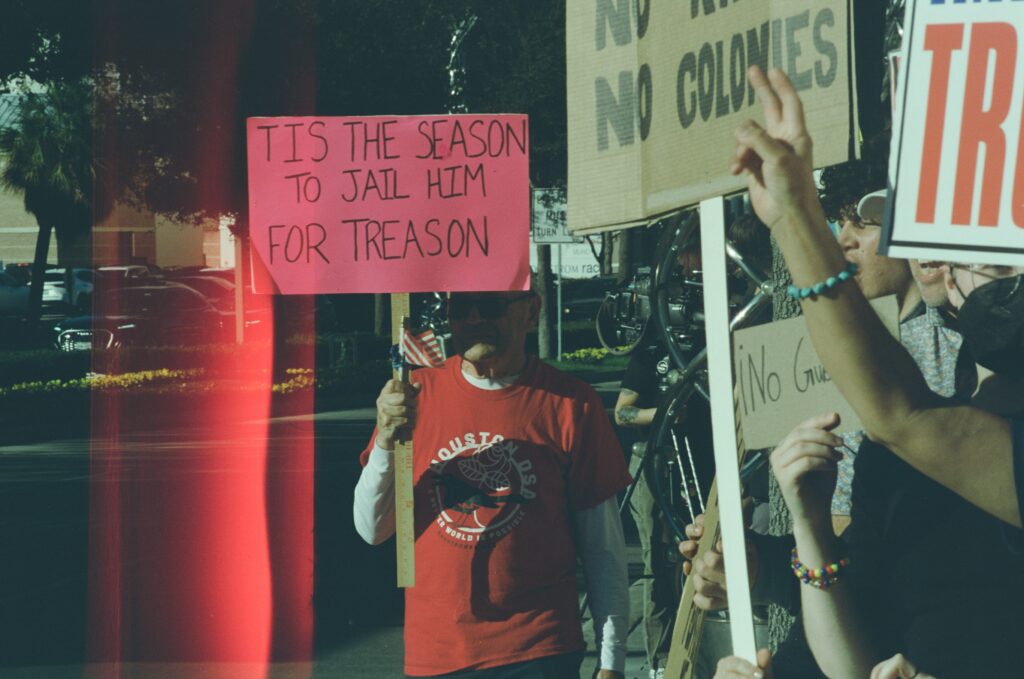
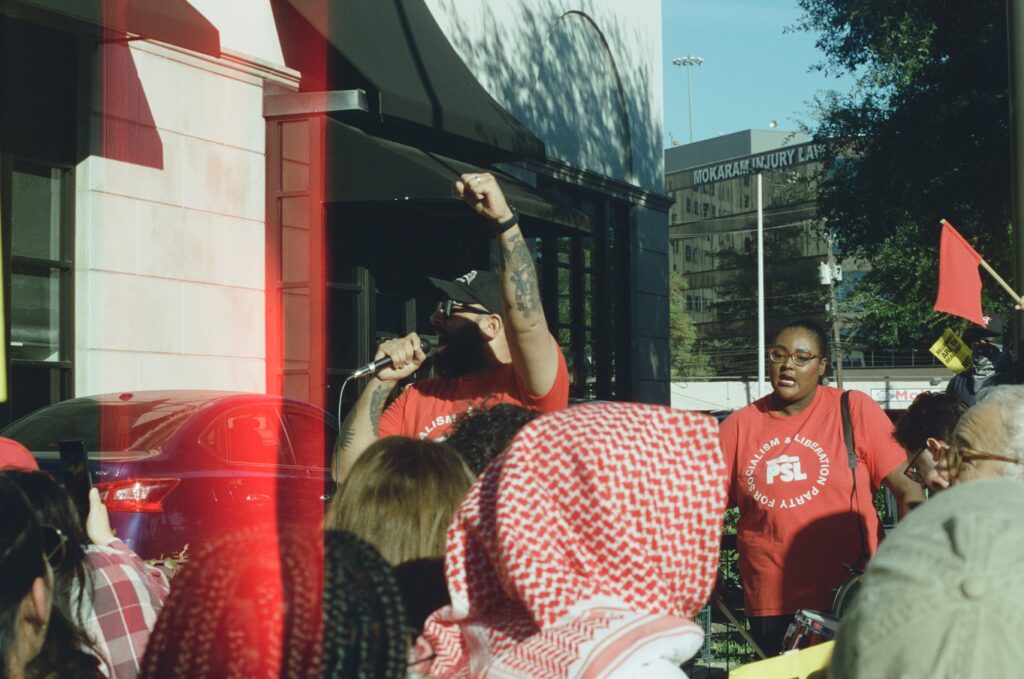
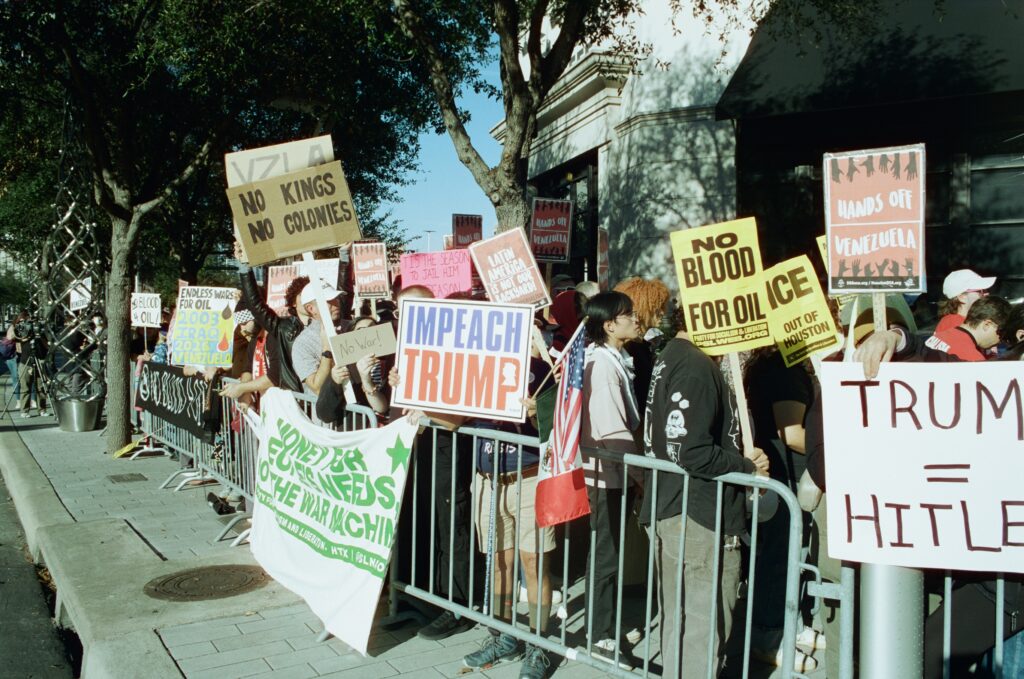
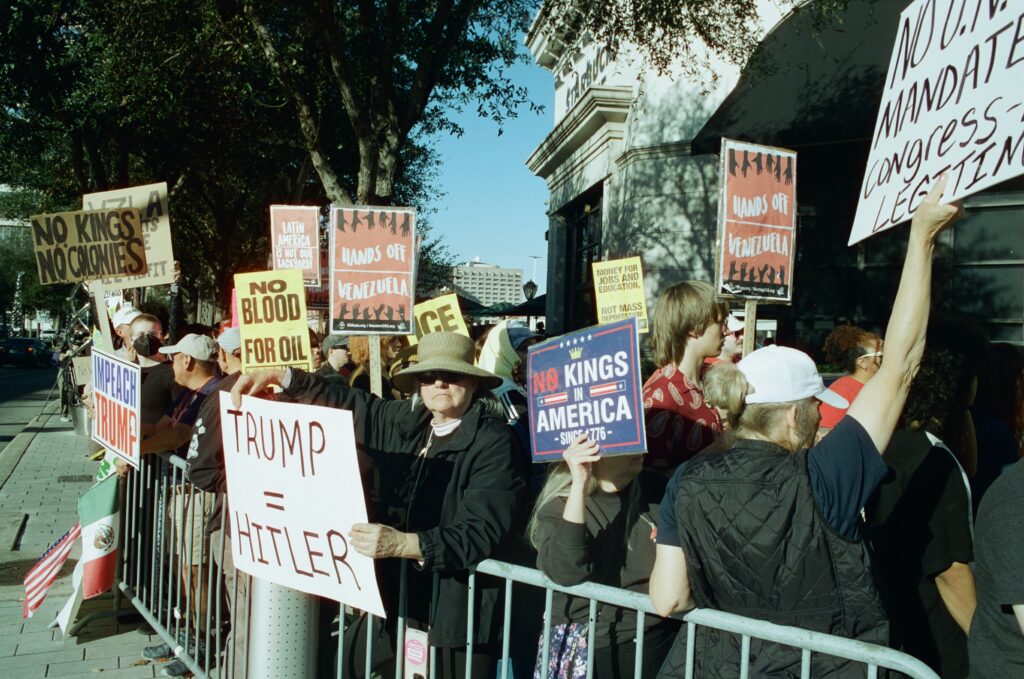
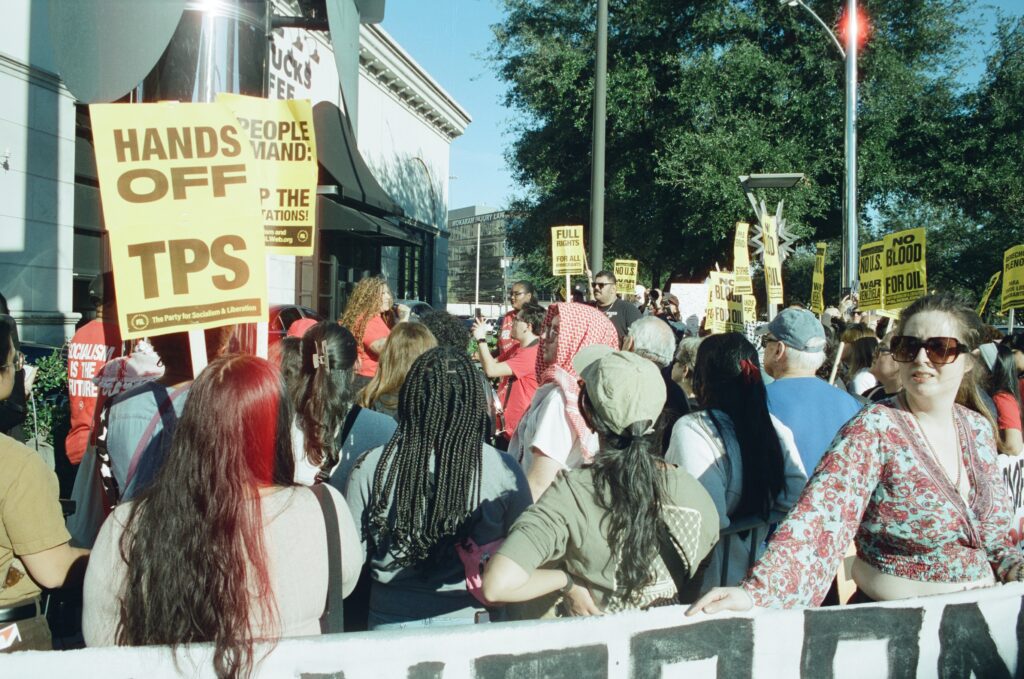
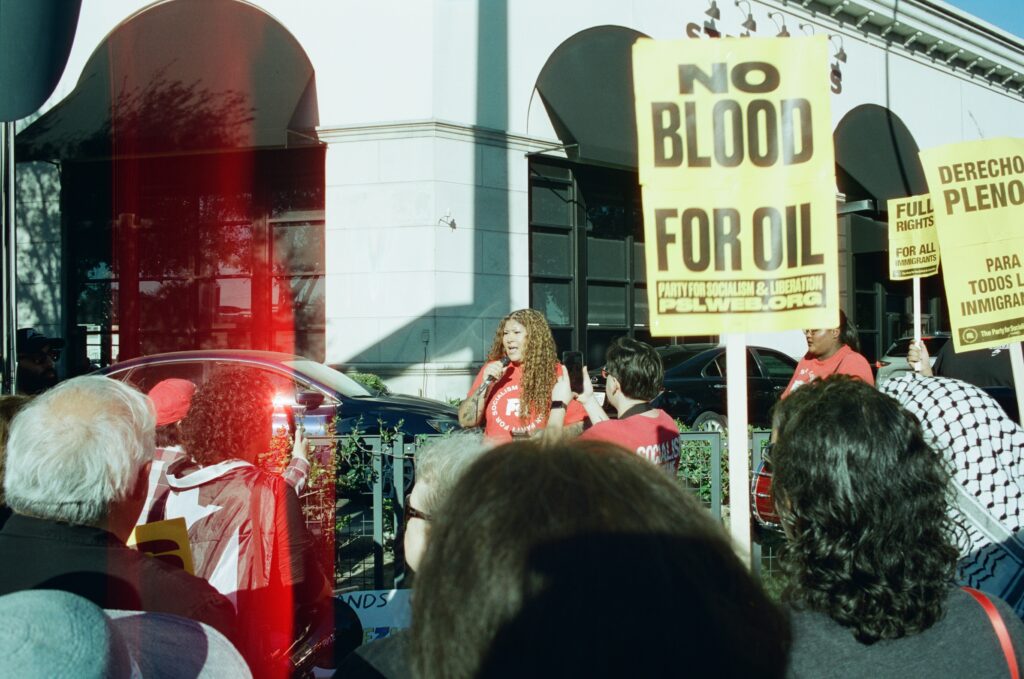
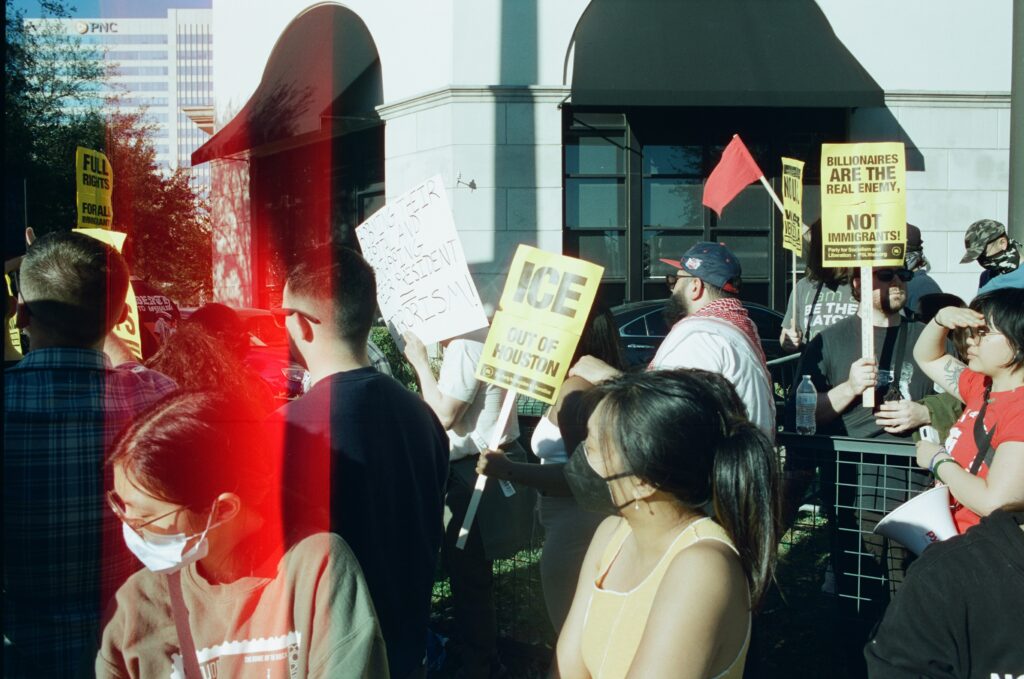
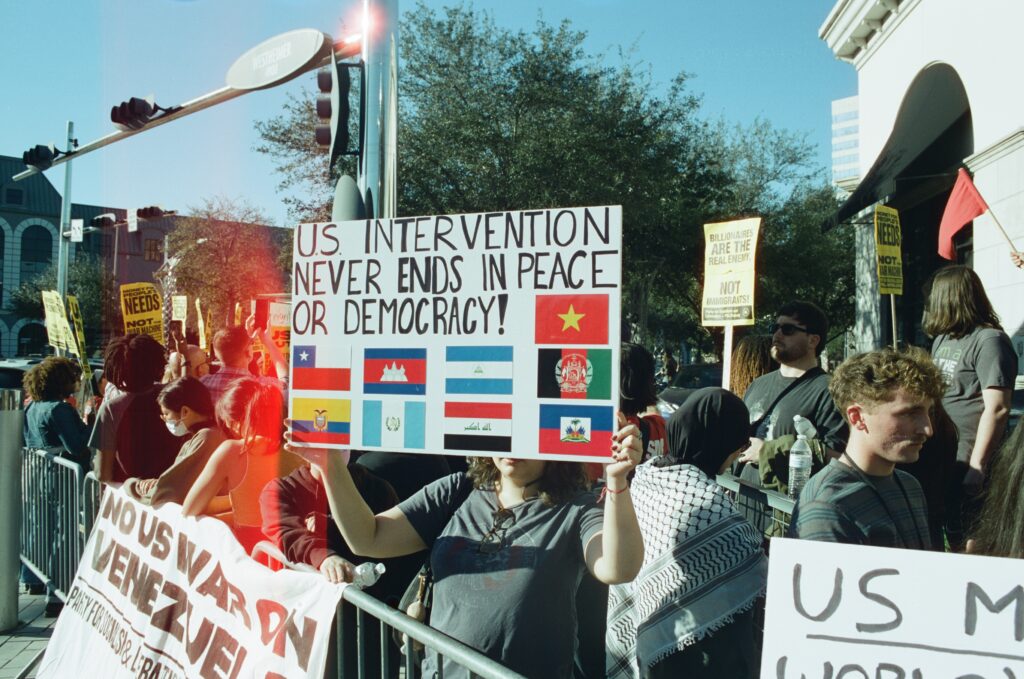
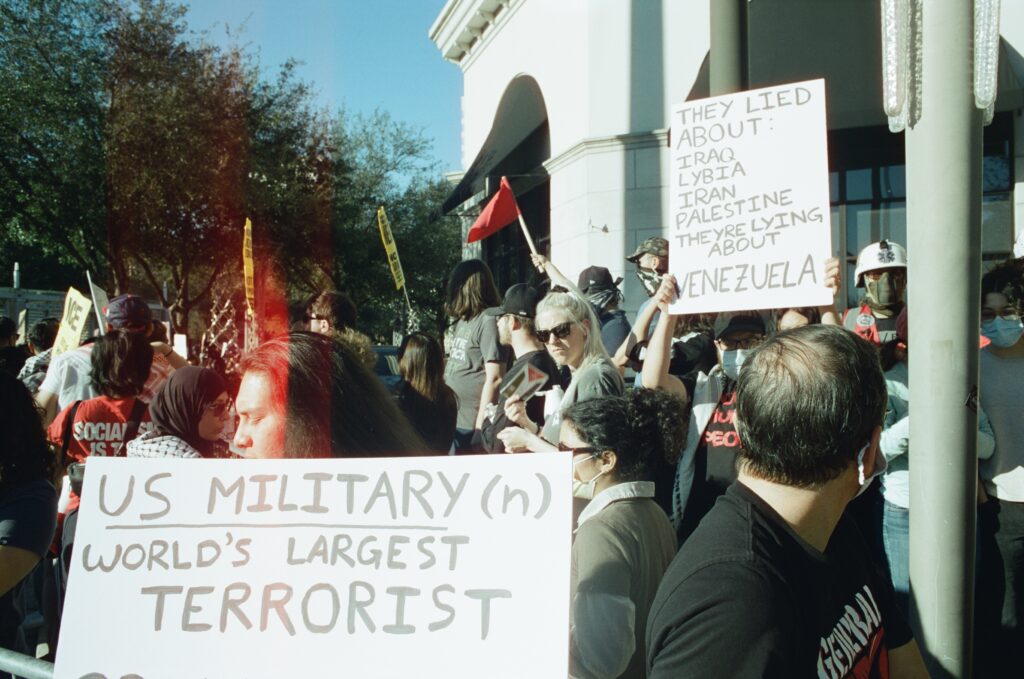
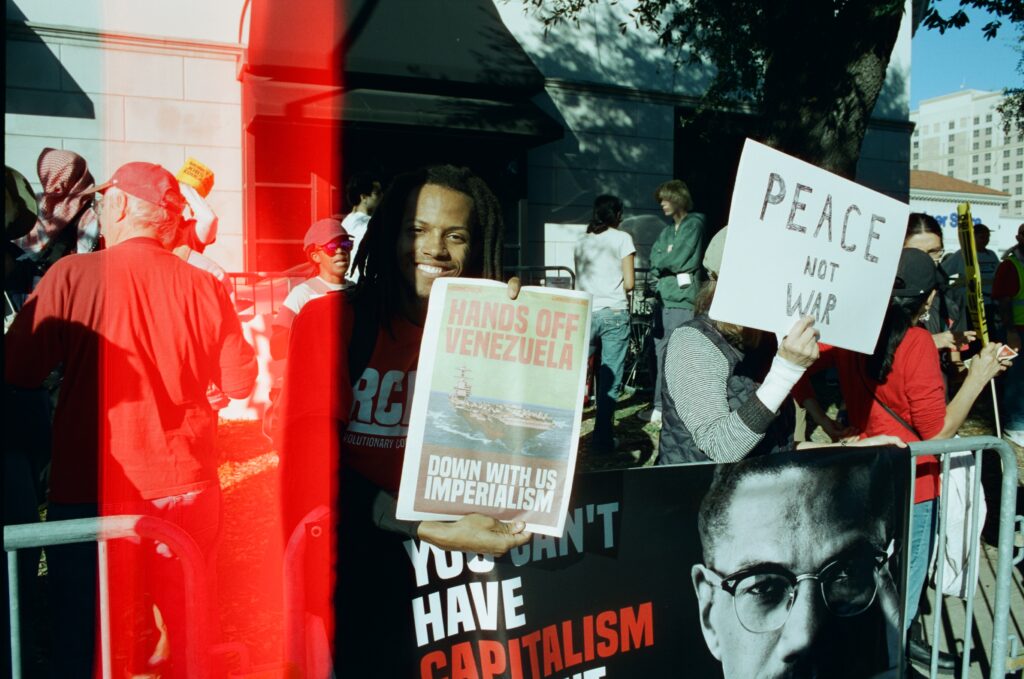
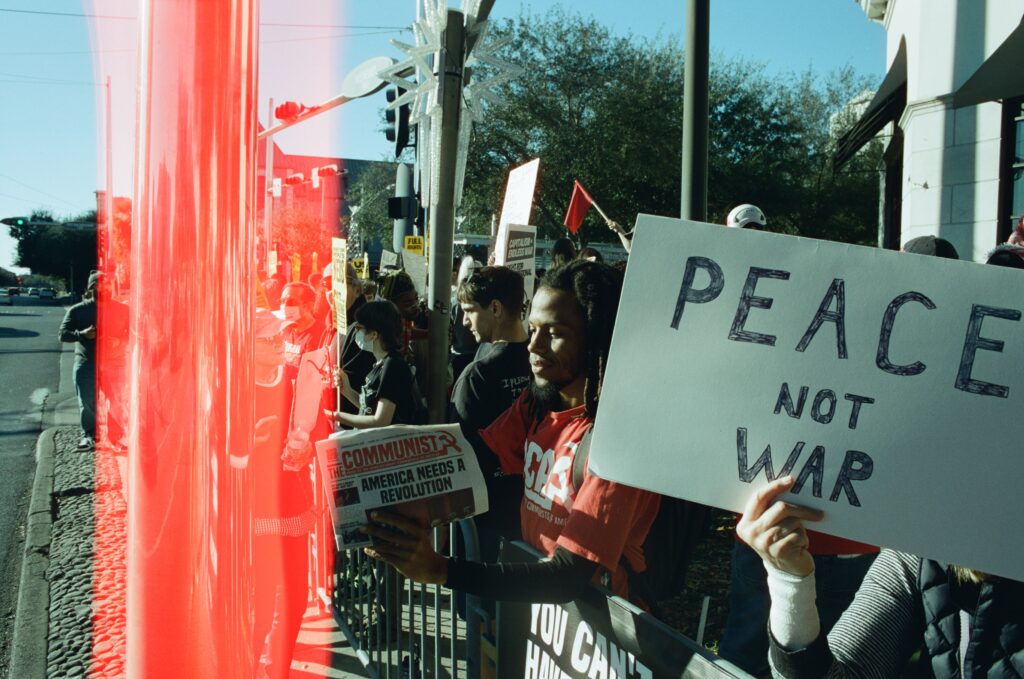
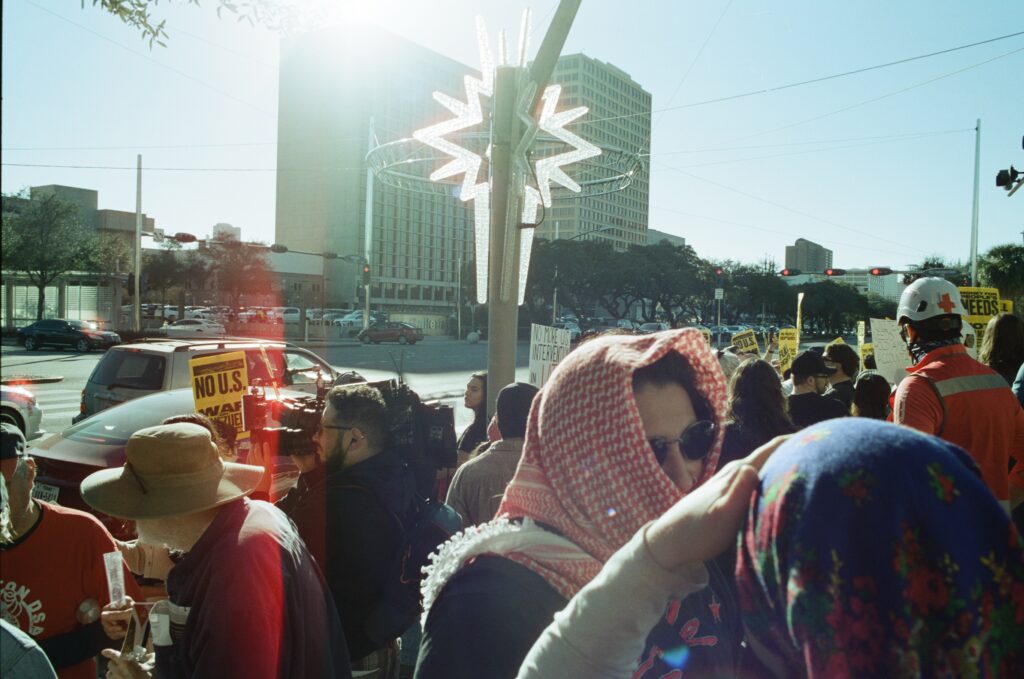
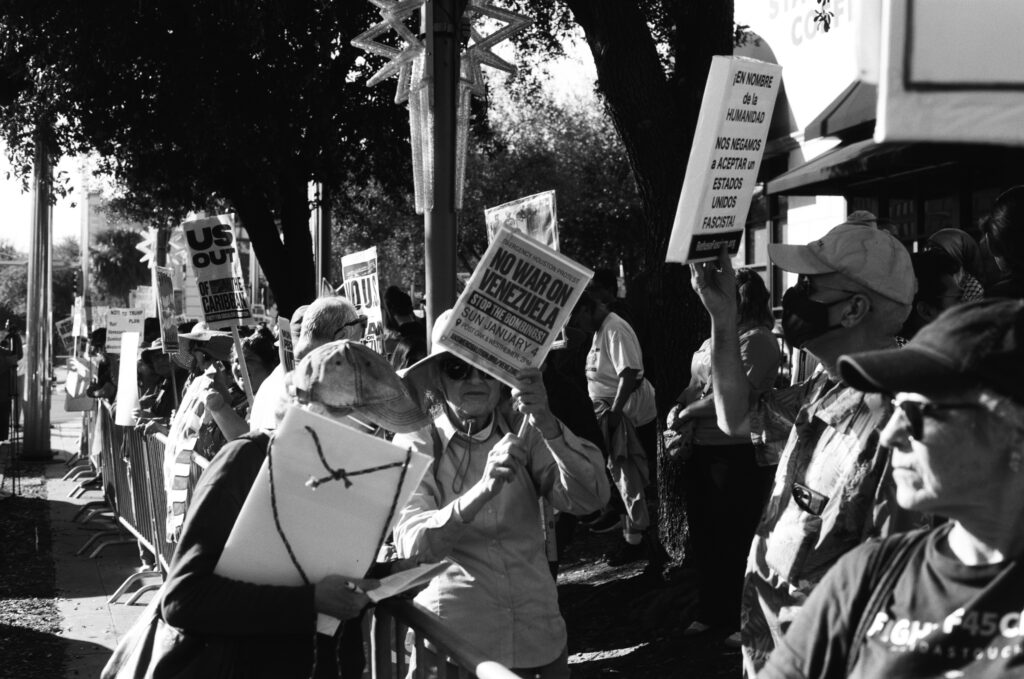
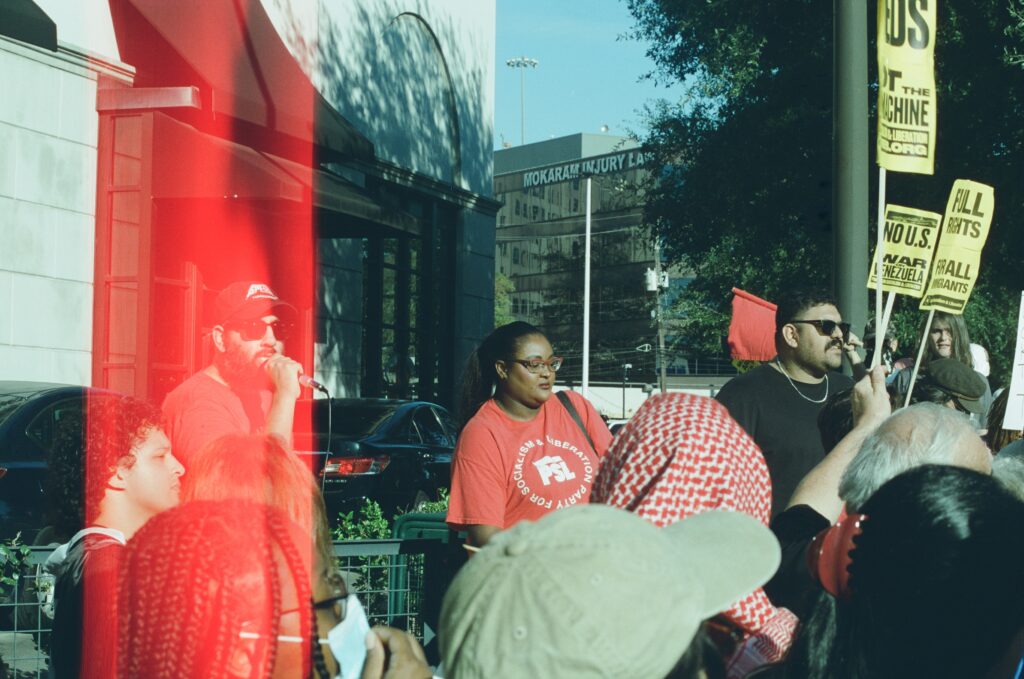
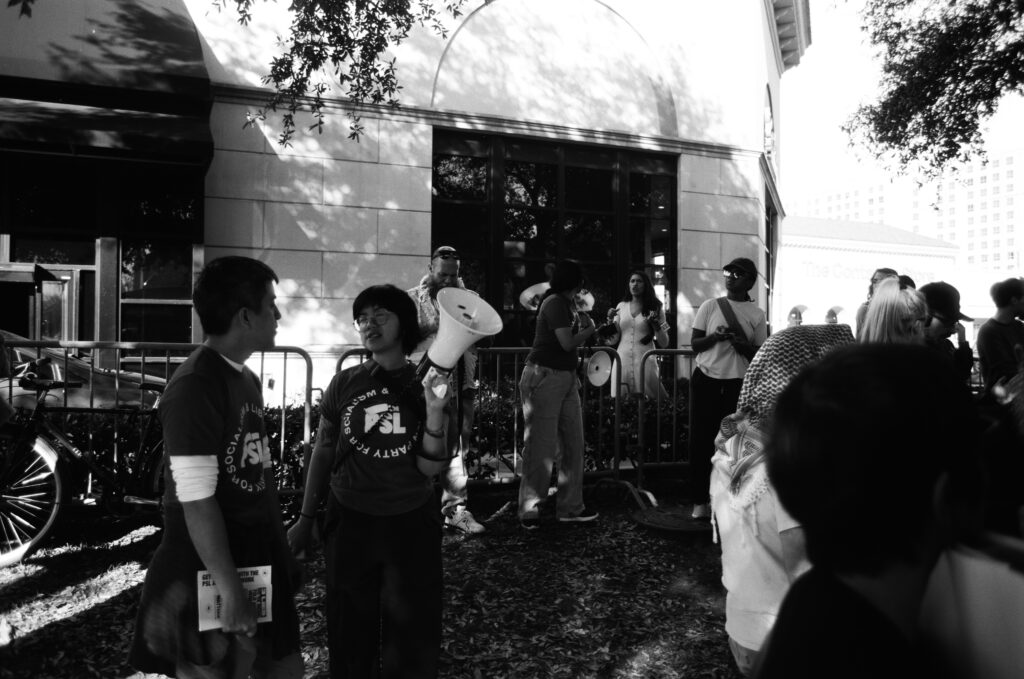
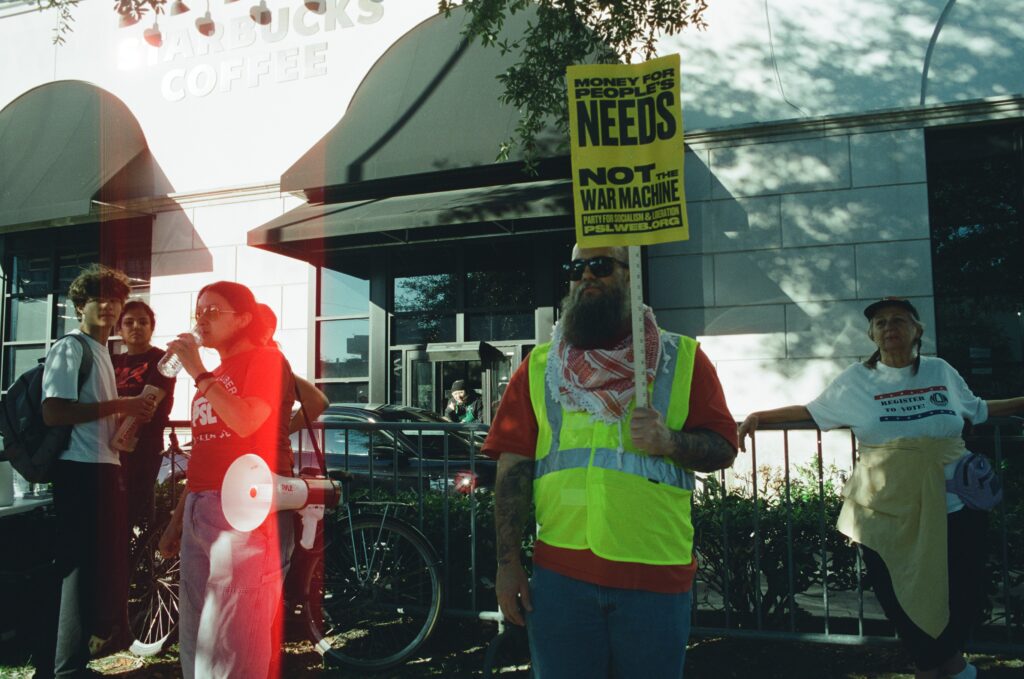
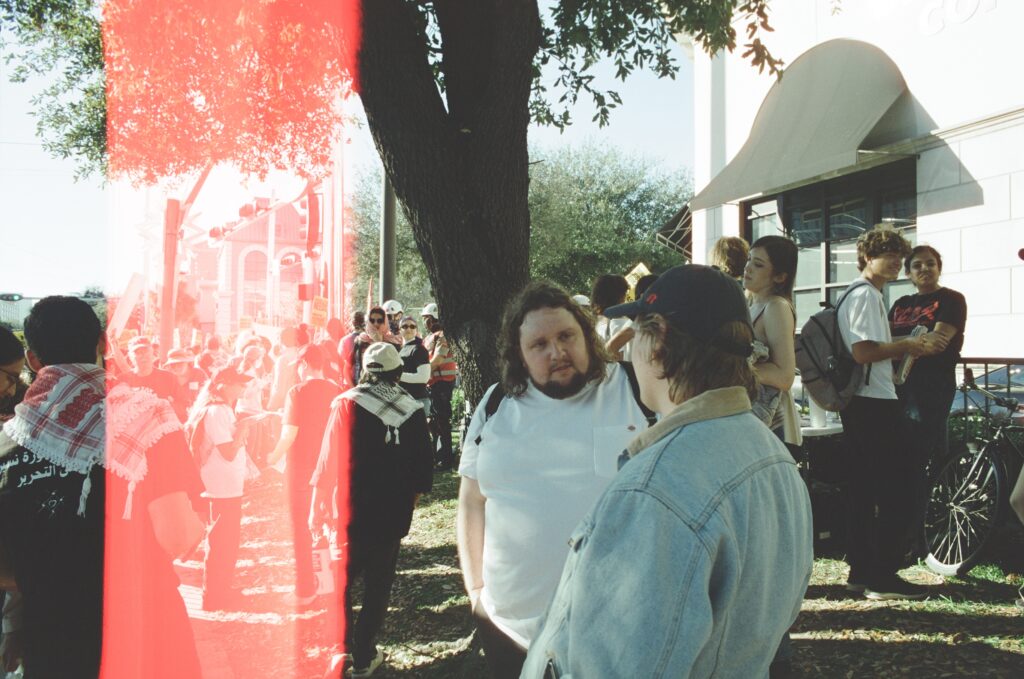
PHOTO SET — INTERACTIONS & DETAILS
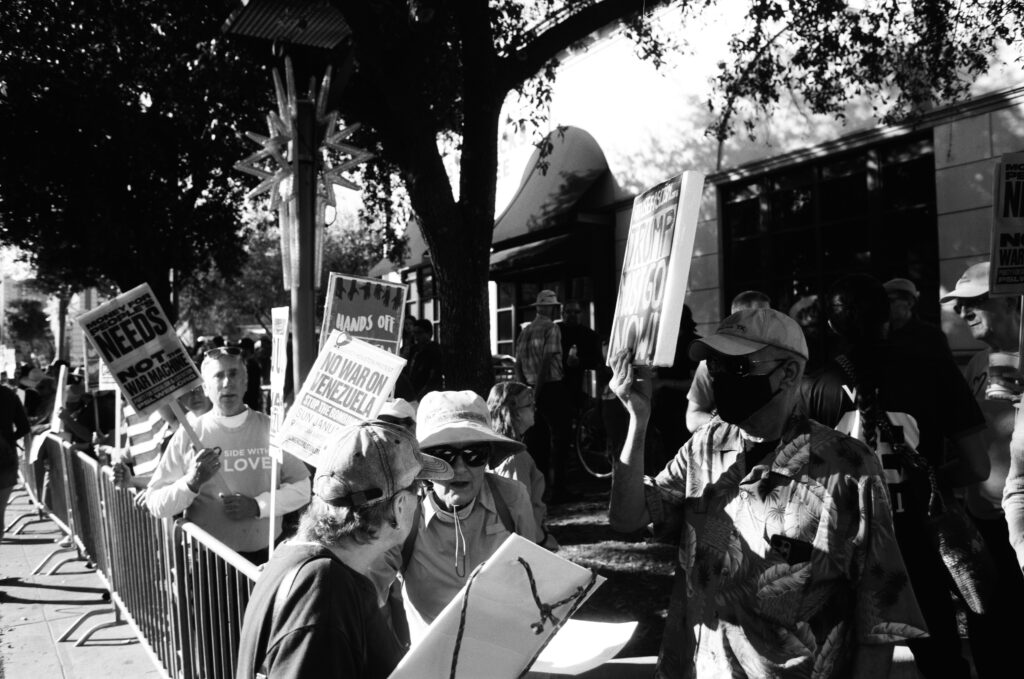
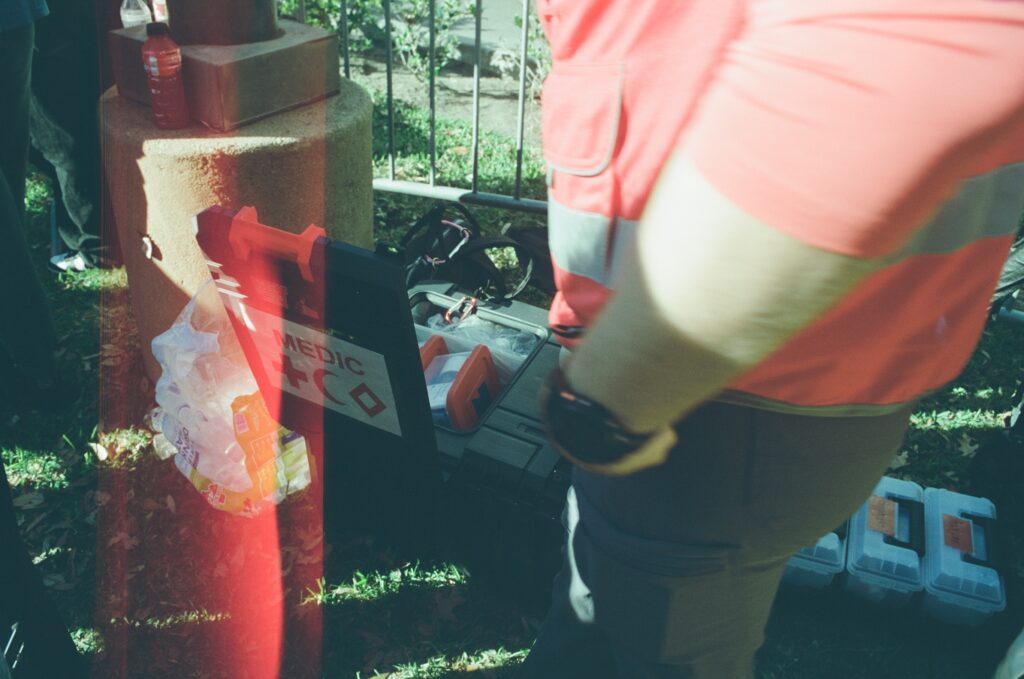
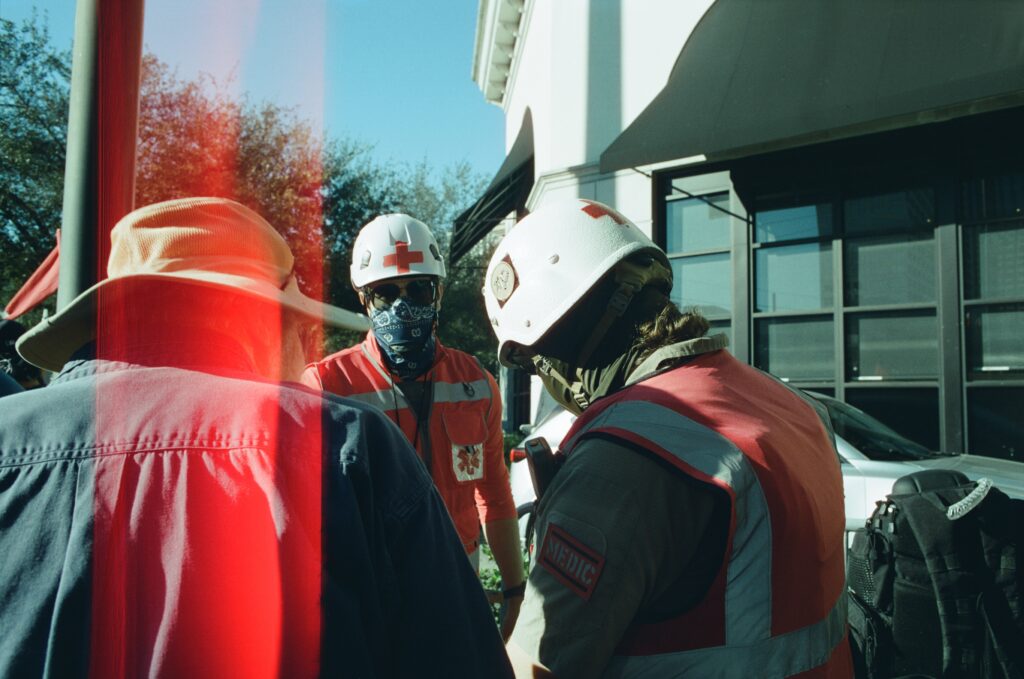
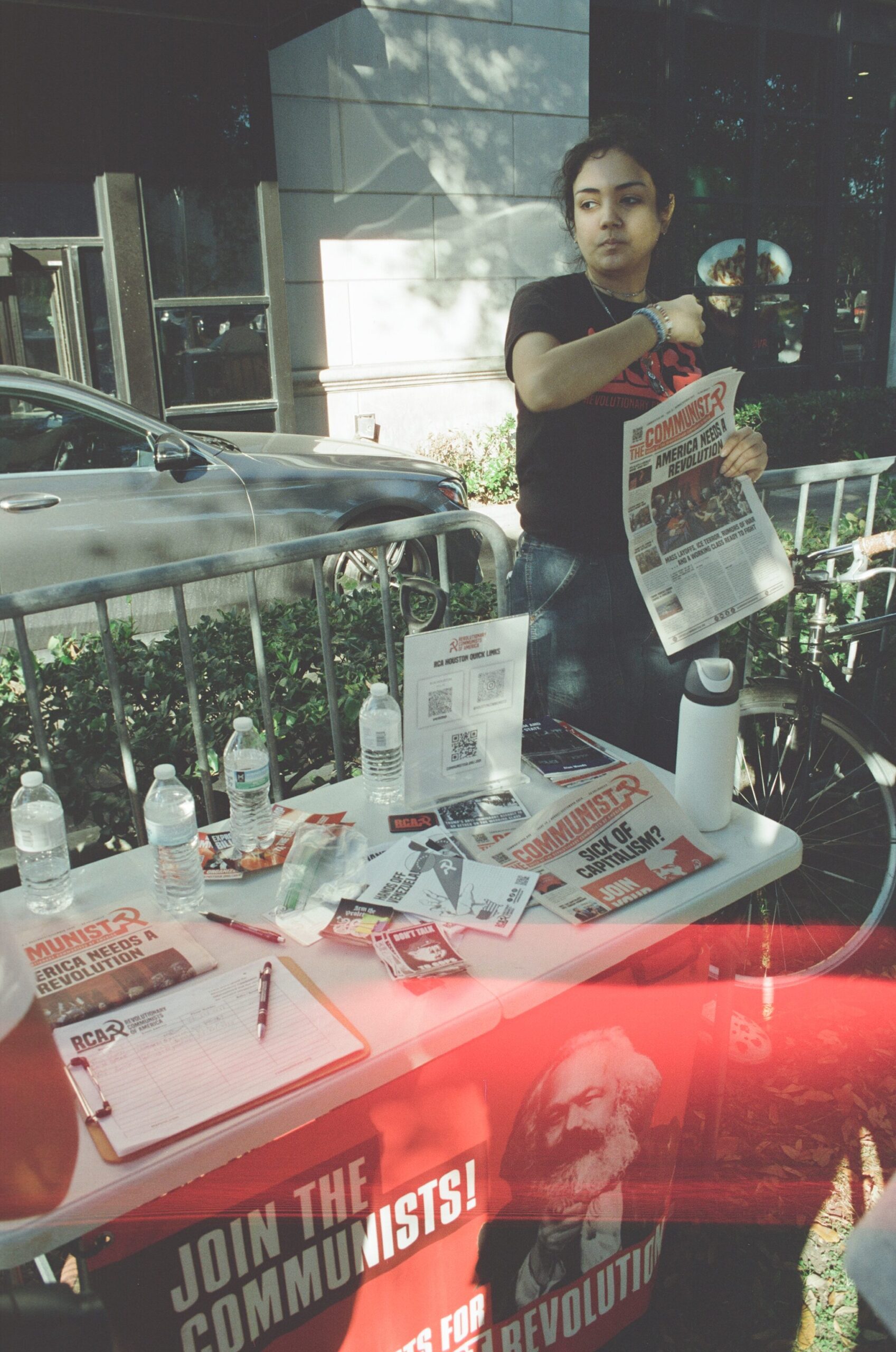
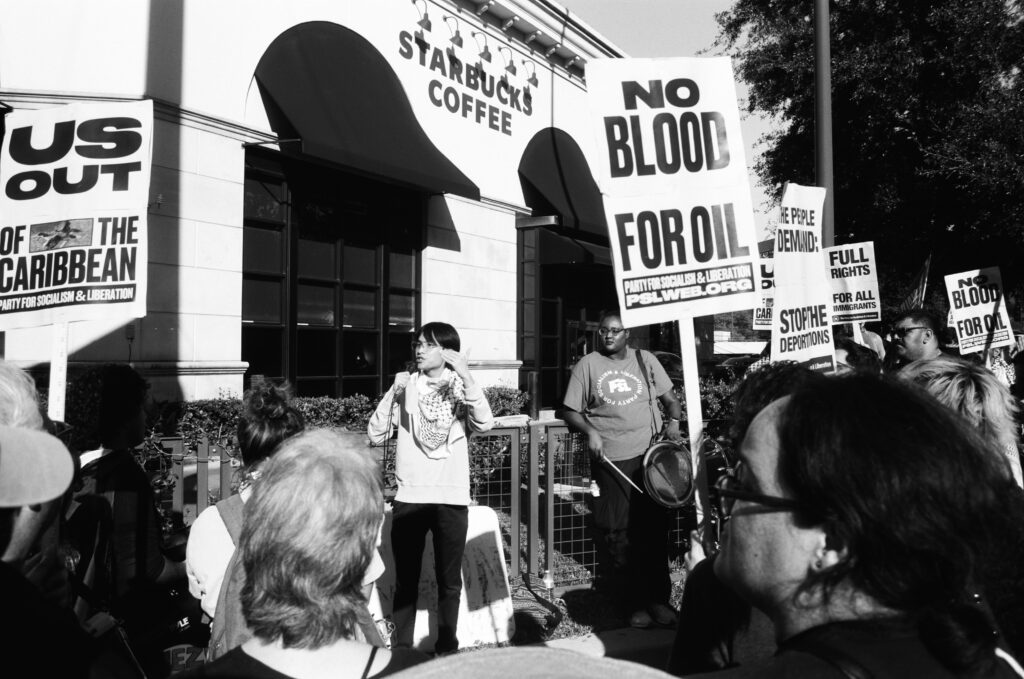
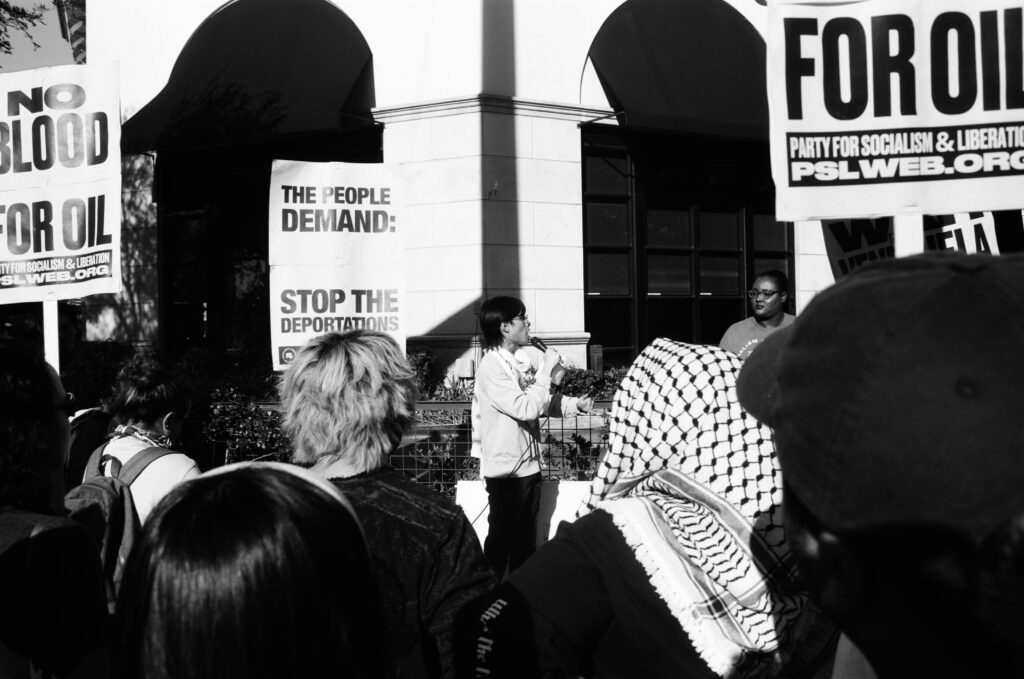
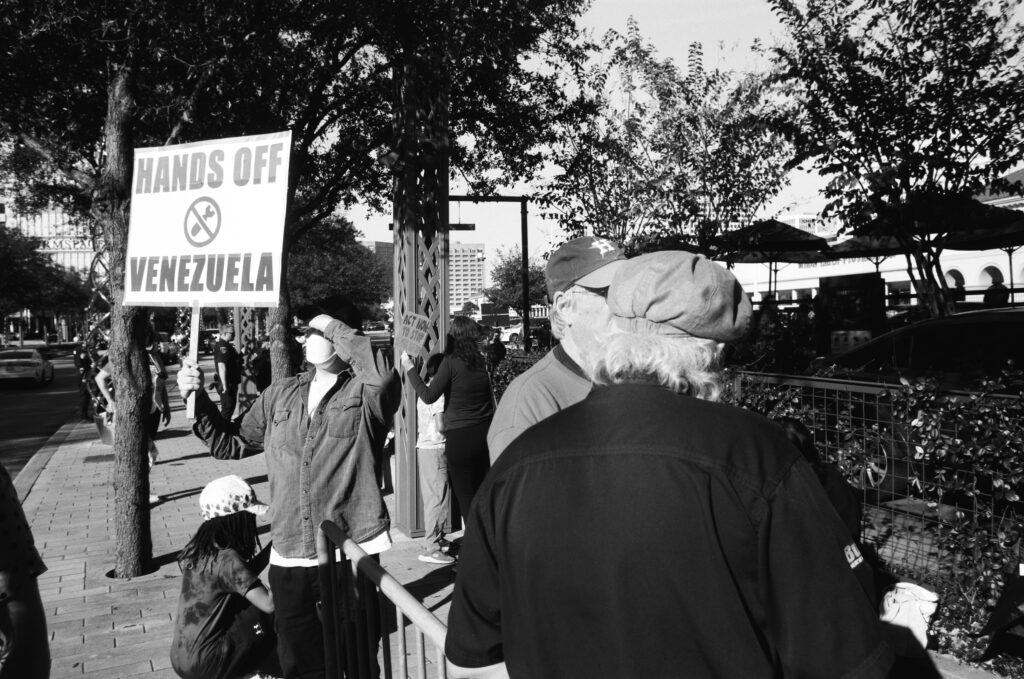
This is where nuance lives. Who approaches whom? Who steps into space? Who controls movement? These moments are rarely described accurately after the fact.
The Gear (Because Process Matters)
Roughly thirty percent of this project lives here—on purpose.
Politics change daily. Process doesn’t.
Camera Body
Canon T90 — chosen for its metering reliability, tactile controls, and ability to slow decision-making.
This camera forces intention. You don’t spray frames; you commit to them.
Lenses
- Canon FD 50mm f/1.4 — for compressed crowd detail and subject isolation
- Canon FD 28mm f/2.8 — for context, movement, and spatial relationships
Both lenses render differently under high-contrast daylight, which mattered for this event.
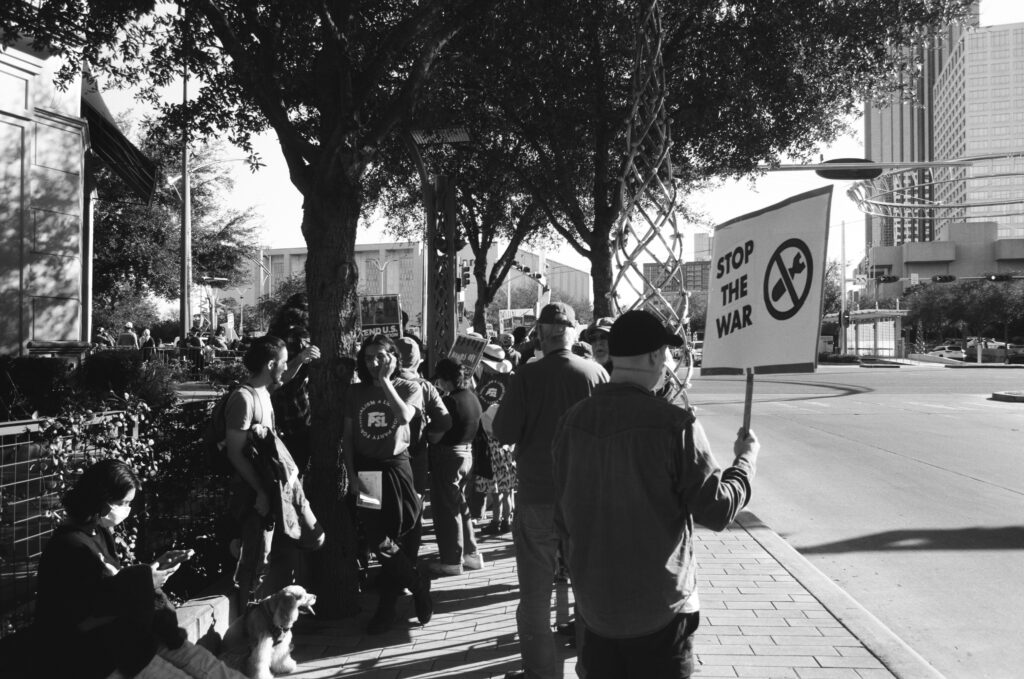
Film Stock #1: Flic Film Ultra Pan 100
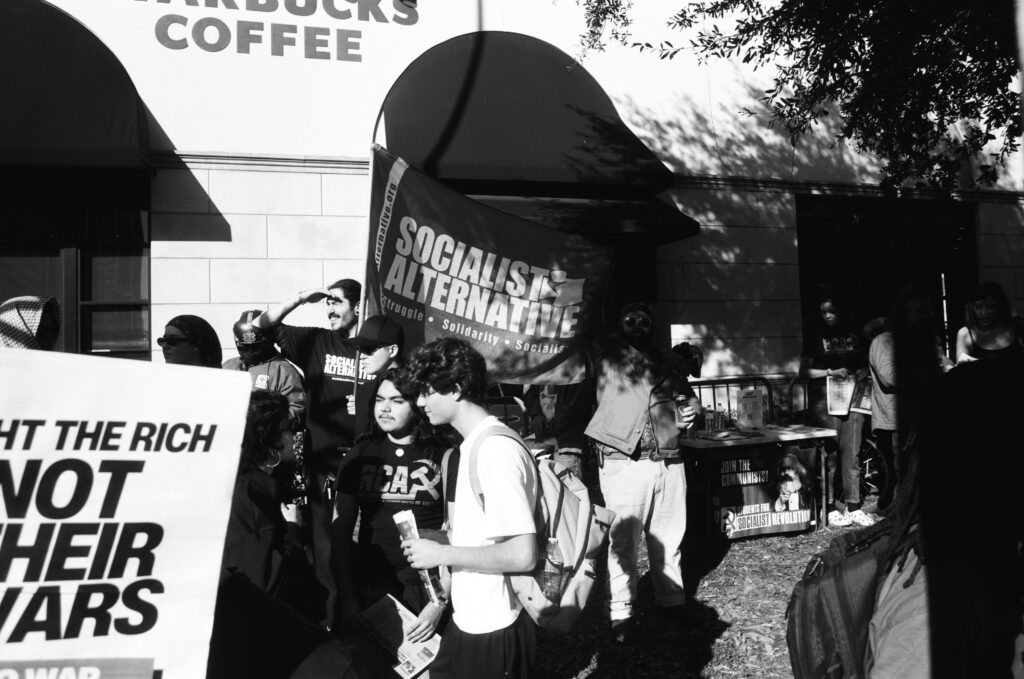
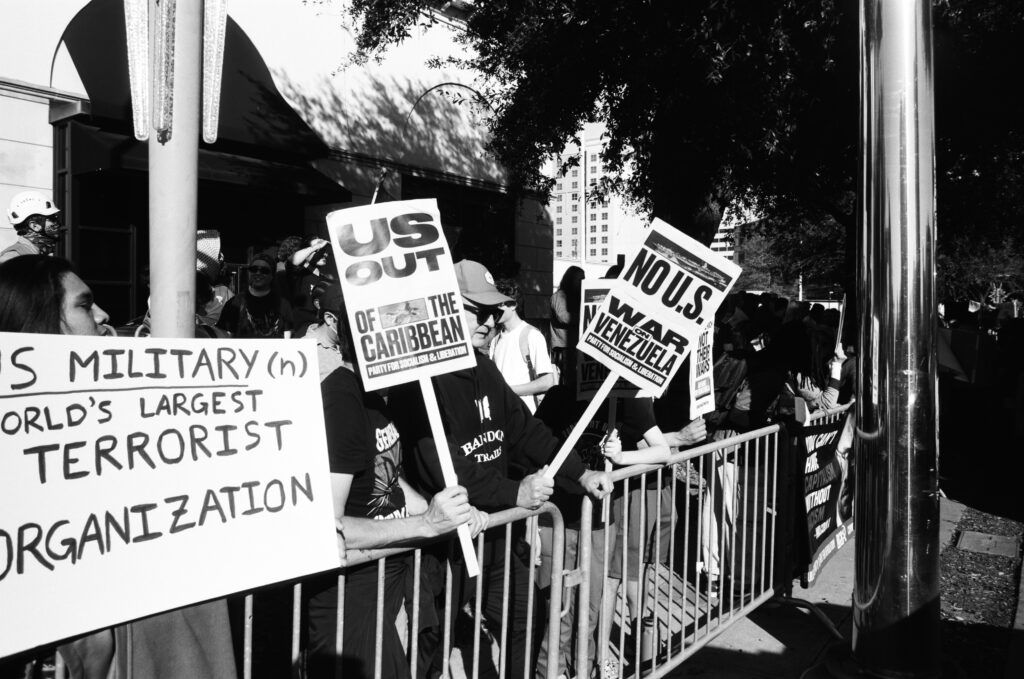
Ultra Pan 100 performed exactly as expected—clean, controlled, and consistent across the roll. Tight grain, strong midtones, and stable edges even under harsh midday sun and reflective signage.
Contrast stayed disciplined without crushing shadows or blowing highlights. Faces held shape. Lettering stayed sharp. There were no recurring edge artifacts or light leaks across the frames.
In protest environments—where signage, faces, and hard light compete—Ultra Pan 100 quietly and reliably does its job.
Film Stock #2: MC Manual ISO 100
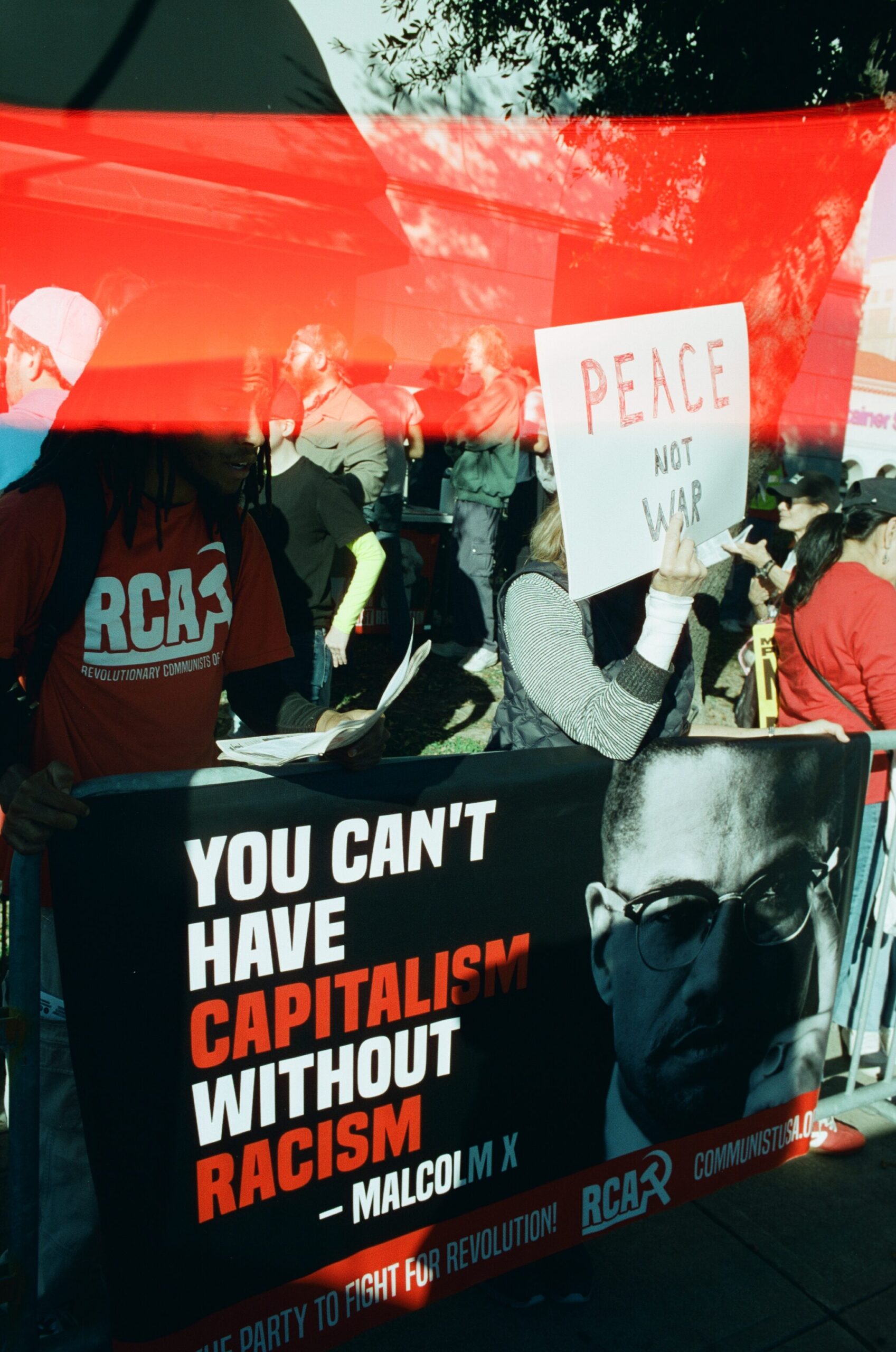
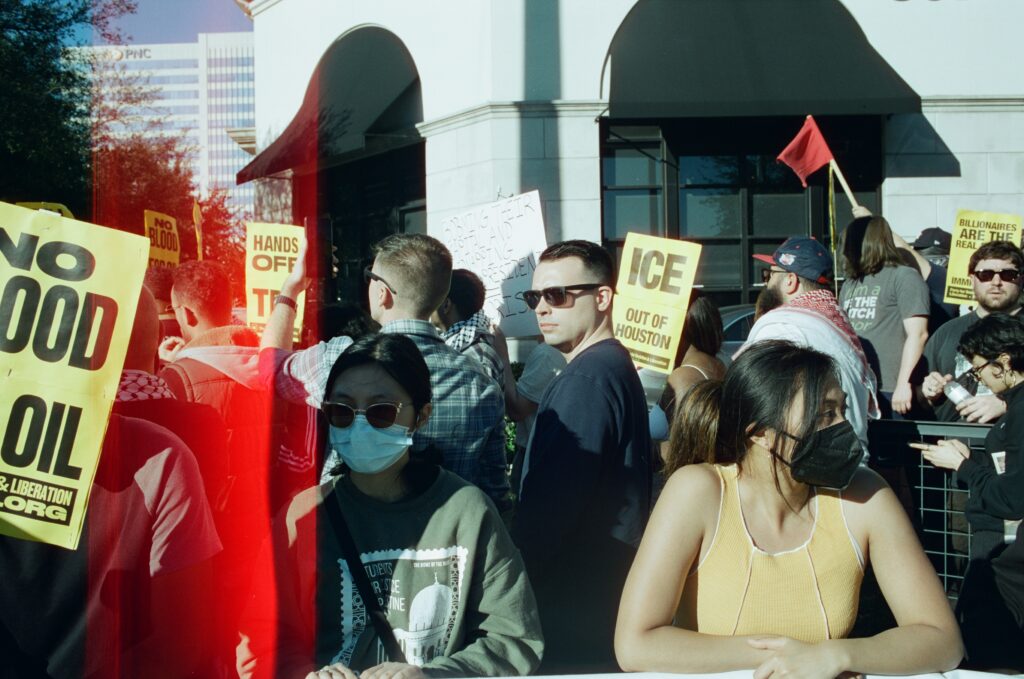
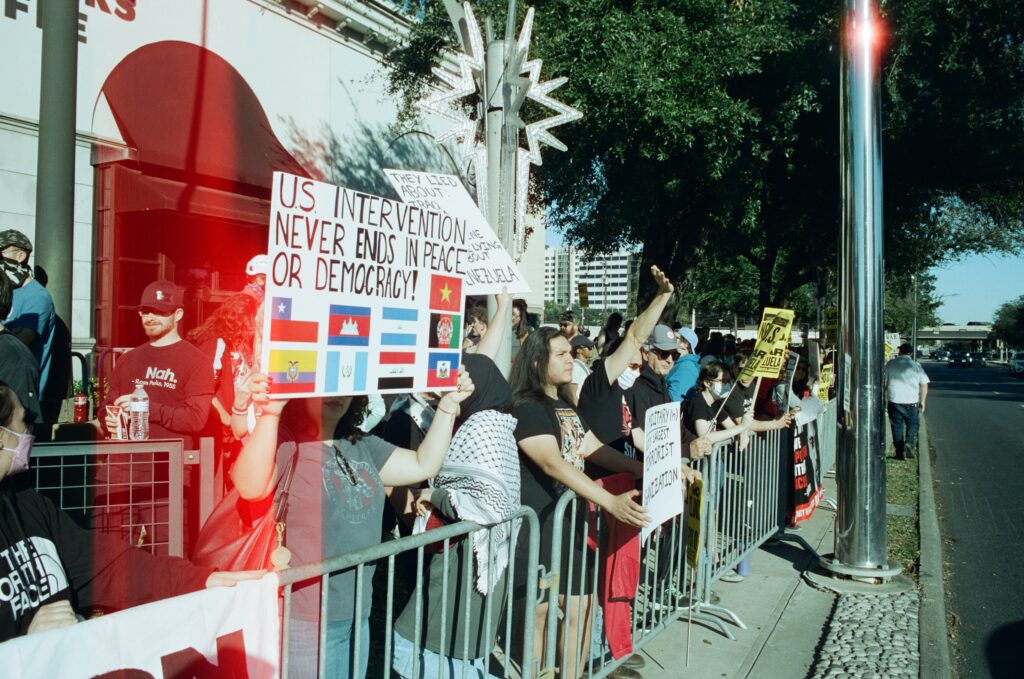
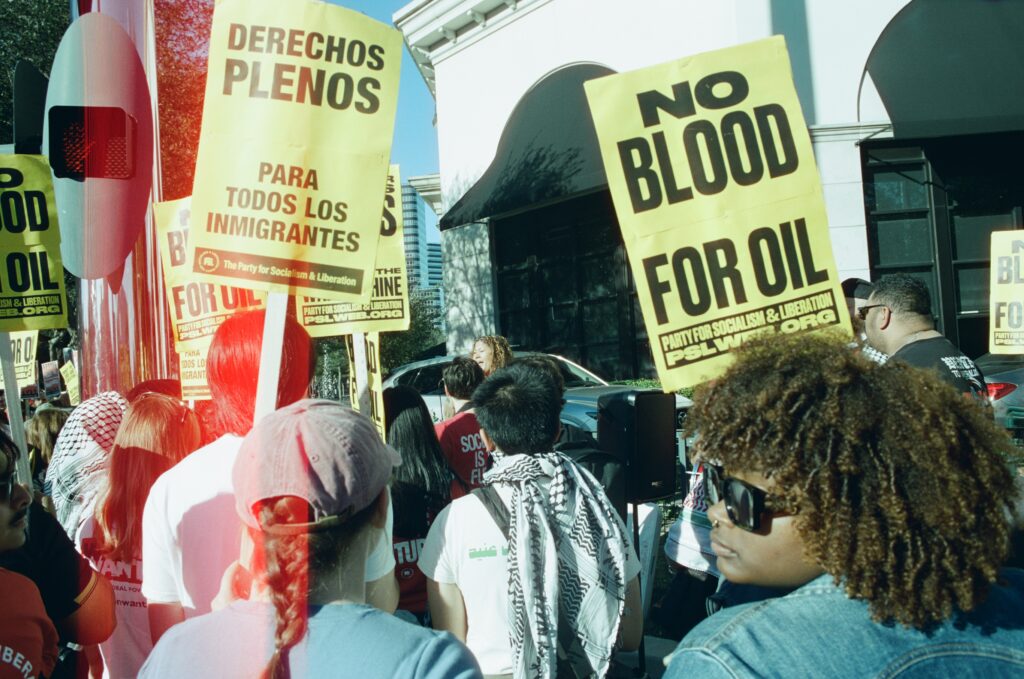
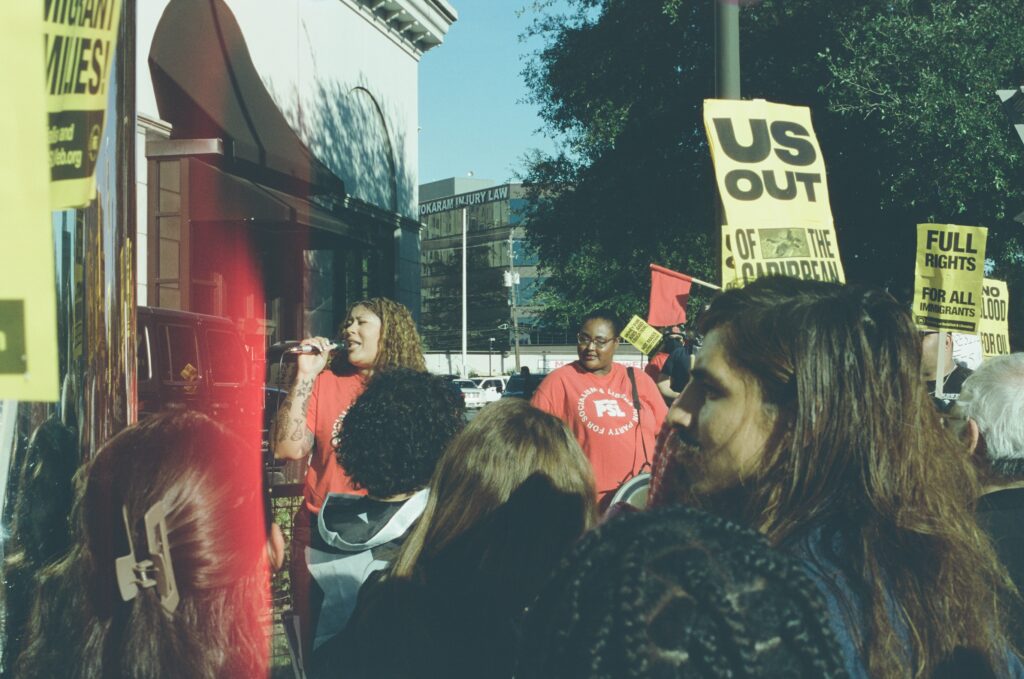
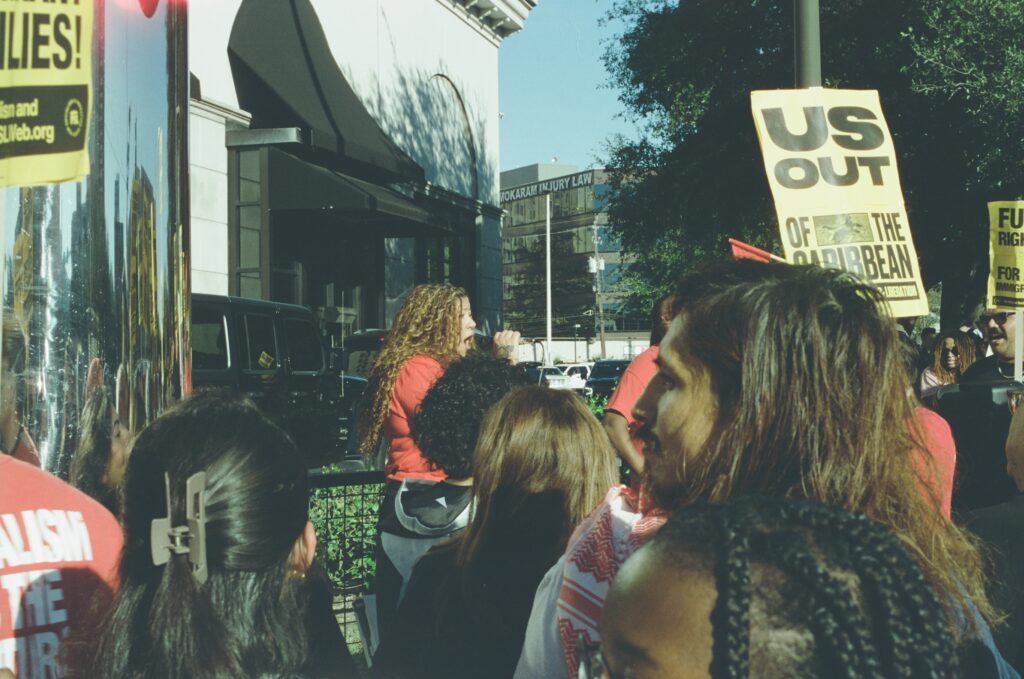
This is the roll with the visible light bleed.
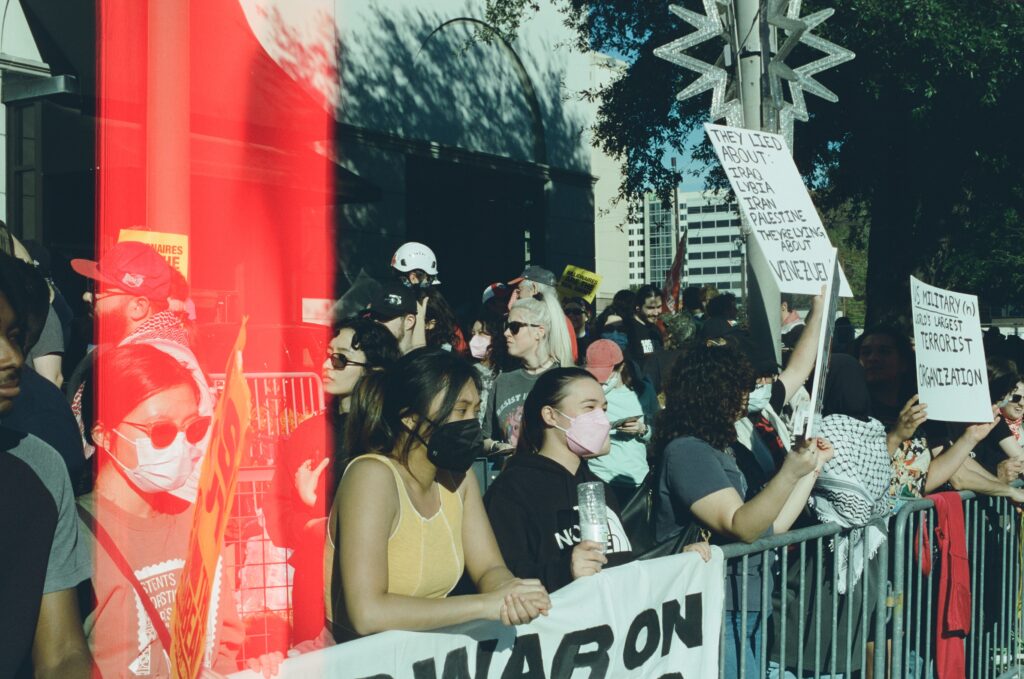
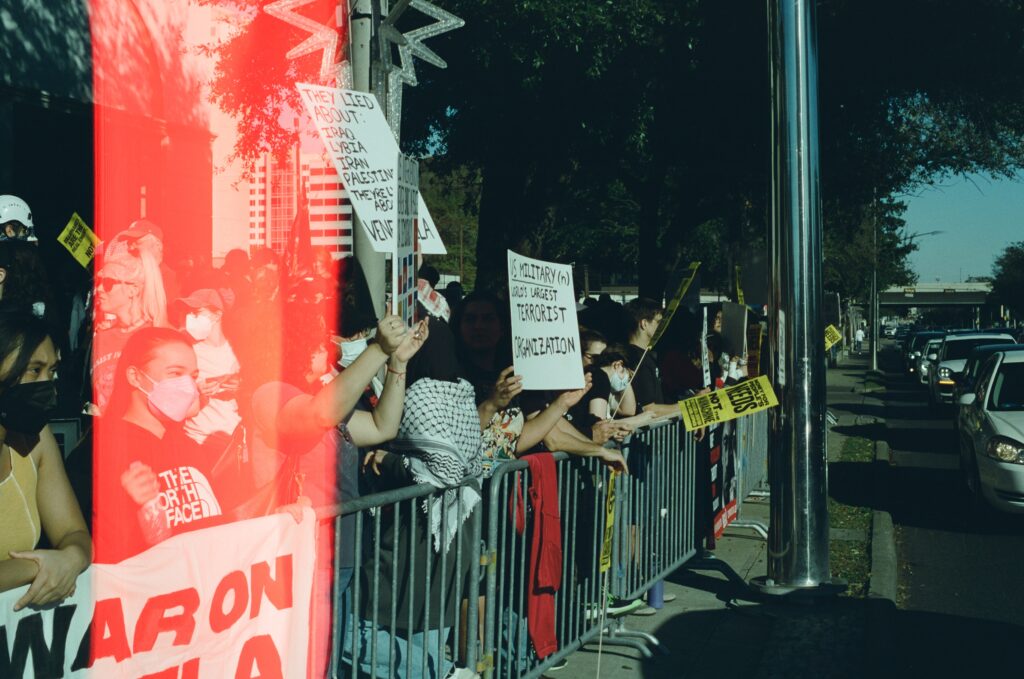
You can see it clearly in the contact-sheet/grid view: recurring red and orange edge flares and intermittent streaking that ride the frame edge rather than the subject. This isn’t random fogging—it’s consistent with minor seal fatigue or handling exposure during load or rewind.
Instead of correcting it, it stays.
MC Manual ISO 100 behaves similarly to Ultra Pan in grain and sharpness, but with slightly smoother tonal transitions and a softer contrast curve.
Where Ultra Pan bites, MC Manual breathes.
In mixed light, it preserved shadow detail without flattening highlights, making it ideal for faces partially obscured by signage or backlit by open sky.
The light bleed adds temporal friction—reminding the viewer these are physical frames made under pressure, not digital captures optimized after the fact.
Why the Light Bleed Stayed
Almost the entire MC Manual roll showed some degree of light intrusion. Rather than masking it, I treated it as metadata.
These artifacts timestamp the images as objects—film that traveled, was handled, and existed in the real world. In a media environment obsessed with polish, imperfection is evidence.
Presenting 71 Frames Without Dilution
With a set this large, sequencing matters more than individual impact.
Suggested structure:
- Opening grid — establish scale
- Mid-section clusters — interaction and expression
- Final run — signage, dispersal, aftermath
This mirrors how the event itself unfolded.
Final Thought (Again)
The most revealing part of this protest wasn’t what people shouted—it was how quickly the issue vanished once shouting stopped.
That doesn’t mean the participants were insincere. It implies the ecosystem rewards immediacy over follow-through.
As an independent journalist, my role isn’t to protect ideologies or prolong outrage. It’s to document what happens, how it’s framed, and what survives contact with reality.
This time, what survived was the film.
Everything else moved on.

Be the first to comment