

Bridges, Banners, and the Weight of Voices: A View from Antares
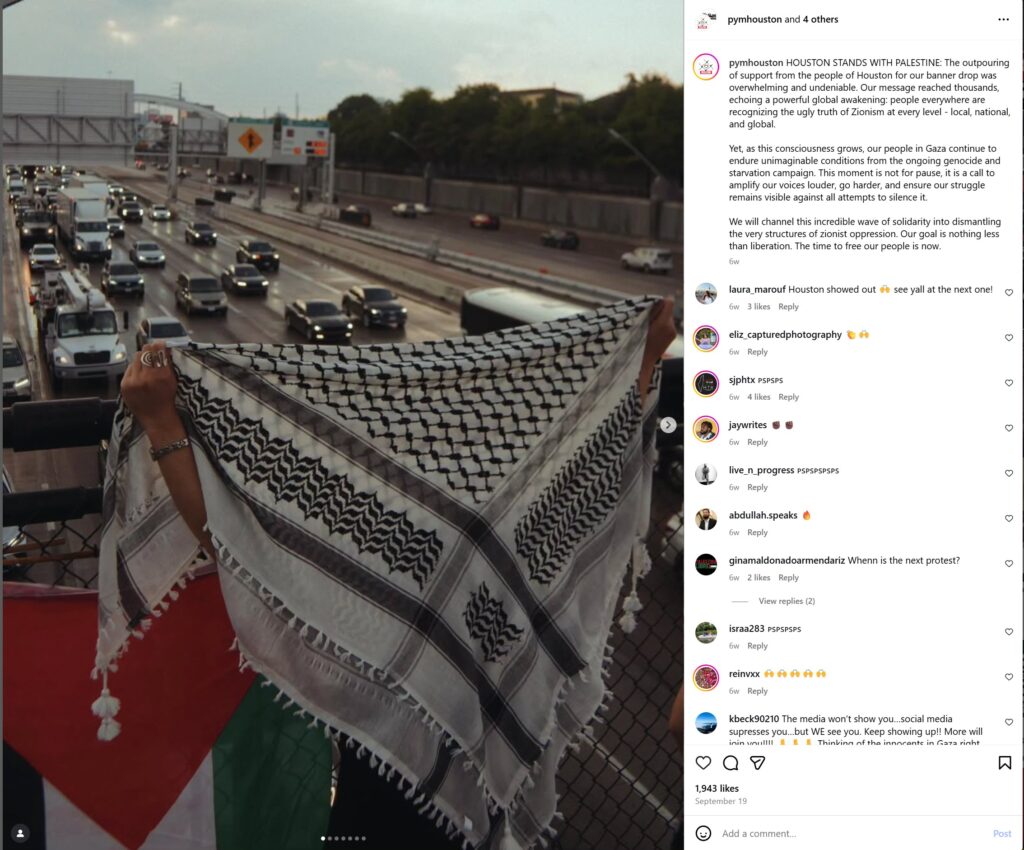
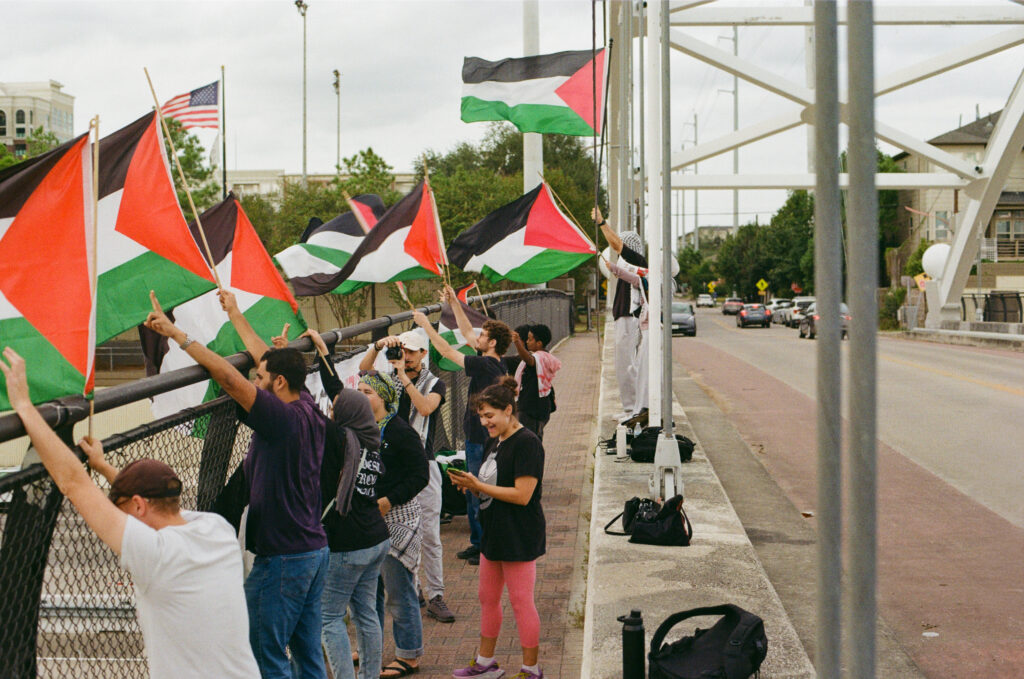
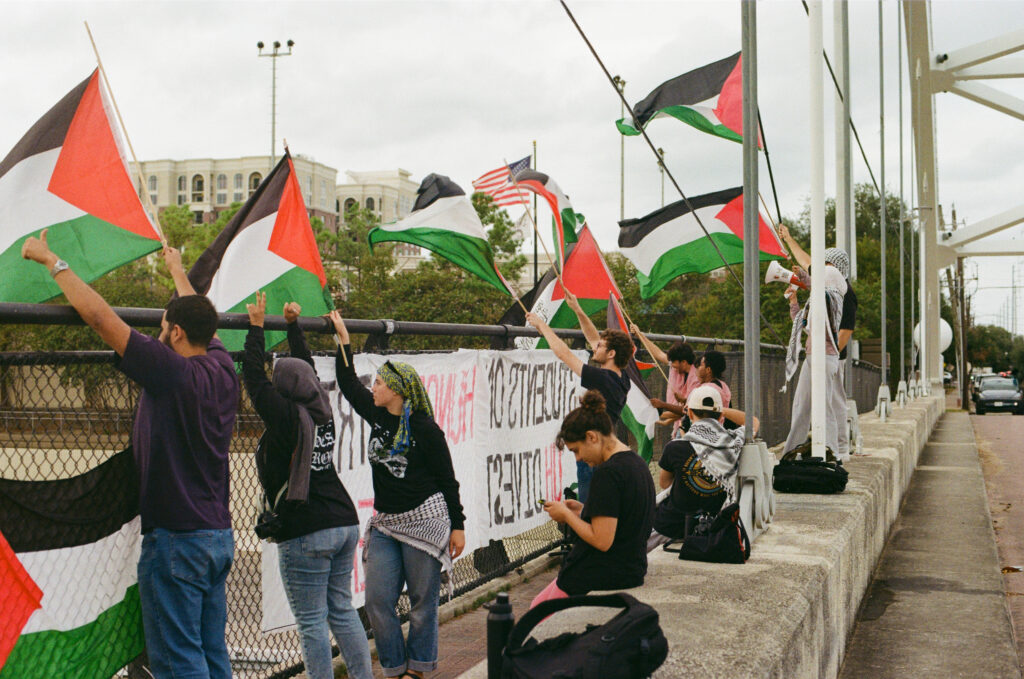
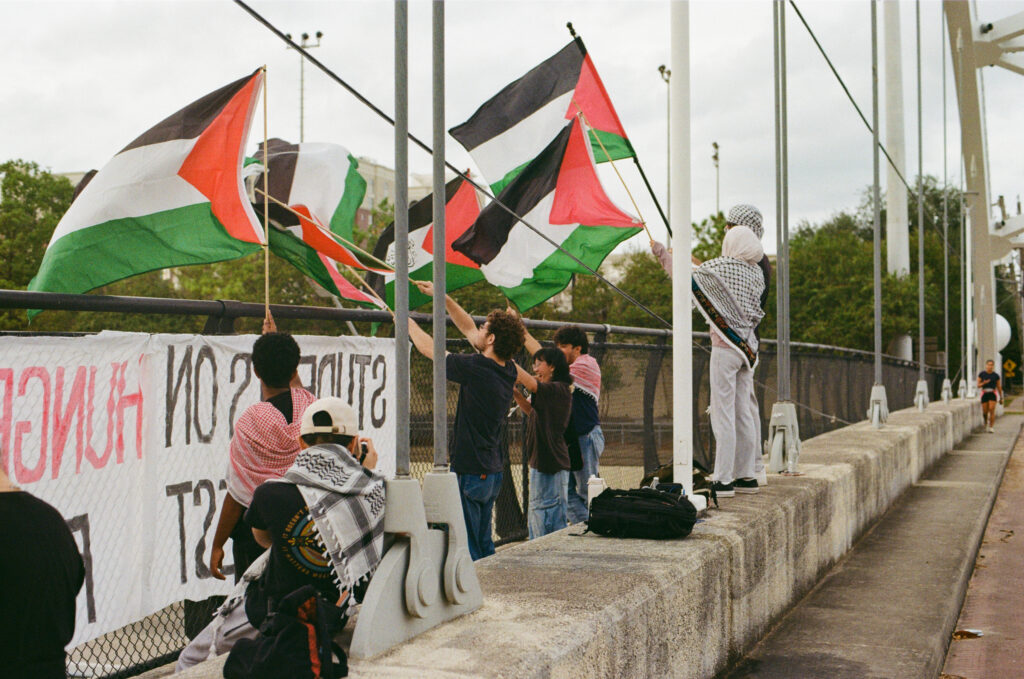
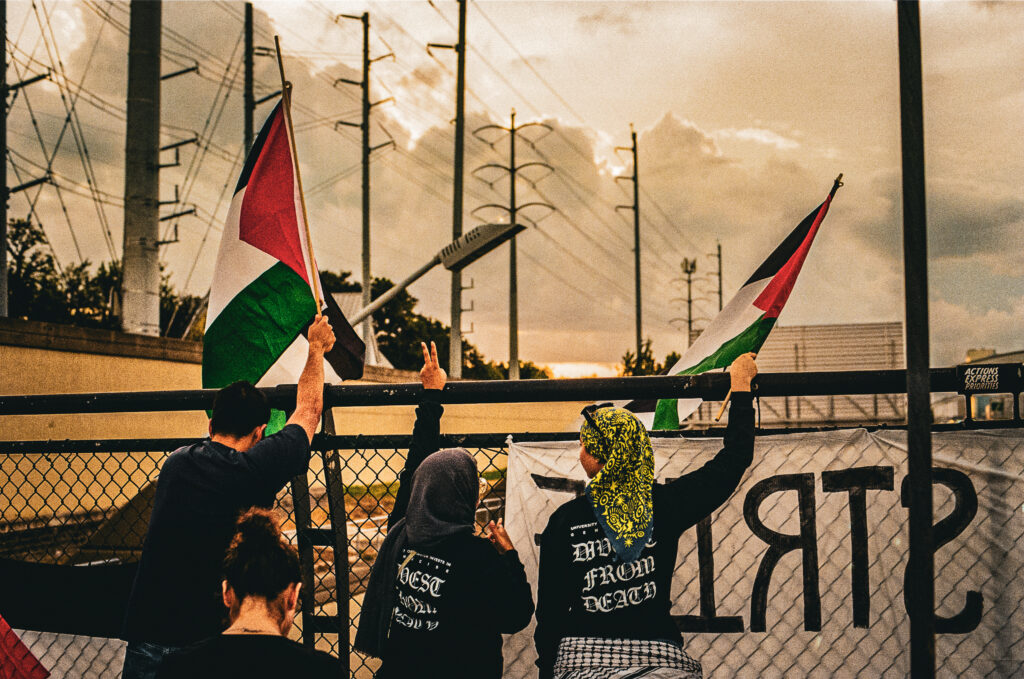
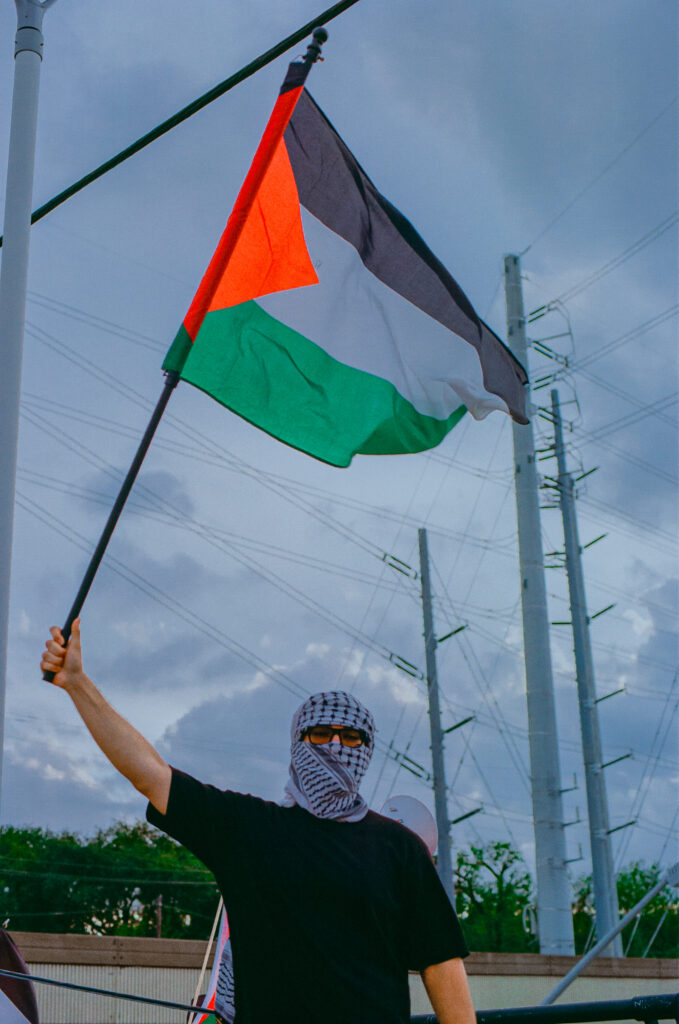
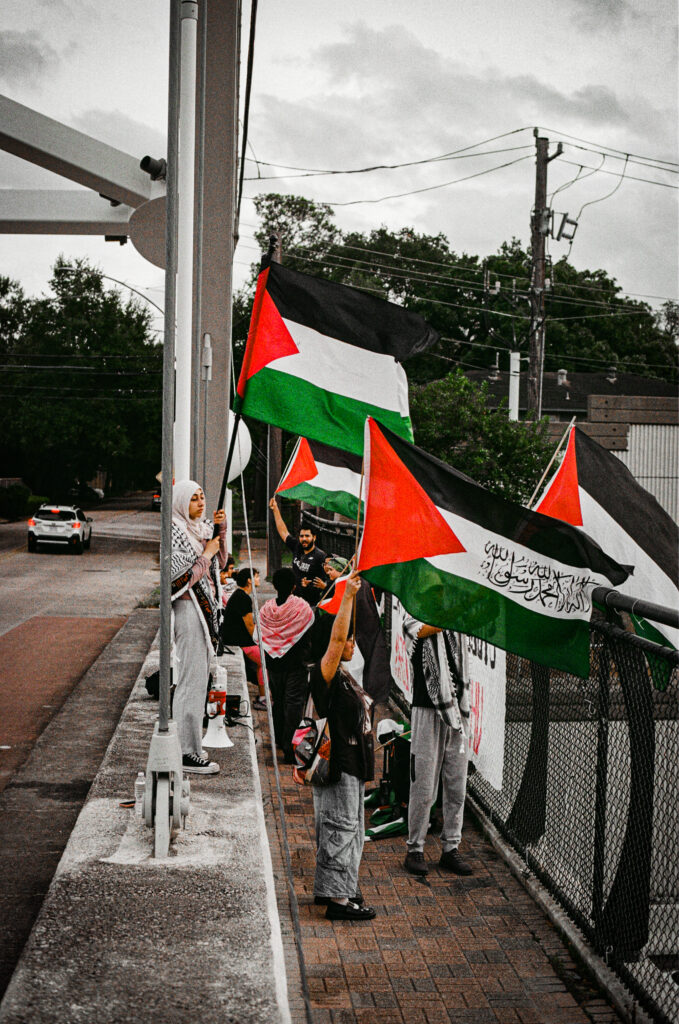
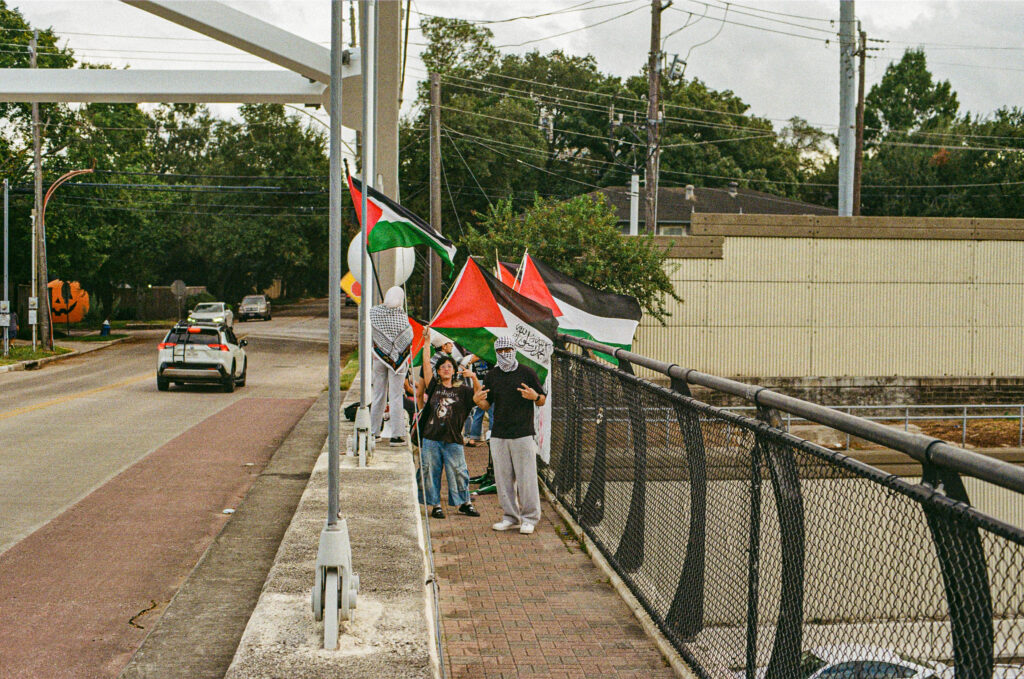
Shot on 35 mm film – Kodak Portra 400 – Houston, TX
The air vibrated with wind and conviction. Flags rippled over the bridge, green and red threads snapping against gray skies. Voices carried through bullhorns, over traffic, over fatigue. I wasn’t here to take a side. I was here to witness—to see how light, motion, and human belief intersect on an ordinary afternoon in Houston.
A Photographer from Antares
From where I stand—figuratively light-years away—Earth’s conflicts appear small yet painfully luminous. Every civilization has its versions of faith, resistance, and survival. My lens simply records how people express them. These frames aren’t propaganda or praise; they’re evidence of how emotion organizes itself into movement.
The Message in the Wind
Supporters of the Palestinian cause gather with familiar urgency: to make visible what they believe the world has ignored. They talk about occupation, displacement, and a mounting humanitarian catastrophe. Their signs demand ceasefires, aid, justice.
Across the digital ether, critics argue that protests like these oversimplify a centuries-old conflict or that demonstrations far from the front lines change little besides public sentiment. Some even claim that moral outrage fades faster than hashtags.
So which is true? Both, perhaps.
The Effectiveness Question
History shows that protest can amplify awareness—the civil-rights era, anti-war movements, labor strikes. Visibility matters; it pushes governments and citizens toward empathy or at least recognition.
But history also warns that protest can polarize—when slogans flatten nuance or when confrontation replaces dialogue. In the social-media era, performative activism sometimes outweighs sustained policy change.
Maybe effectiveness isn’t measured in laws passed, but in how many conversations shift. Maybe that’s the currency of these bridge gatherings.
Seeing Both Sides
Every side believes it’s defending truth. One argues that silence equals complicity; another that outrage without full context fuels misinformation.
As an observer, I hear both. I also hear the unspoken: fatigue, grief, identity, and the yearning to do something when the scale of suffering feels incomprehensible.
It’s not just Palestine. The same emotional circuitry appears when people speak about Sudan, Congo, Myanmar, Ukraine, Yemen—each tragedy competing for global attention, each framed as the “forgotten genocide.”
The question I keep returning to:
Why do some cries echo louder than others?
Humanity in Fragments
Through my viewfinder, I notice micro-stories: a young man teaching an older protester how to hold the banner against the wind; someone passing bottled water; another silently filming the moment on a cracked phone.
None of them will end a war tonight. Yet, for a few hours, they’ve transformed asphalt and rebar into a living symbol of persistence.
From the Antares Perspective
Civilizations rise and fall by how they handle empathy. On my distant world, we learned that empathy without understanding breeds chaos, and understanding without empathy breeds indifference. Earth is still learning to balance the two.
Film, thankfully, remembers even when humans forget. Grain holds memory better than pixels.
The Closing Frame
When I developed the negatives, the colors told the story better than the chants did: red for fury, green for life, black for mourning, white for hope.
Maybe that’s what protests really are—imperfect rituals of hope.
Whether they succeed or not might be less important than the fact that people still believe their voices matter.

Be the first to comment